

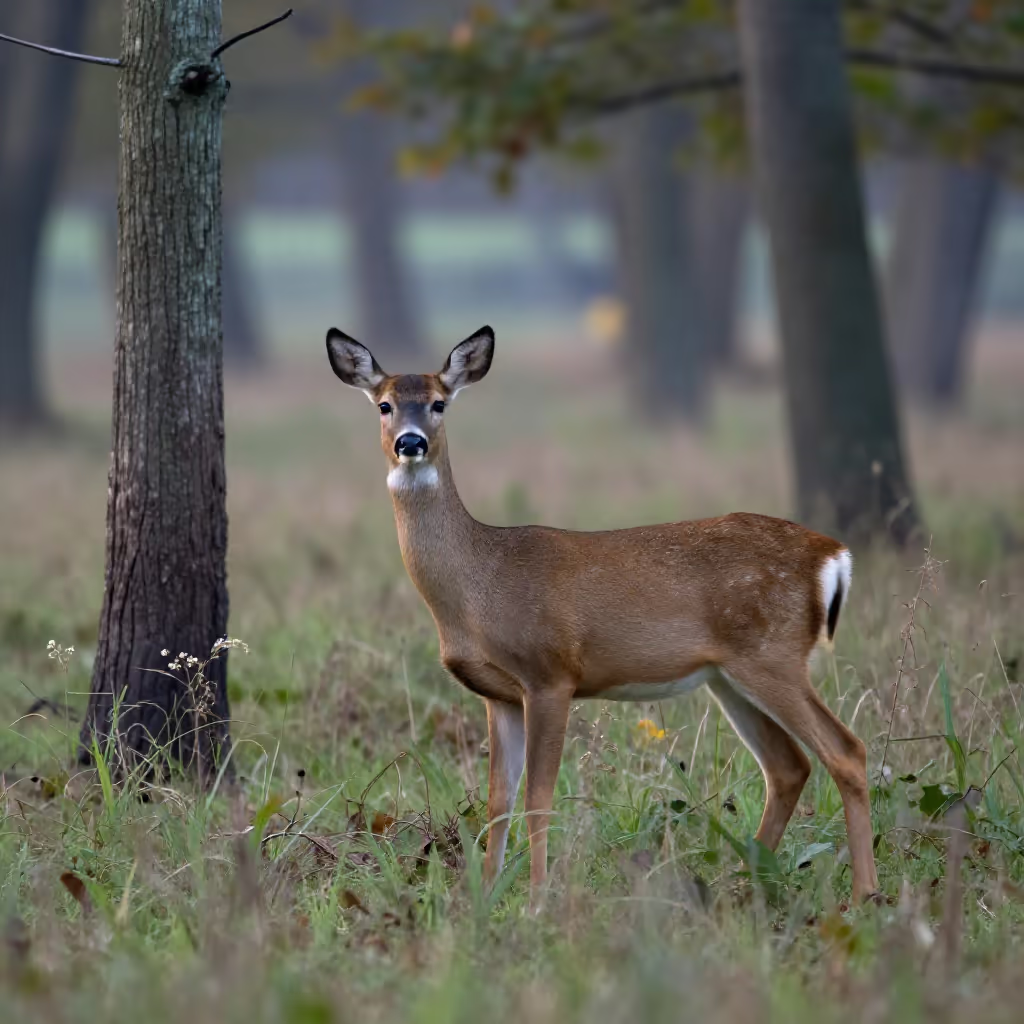
An animal that lives in the wild and has not been domesticated by humans or kept as a pet.
example
Im Nationalpark kann man mit etwas Glück seltene Wildtiere in ihrer natürlichen Umgebung beobachten.
In the national park, with a bit of luck, you can observe rare wild animals in their natural environment.
Usage tips
Compound word
'Wildtier' (wild animal) is made up of the adjective 'wild' and the noun 'Tier' (animal). So it literally describes an animal that lives wild in nature.
EXAMPLE
Ein Fuchs ist ein Wildtier, das man manchmal auch in Städten sehen kann.
A fox is a wild animal that you can sometimes also see in cities.
Typical collocations
Common combinations are 'Wildtiere beobachten' (to observe wild animals), 'Wildtiere schützen' (to protect wild animals), or the expression that they live 'in freier Wildbahn' (in the wild).
EXAMPLE
Es ist verboten, die Wildtiere im Nationalpark zu füttern.
It is forbidden to feed the wild animals in the national park.
Use in the plural
Although the singular 'das Wildtier' (the wild animal) exists, the word is very often used in the plural 'die Wildtiere' (the wild animals) to speak about this category of animals in general.
EXAMPLE
Der Klimawandel bedroht den Lebensraum vieler Wildtiere.
Climate change threatens the habitat of many wild animals.
Compare with
antonym
Wildtier vs Haustier
pet
'Haustier' and 'Wildtier' are opposites in terms of how an animal lives and how it is connected to humans. A 'Haustier' is kept by people, often at home or near the house. It lives together with people, for example a dog, a cat, or a rabbit. A 'Wildtier' lives in the wild and is not kept as an animal belonging to humans. So the difference is: a pet is part of everyday human life, while a wild animal lives independently in nature.
Wildtier
Im Wald sahen die Kinder ein Wildtier zwischen den Bäumen verschwinden.
In the forest, the children saw a wild animal disappear among the trees.
Haustier
Unser Kaninchen ist ein ruhiges Haustier und lebt im Garten.