

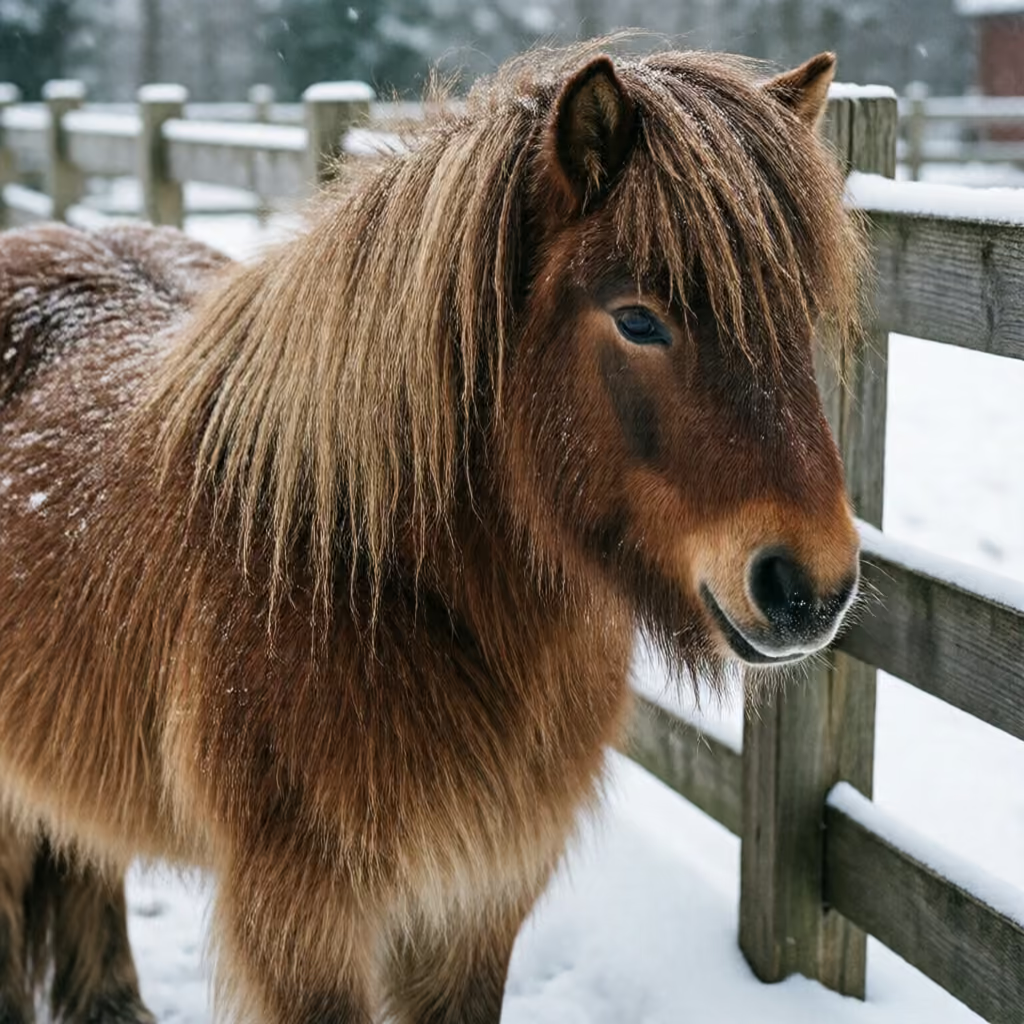
das Winterfell
winter coat
The thick fur that an animal develops for the cold season and that protects it from the cold.
EXAMPLE
Das Pferd hat bereits ein dickes Winterfell bekommen.
The horse has already grown a thick winter coat.
winter coat
das Winterfell, die Winterfelle
Loading your saved state.
winter coat
The thick fur that an animal develops for the cold season and that protects it from the cold.
Das Pferd hat bereits ein dickes Winterfell bekommen.
The horse has already grown a thick winter coat.
| gender | neuter das |
|---|---|
| plural | die Winterfelle |
| genitive | des Winterfelles |
| singular | plural | |
|---|---|---|
| nominative | das Winterfell | die Winterfelle |
| accusative | das Winterfell | die Winterfelle |
| dative | dem Winterfell | den Winterfellen |
| genitive | des Winterfelles des Winterfells | der Winterfelle |
The article changes with the case; it is shown in colour.
'Winterfell' (winter coat) consists of 'Winter' (winter) and 'Fell' (fur). The first part names the season, while the second refers to the animal's body covering.
Das Winterfell des Fuchses schützt ihn auch bei starkem Frost.
The fox's winter coat protects it even in severe frost.
Typical collocations include 'Winterfell bekommen' (to grow a winter coat), 'Winterfell entwickeln' (to develop a winter coat), and 'das Winterfell verlieren' (to lose one's winter coat). You can use these to describe the seasonal change in an animal's fur.
Im Frühjahr verliert unser Hund sein Winterfell.
In spring, our dog loses its winter coat.
Common collocations include 'dichtes Winterfell' (thick winter coat), 'dickes Winterfell' (heavy winter coat), and 'warmes Winterfell' (warm winter coat). You can use 'besonders' (particularly) to emphasize the characteristic being described.
Unsere Katze hat dieses Jahr ein besonders dichtes Winterfell.
Our cat has a particularly thick winter coat this year.