To move quickly and in circles through the air, usually said of light things such as leaves, snow, or dust.
example
Der Herbstwind ließ die bunten Blätter durch die Luft wirbeln.
The autumn wind made the colorful leaves swirl through the air.
Usage tips
Word family
The verb 'wirbeln' (to whirl) is closely related to the noun 'der Wirbel' (vortex, whirlwind). It describes a fast, circular, or chaotic movement that resembles a whirl.
EXAMPLE
Ein kleiner Wirbel aus Staub tanzte über die Straße.
A small swirl of dust danced across the street.
Auxiliary verb: sein or haben?
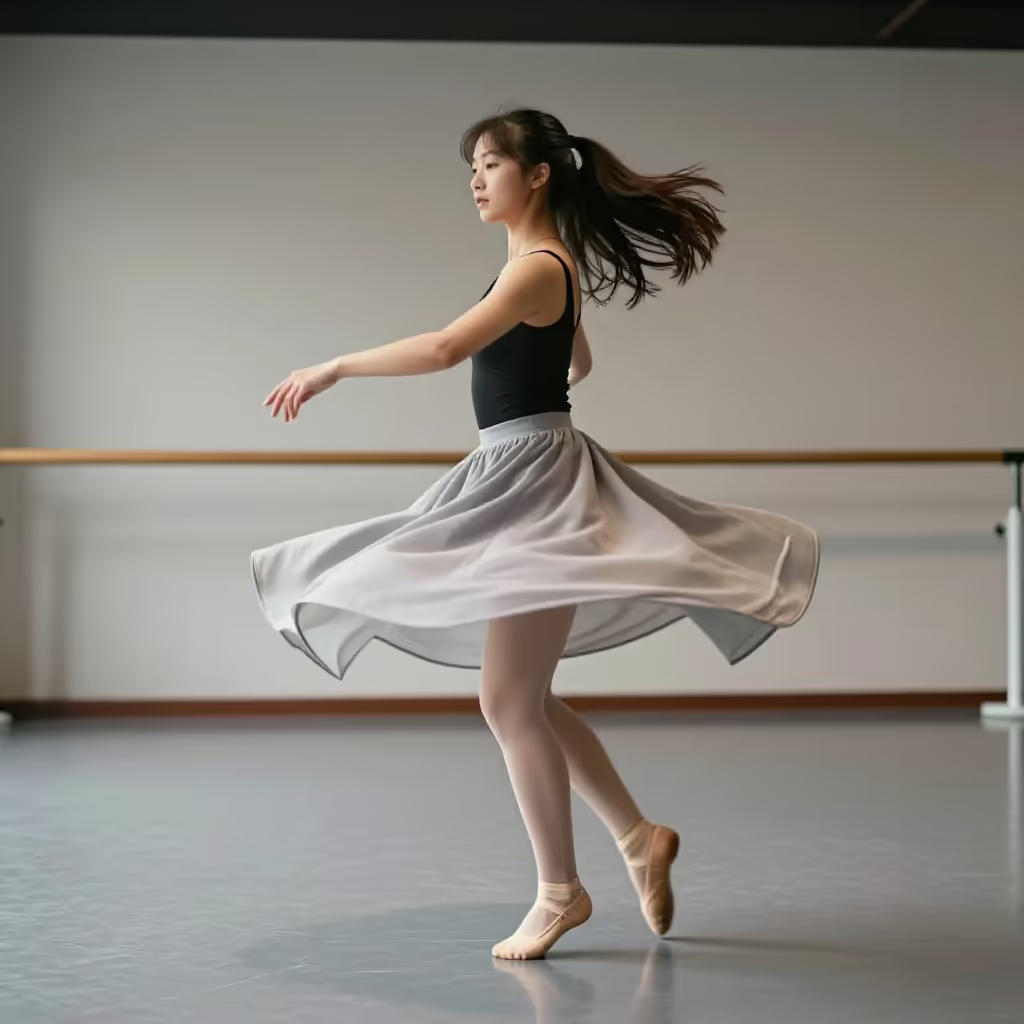
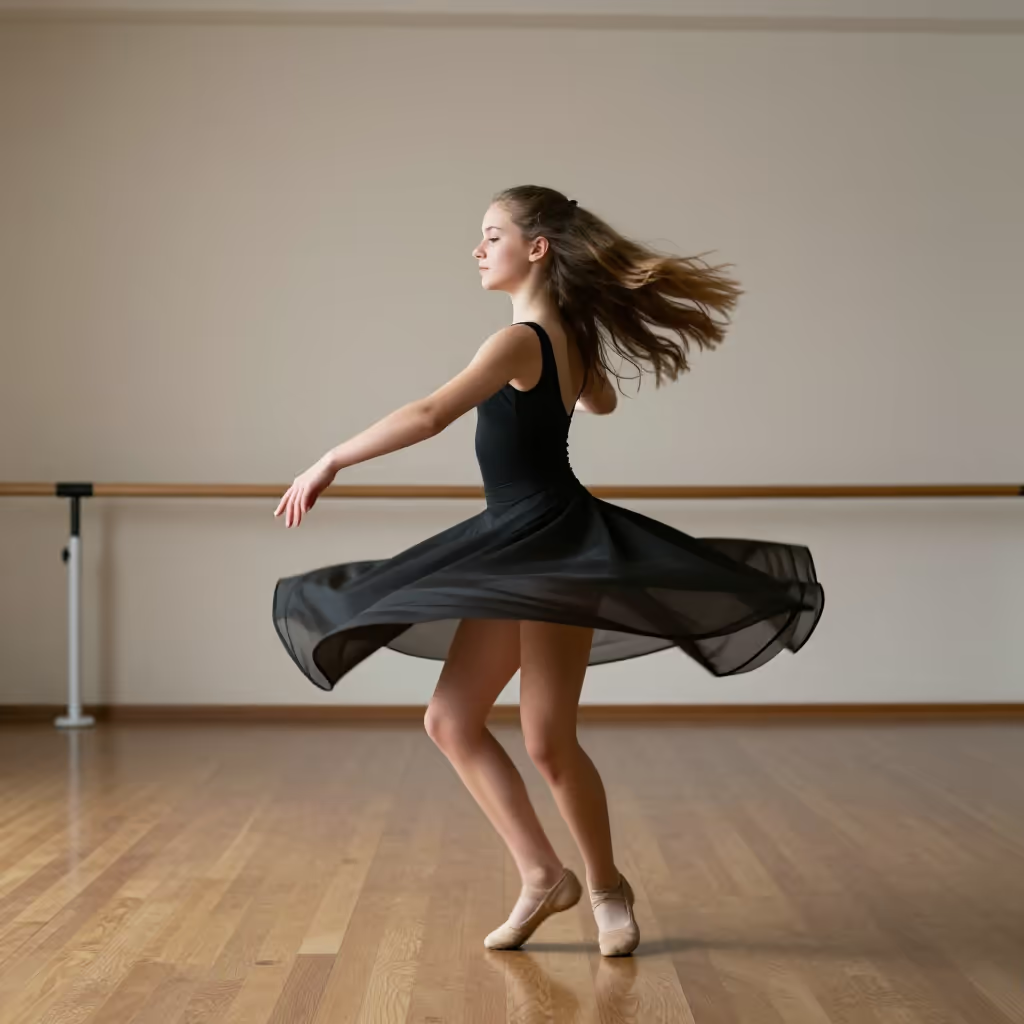
The perfect tense is formed with 'sein' when a movement involving a change of location is described (e.g., leaves, people). It is formed with 'haben' when the movement takes place in one spot (e.g., a dancer who is spinning, or a drummer).
EXAMPLE
Die Schneeflocken sind wild durcheinander gewirbelt.
The snowflakes swirled wildly around.
Typical subjects
In this meaning, the subjects are typically light, inanimate things that are moved by the wind. These include 'Blätter' (leaves), 'Schnee' (snow), 'Staub' (dust), 'Funken' (sparks), or 'Papier' (paper).
EXAMPLE
Als das Feuer ausbrach, wirbelten Funken durch die Nacht.
When the fire broke out, sparks swirled through the night.
Context: lively movement
When people 'wirbeln' (whirl/bustle), it describes very fast, energetic, and often chaotic movement. It is especially often used for children playing or people dancing.
EXAMPLE
Nach der Party wirbelten die Gäste noch lange über die Tanzfläche.
After the party, the guests kept whirling across the dance floor for a long time.
Use in a music context
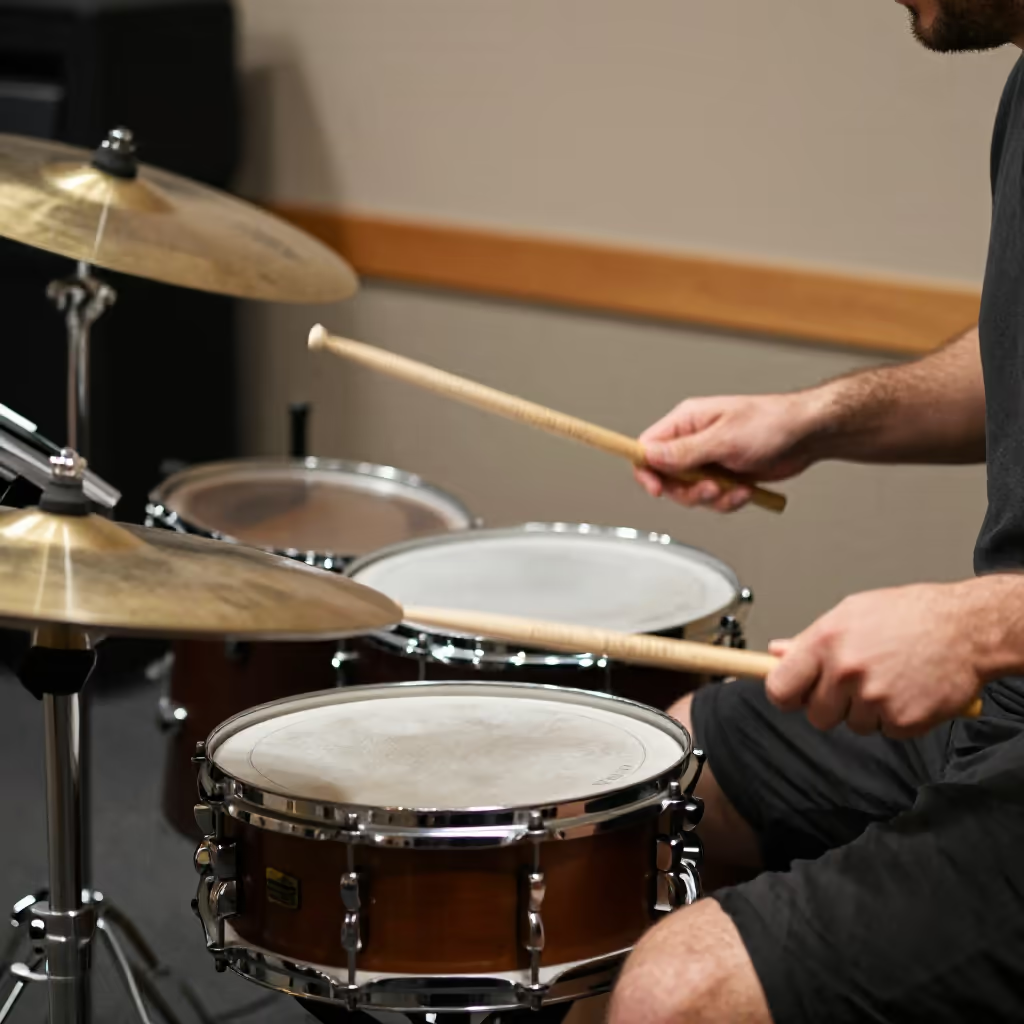
In a musical context, 'wirbeln' means to play a drumroll. The instrument is often named with the preposition 'auf' and the dative.
EXAMPLE
Der Schlagzeuger wirbelte auf seiner Trommel, um die Spannung zu steigern.
The drummer did a drumroll on his drum to increase the tension.
Compare with
near_synonym · confusable
wirbeln vs drehen
to turn / film
'drehen' and 'wirbeln' both describe movements in a circle. 'drehen' is neutral and can be slow or fast: a person, a wheel, or a key can 'drehen'. 'wirbeln' sounds faster, livelier, and often more restless. It fits especially well with light things in the air, such as leaves, dust, or snow, or with very fast movements. Learners may confuse the words because 'wirbeln' is often also a kind of turning. If the movement is calm and precise, 'drehen' usually fits. If it is fast, chaotic, or in the air, 'wirbeln' sounds more natural.
wirbeln
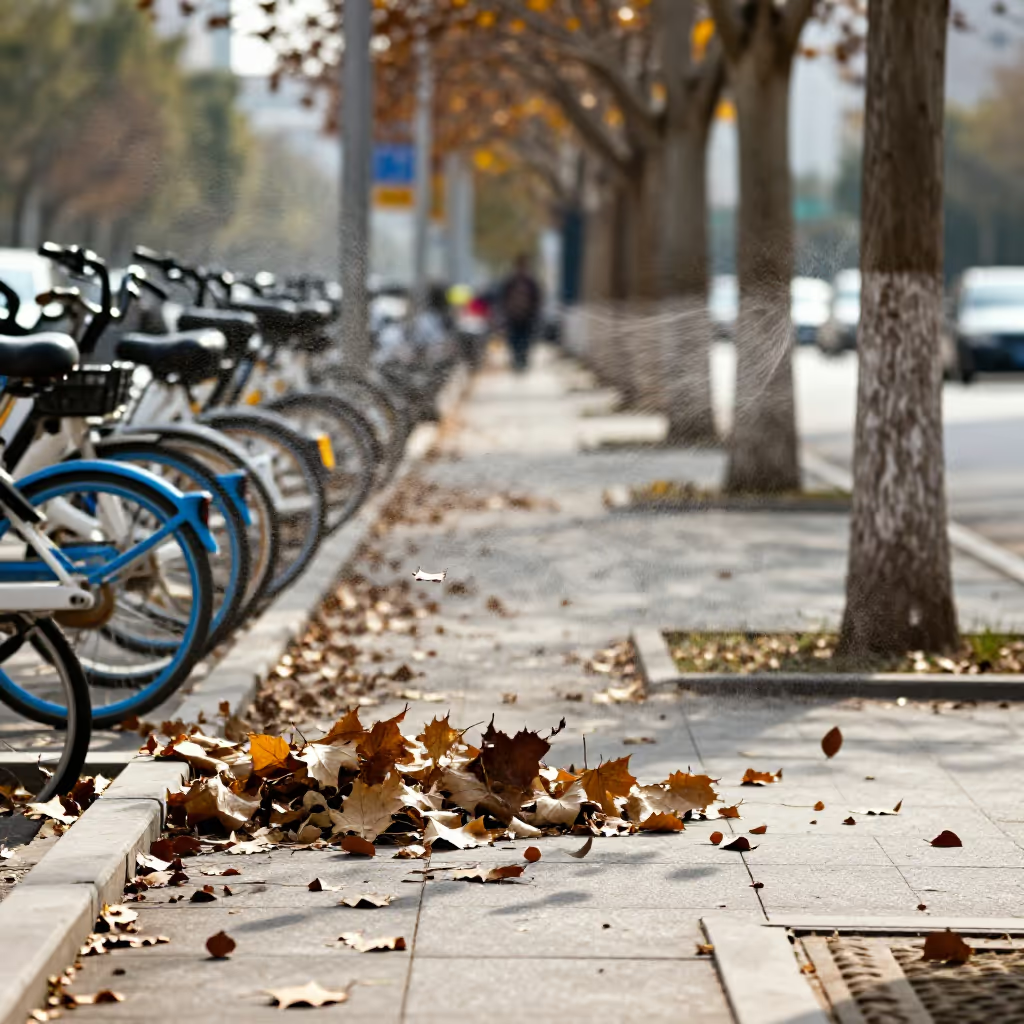
Im Herbst wirbeln bunte Blätter über den Gehweg.
In autumn, colorful leaves swirl across the sidewalk.