

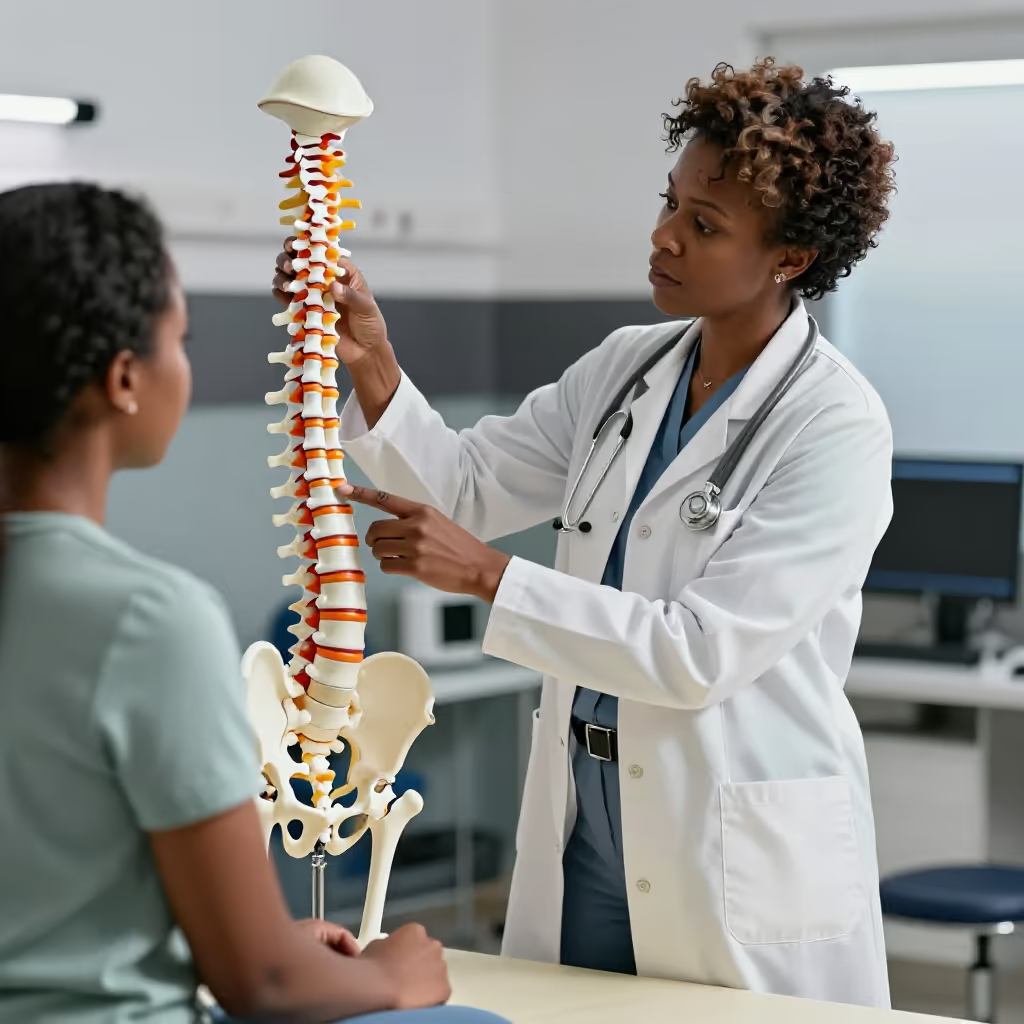
The bony axis of the body in vertebrates, extending from the head to the pelvis, supporting the trunk and protecting the spinal cord.
example
Regelmäßige Bewegung ist wichtig für eine gesunde Wirbelsäule.
Regular exercise is important for a healthy spine.

Usage tips
Compound structure
The word is made up of 'Wirbel' (vertebra) and 'Säule' (column). So it literally describes a 'column of vertebrae,' which explains the structure of this body part very well.
EXAMPLE
Ein einzelner Knochen der Wirbelsäule heißt Wirbel.
A single bone of the spine is called a vertebra.
Typical collocations
In medical and health contexts, 'Wirbelsäule' (spine) is often used with verbs such as 'stärken' (to strengthen), 'entlasten' (to relieve strain on), 'schonen' (to take care of), or 'verletzen' (to injure).
EXAMPLE
Mit gezielten Übungen können Sie Ihre Wirbelsäule stärken.
With targeted exercises, you can strengthen your spine.
Sentence structure and prepositions
Problems or pain are often expressed with the preposition 'an' or 'mit.' Positive effects are frequently described with 'für.'
EXAMPLE
Viele Menschen haben Probleme mit der Wirbelsäule.
Many people have problems with their spine.
Compare with
confusable
Wirbelsäule vs Rücken
back
'der Rücken' and 'die Wirbelsäule' are in the same area of the body, but they are not the same thing. 'der Rücken' means the whole back part of the body between the neck and the buttocks. 'die Wirbelsäule' is the bony structure in the back that supports the body. In everyday language, people usually say 'Rücken', for example when talking about pain. 'Wirbelsäule' sounds more precise and is especially appropriate in medicine, anatomy, or examinations.
Wirbelsäule
Die Ärztin erklärt, dass die Wirbelsäule auf dem Bild gerade aussieht.
The doctor explains that the spine looks straight in the image.
Rücken
Vor der Reise macht Lena Übungen für den Rücken.
Before the trip, Lena does exercises for her back.