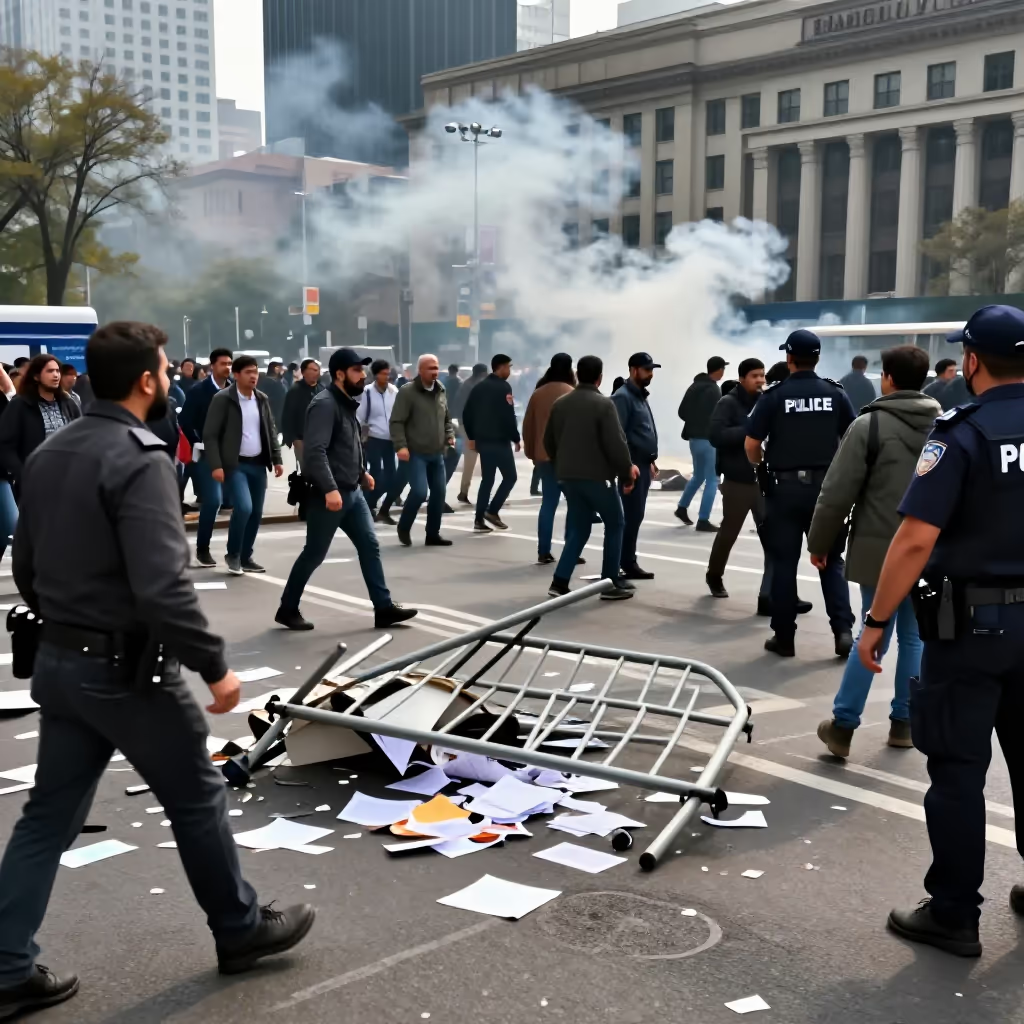
A state of great disorder, confusion, and chaotic events, especially in a political or social context. Used almost exclusively in the plural.
example
In den Wirren der Nachkriegszeit war es schwer, seine Familie wiederzufinden.
In the turmoil of the postwar period, it was difficult to find one's family again.

Usage tips
Word family
The noun 'Wirren' (turmoil) derives from the adjective 'wirr' (chaotic, disorderly, confused). This connection helps you understand the meaning of chaos and disorder.
EXAMPLE
Seine Gedanken waren nach dem langen Tag völlig wirr.
After the long day, his thoughts were completely confused.
Almost only plural
In its main meaning of chaos and unrest, this word is almost always used in the plural, 'die Wirren' (the turmoil). The singular 'die Wirre' for this state is uncommon.
EXAMPLE
Die politischen Wirren führten zu einer Regierungskrise.
The political turmoil led to a government crisis.
Typical collocations
The plural form 'die Wirren' (the turmoil) is very often used with the preposition 'in' and the dative plural: 'in den Wirren' (in the turmoil). It often describes major historical or political events such as a war or a revolution.
EXAMPLE
Er verlor in den Wirren des Krieges den Kontakt zu seiner Familie.
He lost contact with his family in the turmoil of the war.
Rare singular form
The singular form 'die Wirre' (confusion) for mental confusion is very rare and has a literary or old-fashioned style. You will hardly encounter it in modern everyday language.
EXAMPLE
Nach dem Aufwachen spürte er eine seltsame Wirre im Kopf.
After waking up, he felt a strange confusion in his head.
Compare with
near_synonym · confusable
Wirre vs Chaos
chaos
'Chaos' and 'Wirre' both describe disorder and confusion. 'Chaos' is very common in everyday language and fits many situations: a messy room, poor planning, or general disarray. 'Wirren' is usually used in the plural and more often for large, confusing events, for example in politics, history, or society. 'Wirre' in the singular can also mean mental confusion, but it is rare. Learners may confuse the words because both express disorder. In normal everyday language, 'Chaos' is usually more natural; 'die Wirren' sounds more formal and fits larger events better.
Wirre
In den Wirren der Krise verloren viele Menschen ihre Arbeit.
In the turmoil of the crisis, many people lost their jobs.
Chaos
Nach dem Umzug herrschte in der Küche völliges Chaos.
After the move, there was complete chaos in the kitchen.