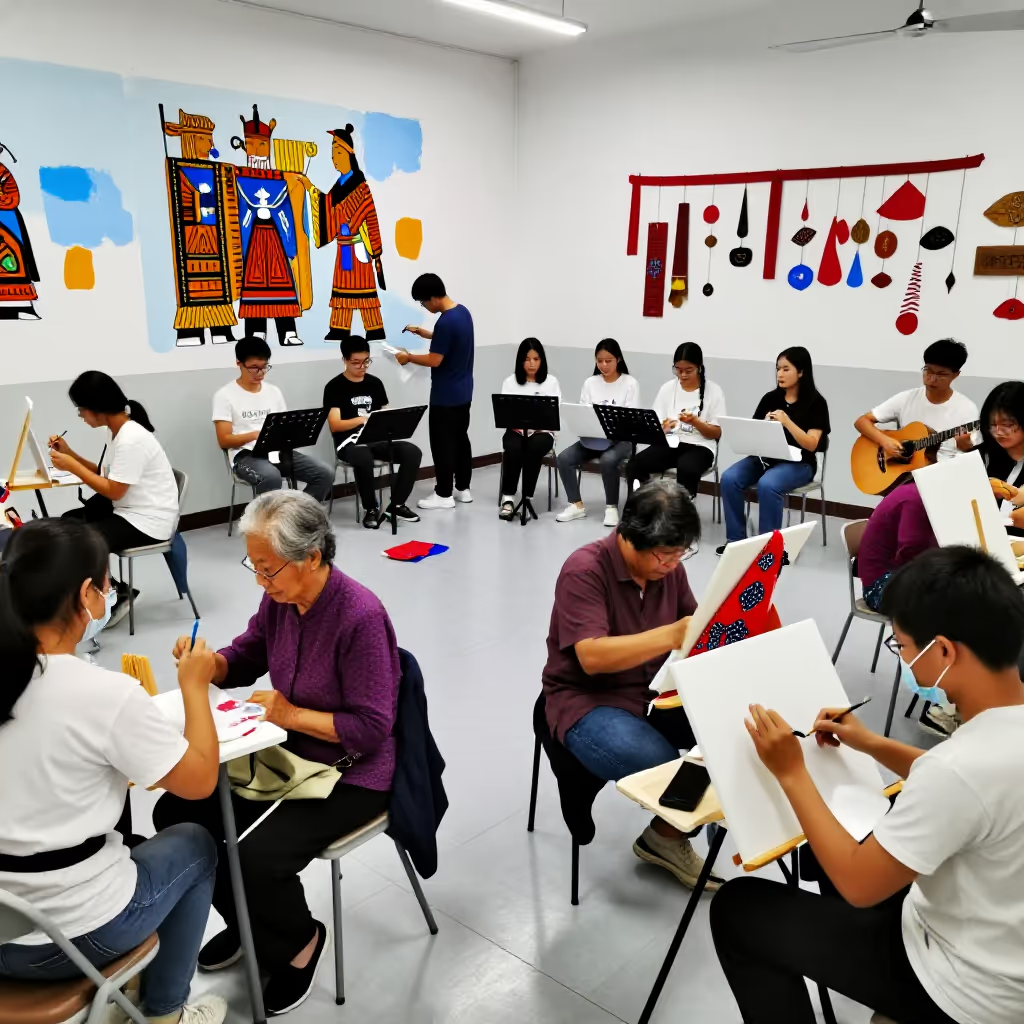
The medical measure of bringing a person back to life after cardiac arrest through chest compressions and rescue breathing.
example
Dank der schnellen Wiederbelebung durch die Ersthelfer hat der Mann überlebt.
Thanks to the quick resuscitation by the first responders, the man survived.
Usage tips
Word composition
The word is clearly structured: 'wieder' (again) + 'beleben' (to bring to life). The ending '-ung' turns the verb into a noun. So it describes the act of bringing something back to life or activating it again.
EXAMPLE
Die Wiederbelebung der alten Bahnstrecke würde der Region helfen.
The revival of the old railway line would help the region.
Related verb
'Wiederbelebung' (revival/resuscitation) is the noun form of the separable verb 'wiederbeleben' (to revive/resuscitate). Pay attention to word order: in a main clause, the prefix 'wieder' goes at the end.
EXAMPLE
Ein Team von Ärzten belebte den Patienten wieder.
A team of doctors resuscitated the patient.
Context clue
The context tells you whether the medical or figurative meaning is intended. Words like 'Notfall' (emergency), 'Herz' (heart), or 'Erste Hilfe' (first aid) point to medicine, while terms like 'Mode' (fashion), 'Tradition' (tradition), or 'Wirtschaft' (economy) point to the figurative meaning.
EXAMPLE
Die Wiederbelebung des Patienten war erfolgreich.
The resuscitation of the patient was successful.
Typical collocations (medicine)
In a medical context, 'Wiederbelebung' (resuscitation) is often combined with verbs like 'einleiten' (to initiate), 'durchführen' (to perform), or 'versuchen' (to attempt). People also speak of 'Maßnahmen zur Wiederbelebung' (resuscitation measures).
EXAMPLE
Die Sanitäter leiteten sofort die Wiederbelebung ein.
The paramedics immediately initiated resuscitation.
Typical collocations (culture)
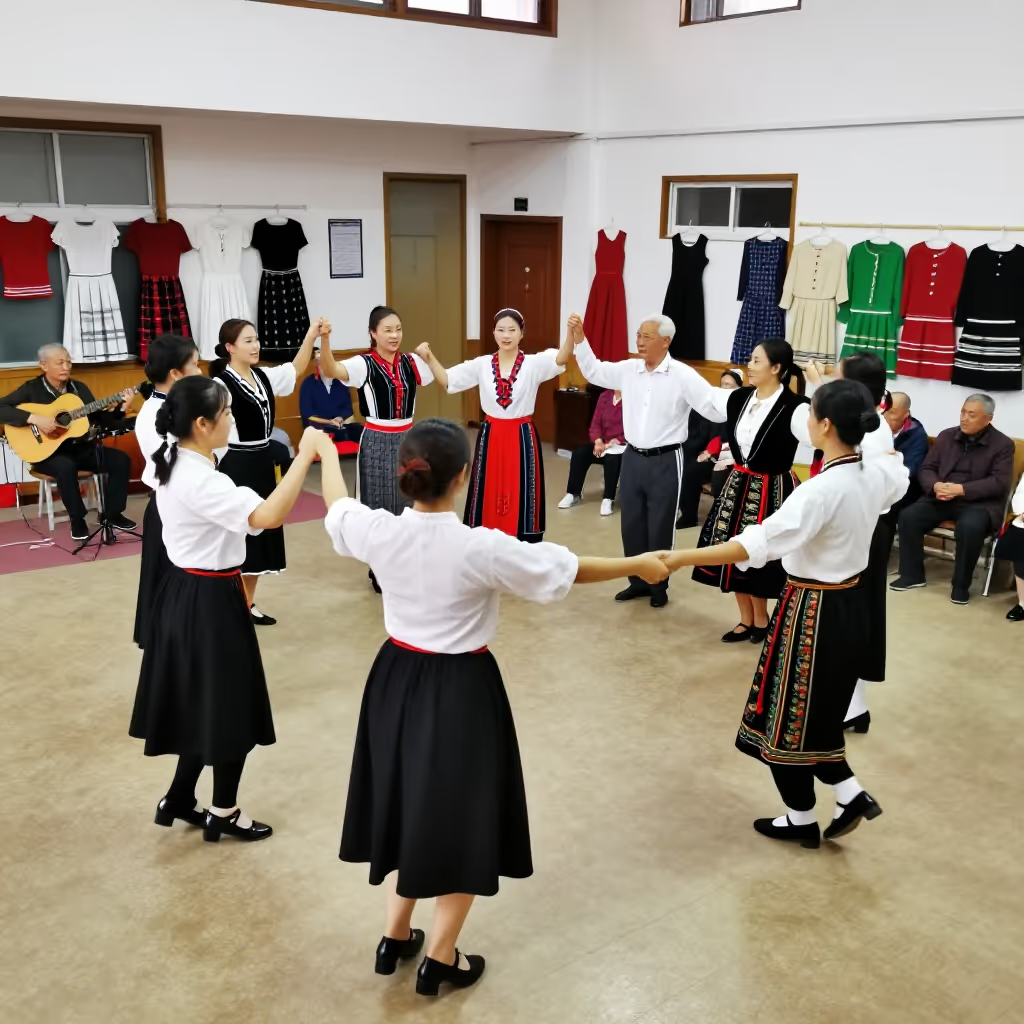
In the figurative meaning, the phrase 'eine Wiederbelebung erleben' or 'eine Wiederbelebung erfahren' (to experience a revival) is often used when something becomes popular again. The combination 'zur Wiederbelebung von etwas beitragen' (to contribute to the revival of something) is also common.
EXAMPLE
Das Interesse an alten Sprachen erlebt eine Wiederbelebung.
Interest in ancient languages is experiencing a revival.
Compare with
near_synonym · confusable
Wiederbelebung vs Comeback
comeback
'Comeback' and 'Wiederbelebung' can both mean that something is back after a break or after a period without interest. 'Comeback' is used especially for people in sports, music, or public life, but also for trends. It sounds lively and fits well in media and everyday language. 'Wiederbelebung' tends to mean that something is made active, popular, or important again, for example a tradition or an old fashion. The word sounds somewhat more formal and can also suggest something planned. The words can be confused when talking about trends. For a person, you usually say 'Comeback'; for a tradition, 'Wiederbelebung' is more likely. The medical meaning of 'Wiederbelebung' is not part of this relation.
Wiederbelebung
Die Stadt plant die Wiederbelebung des alten Marktes mit Musik und kleinen Geschäften.
The city is planning the revival of the old market with music and small shops.
Comeback
Nach zwei Jahren Pause feiert die Sängerin ein großes Comeback.
After a two-year break, the singer is celebrating a major comeback.