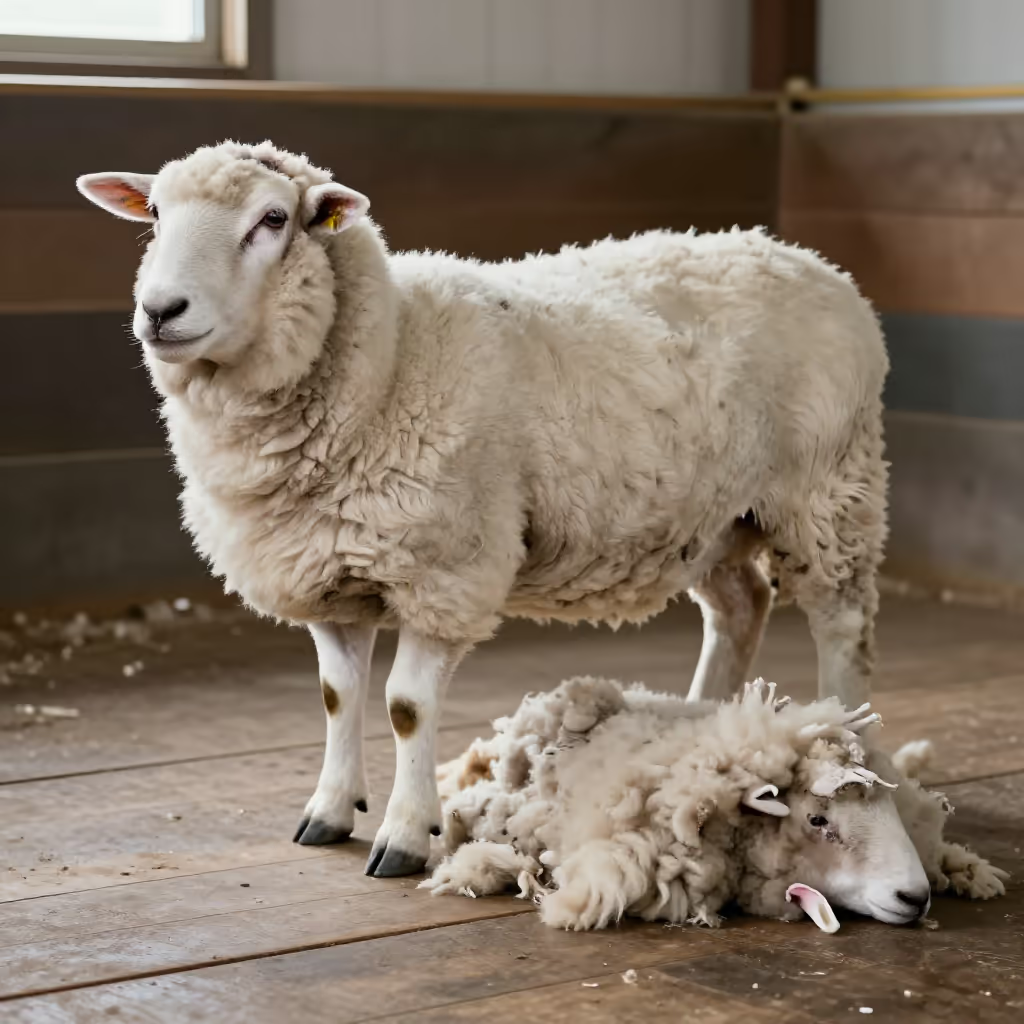
The soft, dense hair of sheep and other animals (e.g., goats, alpacas) that is processed into yarn and fabric.
example
Dieser Mantel aus reiner Schurwolle hält im Winter sehr warm.
This coat made of pure new wool keeps you very warm in winter.
Usage tips
Word family
The adjective 'wollen' (woolen) is derived from the noun 'die Wolle' (wool). It means 'made of wool' and is often used for clothing.
EXAMPLE
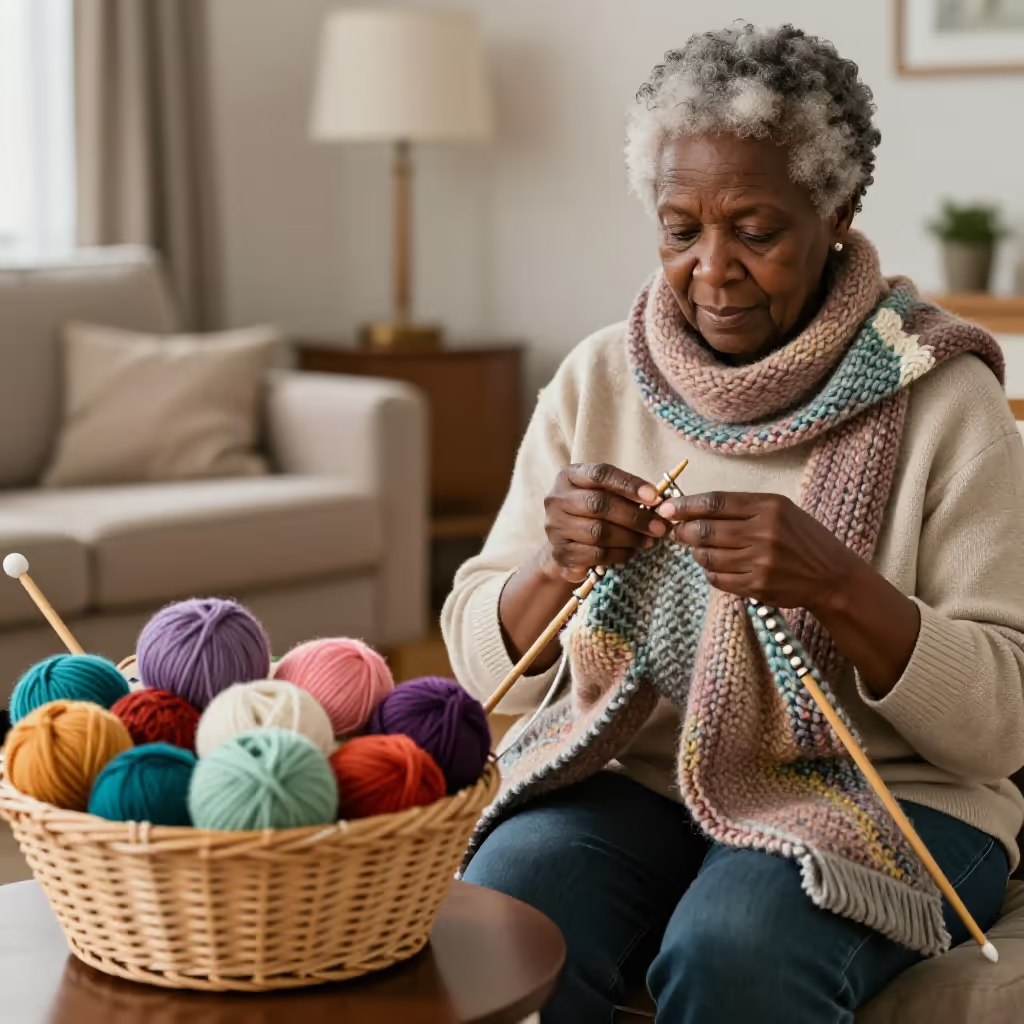
Ich trage im Winter gerne einen wollenen Schal.
I like wearing a woolen scarf in winter.
Fixed expression
The idiom 'sich in die Wolle kriegen' (to get into a fight) is reflexive. The reflexive pronoun 'sich' must be adjusted to match the subject.
EXAMPLE
Warum habt ihr euch schon wieder in die Wolle gekriegt?
Why have you gotten into a fight again?
Context clue
You can always recognize the idiomatic meaning 'sich streiten' (to argue) by the verb 'kriegen' (to get) or 'geraten' (to get into) together with the reflexive structure 'sich in die Wolle...' (to get into a fight...).
EXAMPLE
Die Nachbarn sind sich gestern Abend richtig in die Wolle geraten.
The neighbors really got into a fight yesterday evening.
Register
The idiom 'sich in die Wolle kriegen' (to get into a fight) is colloquial. It is used in informal conversations, but not in formal texts.
EXAMPLE
Ich will mich mit dir nicht schon wieder in die Wolle kriegen.
I don't want to get into a fight with you again.
Typical collocations
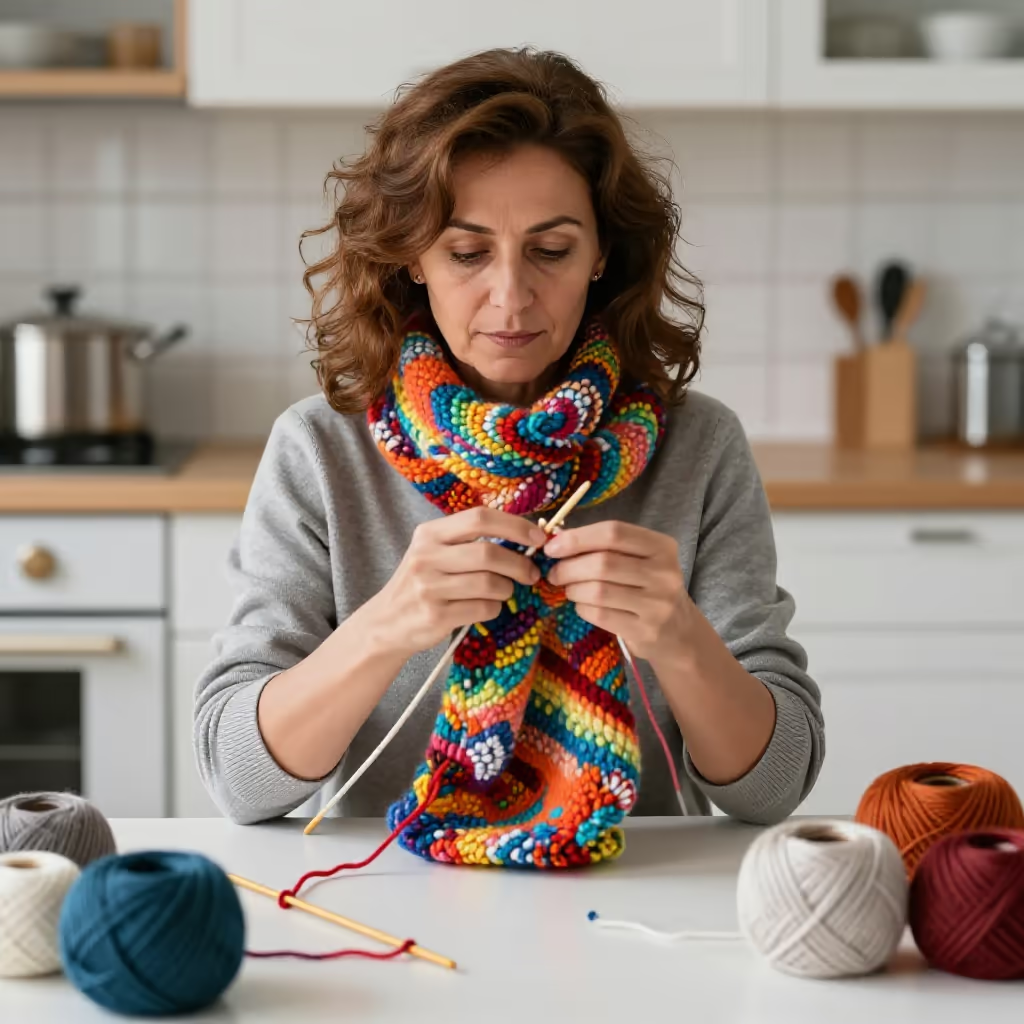
When 'Wolle' (wool/yarn) means yarn for knitting, people often say 'ein Knäuel Wolle' (a ball of yarn). A 'Knäuel' is the wound-up form of the yarn.
EXAMPLE
Meine Oma hat mir beigebracht, wie man mit Wolle und Nadeln strickt.
My grandma taught me how to knit with yarn and needles.
Compare with
near_synonym · confusable
Wolle vs Haar
hair
'das Haar' and 'die Wolle' can both refer to thread-like parts of humans or animals. 'Haar' is the general word for individual hairs, especially on humans but also on animals. 'Wolle' mainly means the soft, dense hair of sheep or similar animals. In addition, 'Wolle' is also the yarn used for knitting. Learners may confuse the words because wool is made from animal hair. But for human head hair, you do not say 'Wolle'. In colloquial German, there are also similar idioms: 'sich in die Haare geraten' and 'sich in die Wolle kriegen' both mean that people get into an argument.