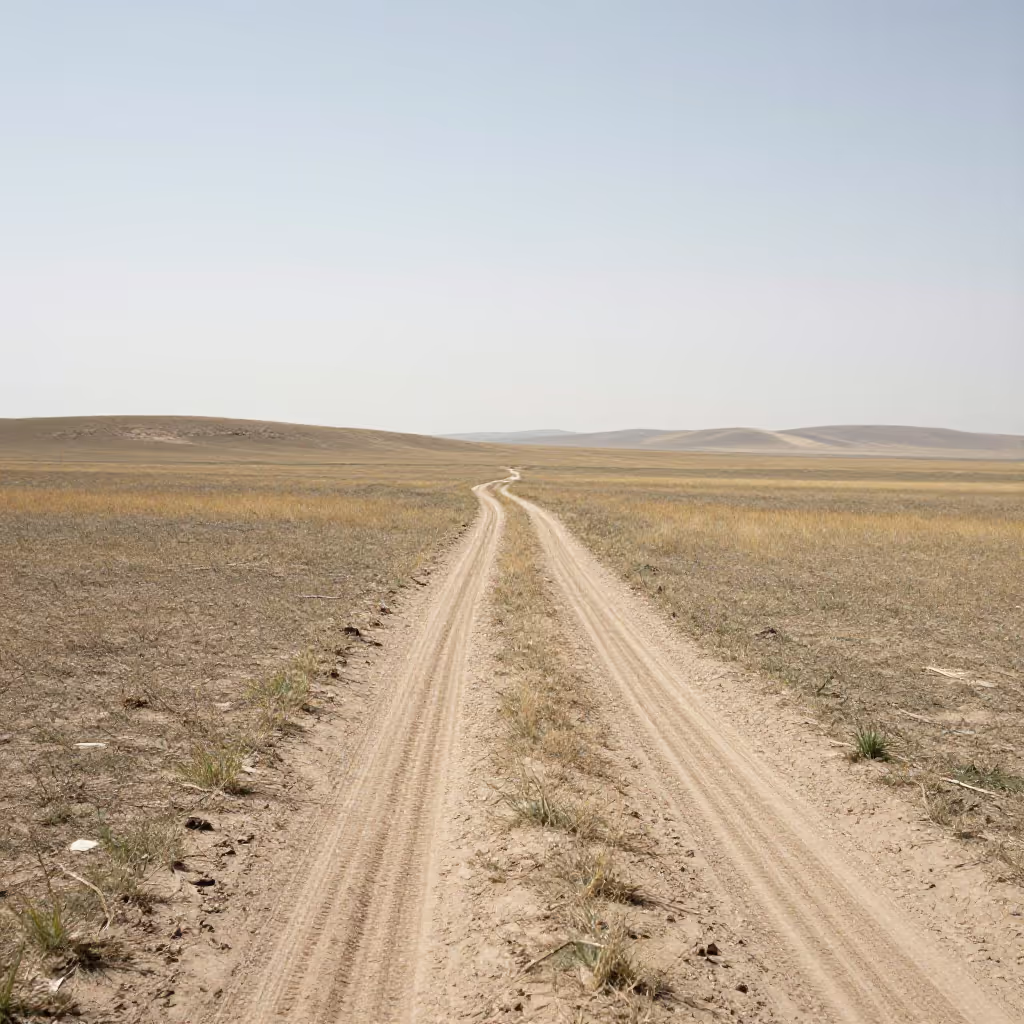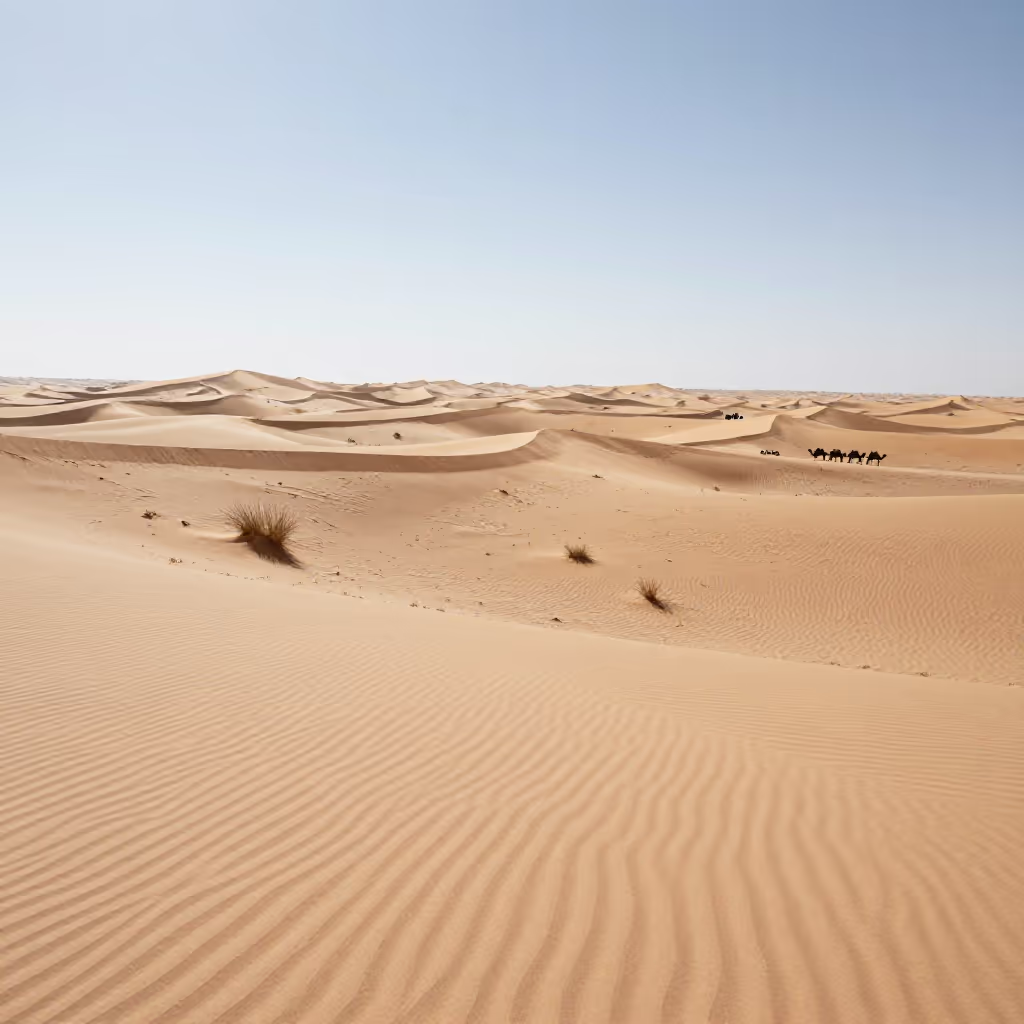
A very large, dry landscape where there are hardly any plants because it rains only very rarely. Deserts can consist of sand, rock, or ice.
example
Die Sahara ist die größte Trockenwüste der Erde.
The Sahara is the largest hot desert on Earth.

Usage tips
Word family
'Die Wüste' (the desert) is the noun related to the adjective 'wüst', which means 'desolate', 'chaotic', or 'empty'. This connection helps you understand both the meaning of the landscape and the figurative meaning of a chaotic place.
EXAMPLE
Nach der Party sah die Küche einfach nur wüst aus.
After the party, the kitchen simply looked chaotic.
Typical collocations
In a geographical context, 'Wüste' (desert) is often combined with verbs of movement. Typical phrases are 'durch die Wüste reisen' (to travel through the desert), 'in der Wüste wandern' (to hike/walk in the desert), or 'die Wüste durchqueren' (to cross the desert).
EXAMPLE
Sie planten, mit Kamelen durch die Wüste zu reiten.
They planned to ride through the desert on camels.
Context clue
You can recognize the figurative meaning by the fact that 'Wüste' (desert/wasteland) refers to a place that cannot actually be a desert, such as a room or a desk. It then describes great disorder or a feeling of emptiness.
EXAMPLE
Dein Schreibtisch ist eine einzige Wüste! Räum bitte auf.
Your desk is a total wasteland! Please tidy it up.
Fixed expression
The expression 'jemanden in die Wüste schicken' is a fixed idiom. It means to dismiss a person, send them away, or end a relationship with them.
EXAMPLE
Wegen seiner Unzuverlässigkeit hat die Firma ihn in die Wüste geschickt.
Because of his unreliability, the company sent him packing.
Compare with
near_synonym · confusable
Wüste vs Chaos
chaos
'das Chaos' and 'die Wüste' can both describe a bad state in a figurative sense. 'Chaos' emphasizes that everything is in a mess and you cannot keep track of things. 'Wüste' emphasizes more that a place seems empty, bleak, or completely devastated; sometimes it can also refer to a chaotic situation. The words can be confused when describing a messy place. If the disorder is the main point, 'Chaos' is more natural. If something looks empty, abandoned, or as if it has been devastated, 'Wüste' fits better.
Wüste
Nach dem Flohmarkt sah der Platz aus wie eine Wüste.
After the flea market, the square looked like a wasteland.
Chaos
Vor der Prüfung herrschte im Klassenzimmer großes Chaos.
Before the exam, there was major chaos in the classroom.