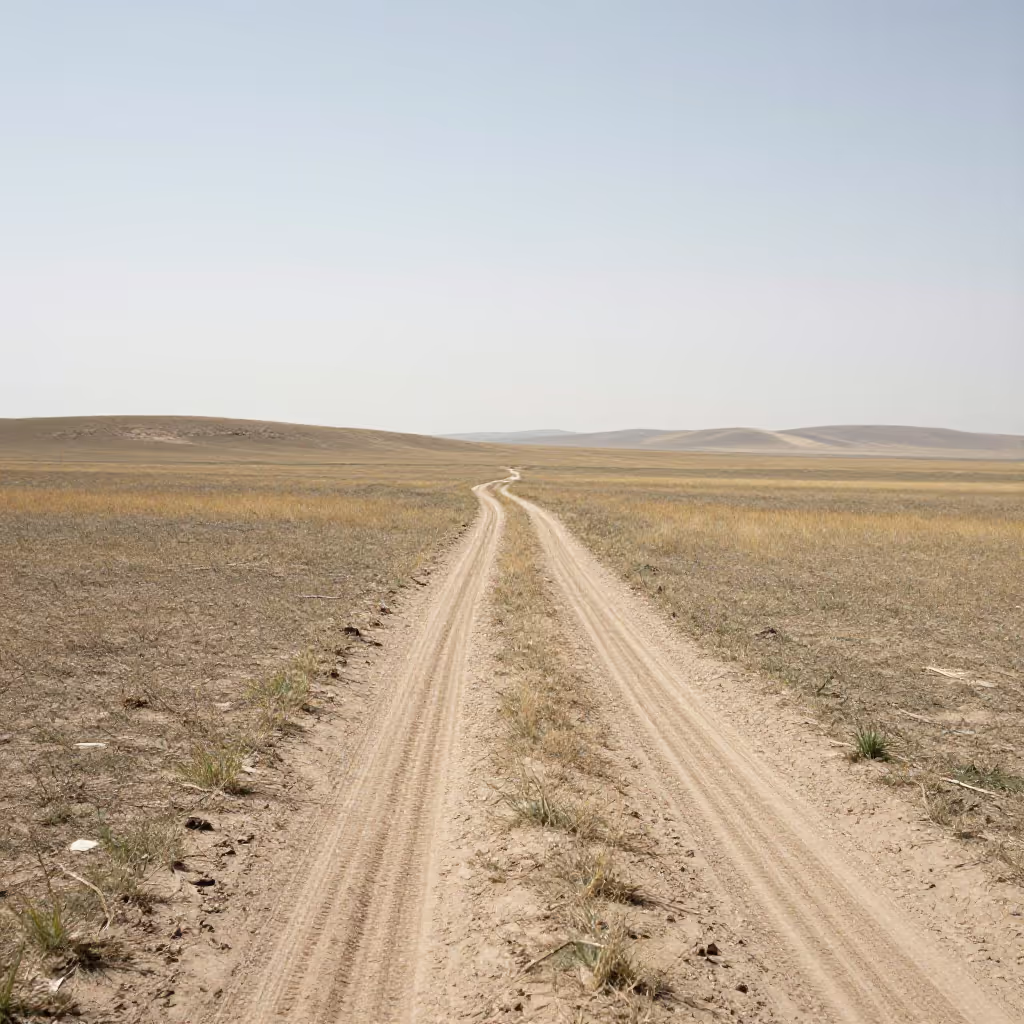
A lonely, deserted, and often barren landscape or area.
example
Sie fuhren stundenlang durch die isländische Einöde, ohne einem anderen Auto zu begegnen.
They drove for hours through the Icelandic wasteland without encountering another car.

Usage tips
Word composition
The word is made up of 'ein' (one) and the adjective 'öde' (barren, bleak, boring). So it describes a place or situation shaped by one single, bleak quality.
EXAMPLE
Die Wüste ist eine Sand-Einöde.
The desert is a sandy wasteland.
Typical adjectives
To describe the landscape, 'Einöde' is often combined with adjectives such as 'karg' (barren), 'trostlos' (bleak), 'menschenleer' (deserted), or 'eisig' (icy).
EXAMPLE
Sie wanderten tagelang durch die trostlose Einöde.
They hiked for days through the bleak wasteland.
Figurative use
In a figurative sense, 'Einöde' describes a situation perceived as empty and lacking appeal. For example, people speak of a 'kulturelle Einöde' (cultural wasteland) or a 'geistige Einöde' (intellectual wasteland).
EXAMPLE
Nach dem Umzug empfand er sein neues Leben als soziale Einöde.
After the move, he perceived his new life as a social wasteland.
Compare with
near_synonym · confusable
Einöde vs Wüste
desert
'die Wüste' and 'die Einöde' can both describe an empty, barren, or bleak area. But 'Wüste' first of all means a specific landscape with very little rain and hardly any plants. 'Einöde' emphasizes more strongly that a place seems lonely, deserted, and lacking appeal. That is why a remote village or a boring area can also be described as an 'Einöde', even if it is not a real desert. The words can be confused especially in a figurative sense, when the topic is emptiness or bleakness. For climate and nature, 'Wüste' is more precise; for loneliness and emptiness, 'Einöde' often fits.
Einöde
Nach der Schließung des kleinen Bahnhofs wirkte der Ort wie eine Einöde.
After the small train station closed, the place felt like a wasteland.
Wüste
In der Wüste findet man nur selten Wasser und Schatten.