

wurzeln
to be rooted
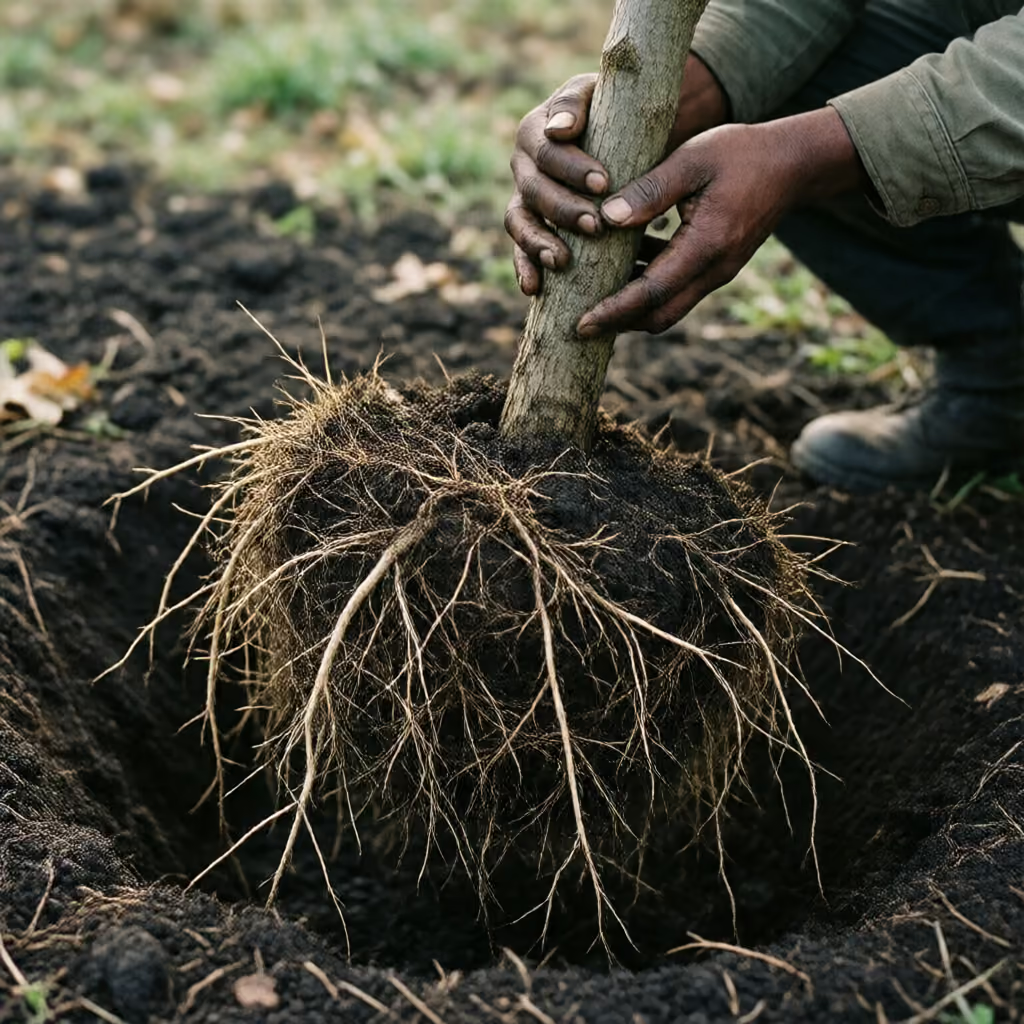
For a plant to form roots and be anchored in the soil.
EXAMPLE
Der alte Baum wurzelt tief im Boden.
The old tree is rooted deep in the soil.
to be rooted
wurzeln – wurzelte – hat gewurzelt
Loading your saved state.
to be rooted
For a plant to form roots and be anchored in the soil.
Der alte Baum wurzelt tief im Boden.
The old tree is rooted deep in the soil.

to be rooted in
To have its origin or cause in something.
Der Konflikt wurzelt in einem alten Missverständnis.
The conflict is rooted in an old misunderstanding.
| ich | wurzle wurzele |
|---|---|
| du | wurzelst |
| er/sie/es | wurzelt |
| wir | wurzeln |
| ihr | wurzelt |
| sie | wurzeln |
| ich | wurzelte |
|---|---|
| du | wurzeltest |
| er/sie/es | wurzelte |
| wir | wurzelten |
| ihr | wurzeltet |
| sie | wurzelten |
| ich | habe gewurzelt |
|---|---|
| du | hast gewurzelt |
| er/sie/es | hat gewurzelt |
| wir | haben gewurzelt |
| ihr | habt gewurzelt |
| sie | haben gewurzelt |
| du | wurzel! wurzle!, wurzele! |
|---|---|
| ihr | wurzelt! |
| Sie | wurzeln Sie! |
| ich | hatte gewurzelt |
|---|---|
| du | hattest gewurzelt |
| er/sie/es | hatte gewurzelt |
| wir | hatten gewurzelt |
| ihr | hattet gewurzelt |
| sie | hatten gewurzelt |
| ich | werde wurzeln |
|---|---|
| du | wirst wurzeln |
| er/sie/es | wird wurzeln |
| wir | werden wurzeln |
| ihr | werdet wurzeln |
| sie | werden wurzeln |
| ich | wurzele wurzle |
|---|---|
| du | wurzelst wurzlest |
| er/sie/es | wurzele wurzle |
| wir | wurzeln |
| ihr | wurzelt wurzlet |
| sie | wurzeln |
Used for reported speech.
| ich | wurzelte |
|---|---|
| du | wurzeltest |
| er/sie/es | wurzelte |
| wir | wurzelten |
| ihr | wurzeltet |
| sie | wurzelten |
Used for wishes and “would”.
| infinitive | wurzeln |
|---|---|
| with zu | zu wurzeln |
| present participle | wurzelnd |
| past participle | gewurzelt |
'wurzeln' (to be rooted) belongs to the same word family as 'Wurzel' (root). This connection helps you recognize both the literal meaning and the figurative meaning of something having its origin in something else.
Die junge Pflanze wurzelt noch nicht tief.
The young plant is not yet deeply rooted.
With 'wurzeln' (to be rooted), words such as 'Boden' (soil), 'Erde' (earth), or 'Baum' (tree) usually indicate the literal meaning. Abstract words such as 'Konflikt' (conflict), 'Tradition' (tradition), or 'Problem' (problem) often point to the meaning 'seinen Ursprung in etwas haben' (to have its origin in something).
Die Tradition wurzelt tief in der Geschichte der Region.
The tradition is rooted deep in the history of the region.
In its figurative meaning, 'wurzeln' (to be rooted) is often used with 'in' and the dative case. The thing in which something has its origin is therefore expressed using a dative form.
Die Unsicherheit wurzelt in fehlendem Vertrauen.
The uncertainty is rooted in a lack of trust.