

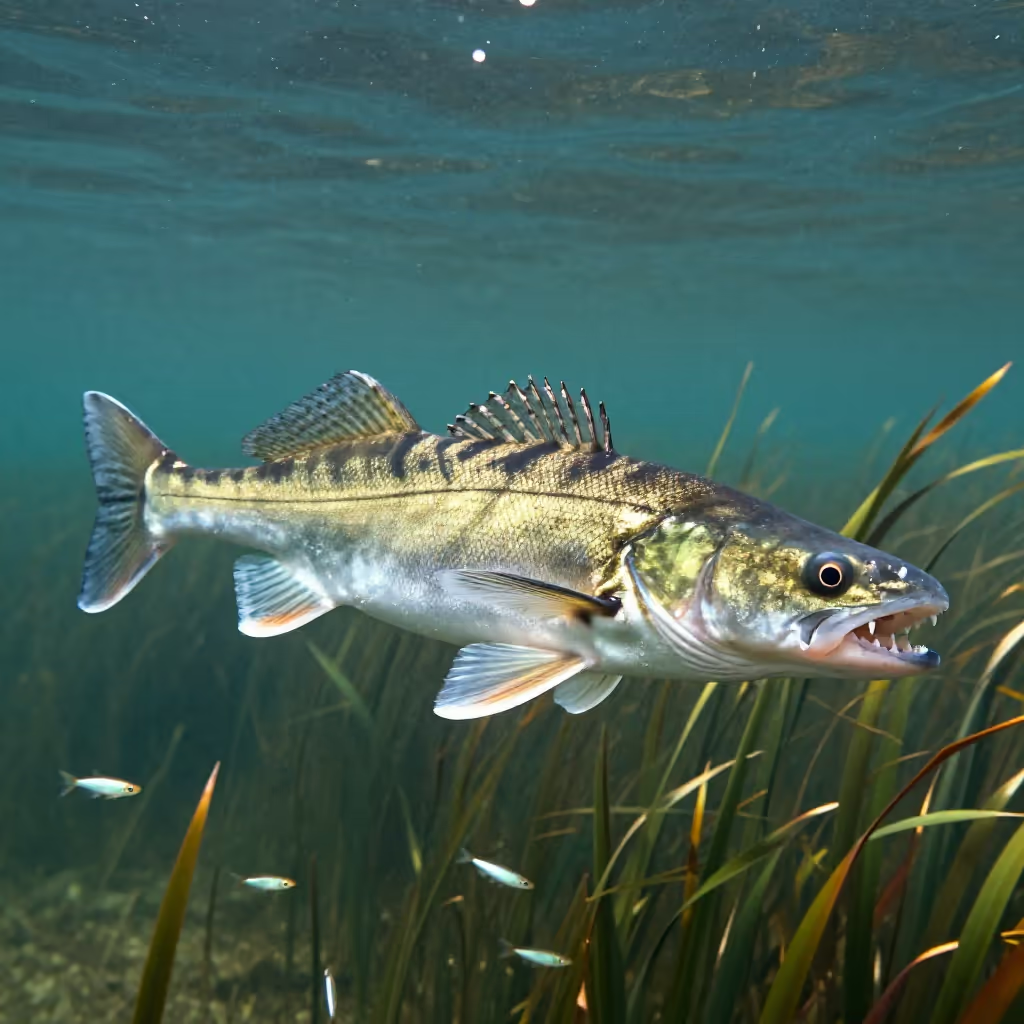
A predatory fish from the perch family that lives in European freshwater and is highly valued as a food fish.
example
Im Restaurant bestellte sie gebratenes Zanderfilet auf Rahmwirsing.
At the restaurant, she ordered fried zander fillet on creamed savoy cabbage.
Usage tips
Two main contexts
The word 'Zander' (zander/pike-perch) is mainly used in two contexts: in fishing and biology as a term for the living fish, or in cooking as a food fish.
EXAMPLE
Der Angler war stolz auf den großen Zander, den er gefangen hat.
The angler was proud of the large zander he had caught.
Typical collocations
When 'Zander' (zander) is meant as food, it is often referred to as 'Zanderfilet' (zander fillet). Common preparation methods are 'gebratener Zander' (fried zander) or 'Zander auf der Haut gebraten' (zander fried on the skin).
EXAMPLE
Ich hätte gern das Zanderfilet mit dem saisonalen Gemüse.
I would like the zander fillet with the seasonal vegetables.
Use without an article
On menus or when describing a dish, 'Zander' (zander) is often used without an article. This is typical for the names of ingredients or dishes.
EXAMPLE
Heute im Angebot: Frischer Zander mit Dillsoße.
Today's special: fresh zander with dill sauce.
Compare with
confusable
Zander vs Hecht
pike
'Hecht' and 'Zander' both refer to predatory freshwater fish. They can therefore easily be confused, especially when talking about fishing, lakes, or fish dishes. A 'Hecht' (pike) is known for its long body and large mouth. A 'Zander' (zander / pike-perch) belongs to the perch family and is often mentioned as a food fish. For learners, the important point is: both are fish, but they are not synonyms. If you are talking about the exact species of fish, you need to use the right word.
Zander
Im Restaurant bestellt Maria Zander mit Kartoffeln und Salat.
At the restaurant, Maria orders zander with potatoes and salad.
Hecht
Im flachen Wasser sah Paul einen großen Hecht zwischen den Pflanzen.
In the shallow water, Paul saw a large pike among the plants.