

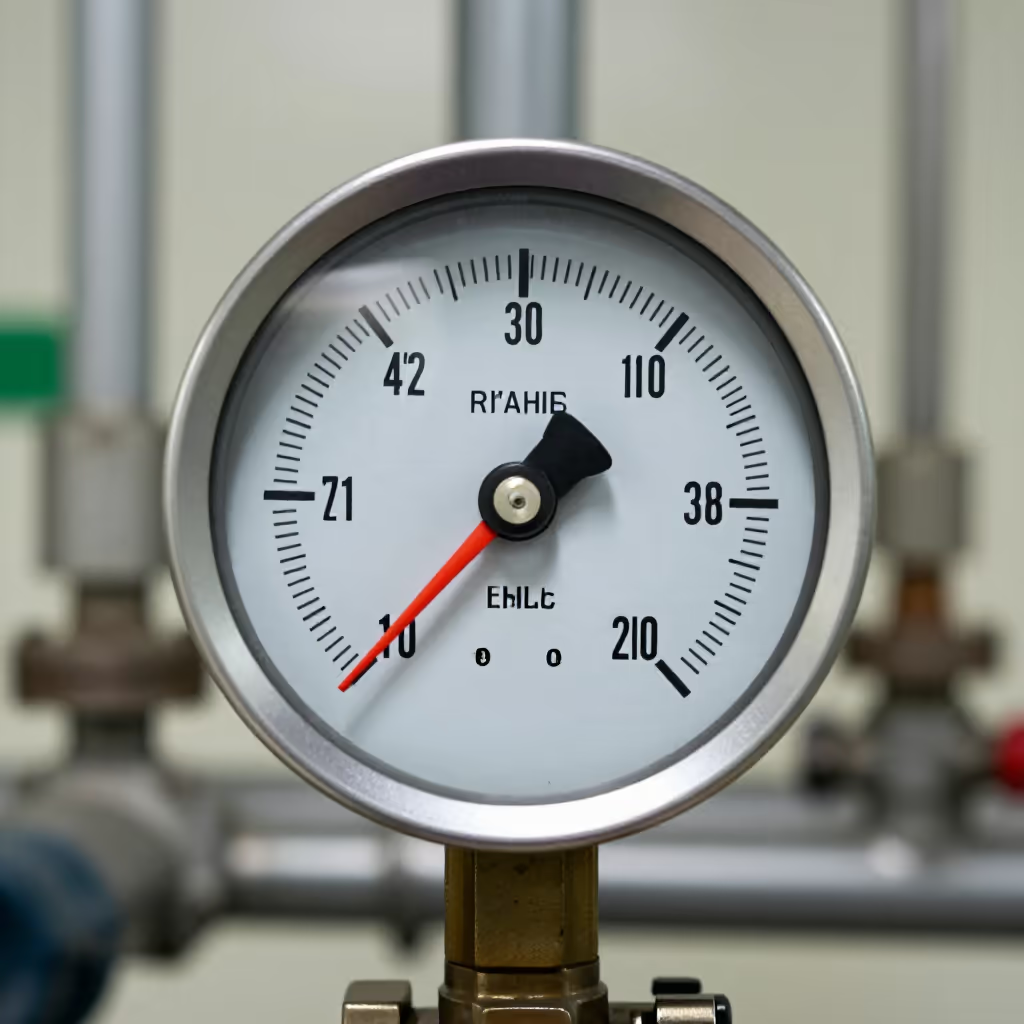
der Zeiger
hand / pointer
The movable part of a clock or measuring instrument that indicates the time or a measured value on a scale.
EXAMPLE
Der große Zeiger der Uhr zeigt auf die Zwölf.
The big hand of the clock points to twelve.
hand / pointer
Loading your saved state.
hand / pointer
The movable part of a clock or measuring instrument that indicates the time or a measured value on a scale.
Der große Zeiger der Uhr zeigt auf die Zwölf.
The big hand of the clock points to twelve.

signs point to
A figurative expression that indicates an upcoming development or a particular situation.
Nach den jüngsten Ereignissen stehen die Zeiger auf Sturm.
After the recent events, the signs point to trouble.
The word 'Zeiger' is derived from the verb 'zeigen' (to show/point). So a 'Zeiger' is literally a thing that indicates something—whether the time on a clock or a value on a measuring device.
Ein Kompass hat einen Zeiger, der immer nach Norden zeigt.
A compass has a pointer that always points north.
With clocks, people speak of the 'großer Zeiger' (big hand, minutes), 'kleiner Zeiger' (small hand, hours), and 'Sekundenzeiger' (second hand). A 'Zeiger' can 'sich bewegen' (move), 'stehen' (stand/be positioned), or 'auf eine Zahl zeigen' (point to a number).
Der kleine Zeiger steht auf der Drei und der große auf der Sechs.
The small hand is on the three and the big hand is on the six.
The idiom 'die Zeiger stehen auf ...' is always used in the plural and combined with a noun that describes a situation. Typical nouns are 'Sturm' (storm/trouble), 'Konfrontation' (confrontation), or 'Veränderung' (change).
Nach den schlechten Quartalszahlen stehen die Zeiger in der Firma auf Sparen.
After the poor quarterly figures, the signs in the company point to cost-cutting.
You can almost always recognize the figurative meaning from the fixed expression 'die Zeiger stehen auf...' (the signs point to...). In all other cases, especially when clocks or measuring instruments are involved, the literal meaning is intended.
Der Zeiger des Messgeräts schlug plötzlich aus.
The pointer of the measuring device suddenly jumped.
sign / symbol
Das Zeichen can generally point to an upcoming development. Der Zeiger has this meaning in the figurative expression „die Zeiger stehen auf“ (the signs point to). Outside this expression, Zeichen is generally the better choice for indications of a development.

Nach dem ruhigen Gespräch stehen die Zeiger auf Versöhnung.
After the calm conversation, the signs point toward reconciliation.
Nach dem ruhigen Gespräch gibt es erste Zeichen für eine Versöhnung.
After the calm conversation, there are the first signs of reconciliation.