An official school document that certifies a student's grades and performance for a certain period of time.
example
Am letzten Schultag bekommen alle Kinder ihr Zeugnis.
On the last day of school, all the children get their report cards.

Usage tips
Word family
The word 'Zeugnis' (certificate / testimony) belongs to the word family of 'der Zeuge' (the witness) and 'zeugen' (to testify / to bear witness). A 'Zeugnis' is therefore always something that attests to or proves a fact—whether it is school grades, work performance, or a historical event.
EXAMPLE
Die alten Ruinen zeugen von einer reichen Geschichte.
The old ruins bear witness to a rich history.
Typical collocations
In a school context, 'Zeugnis' (report card) is often combined with the verbs 'bekommen' (to get), 'erhalten' (to receive), or 'bekommen' (to get). Adjectives such as 'gut' (good), 'schlecht' (bad), or 'mittelmäßig' (average) describe the performance.
EXAMPLE
Sie hat für ihre harte Arbeit ein sehr gutes Zeugnis bekommen.
She got a very good report card for her hard work.
Typical documents
In this meaning, 'Zeugnis' (certificate / reference) is often combined with another word to form a compound that specifies the type of document. Common examples are 'Arbeitszeugnis' (work reference), 'Gesundheitszeugnis' (health certificate), or 'Führungszeugnis' (certificate of good conduct).
EXAMPLE
Für die Bewerbung brauche ich ein aktuelles Arbeitszeugnis von meinem letzten Arbeitgeber.
For the application, I need a current work reference from my last employer.
Fixed expression
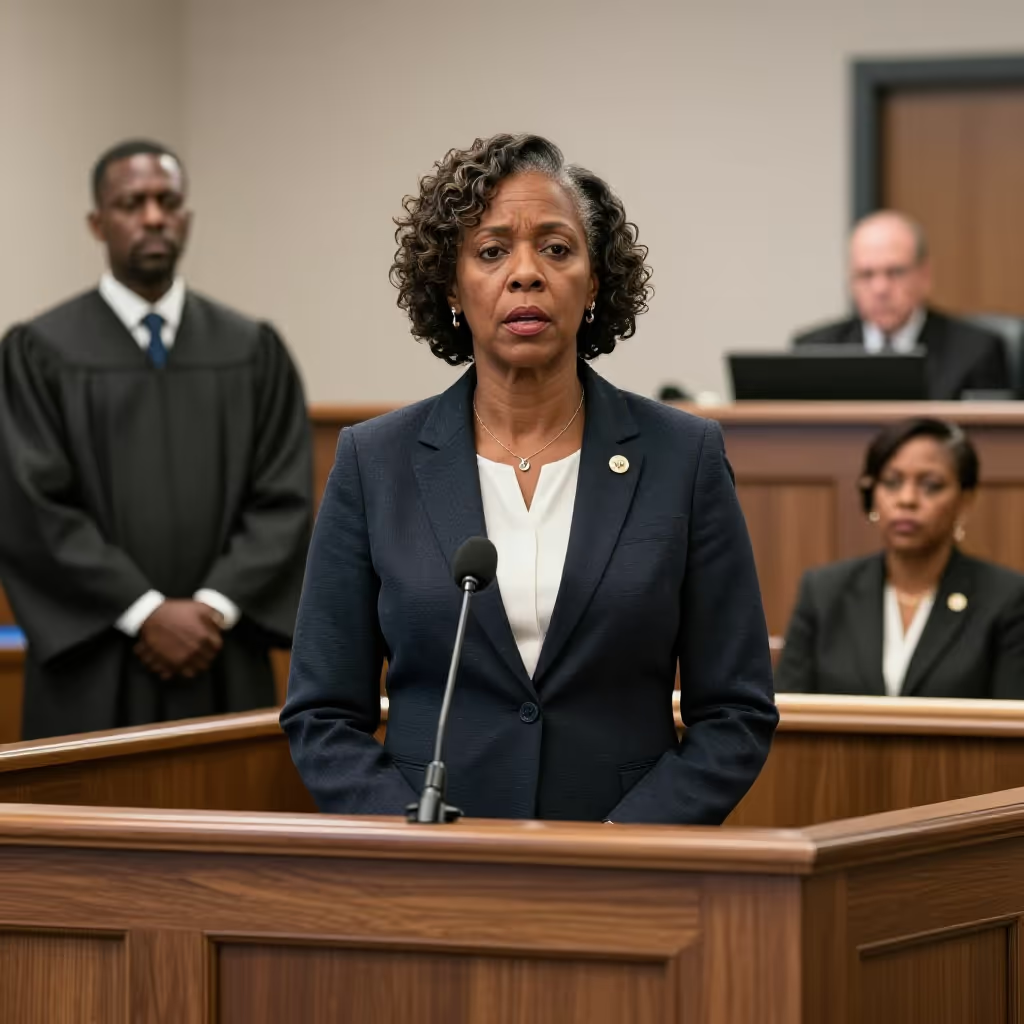
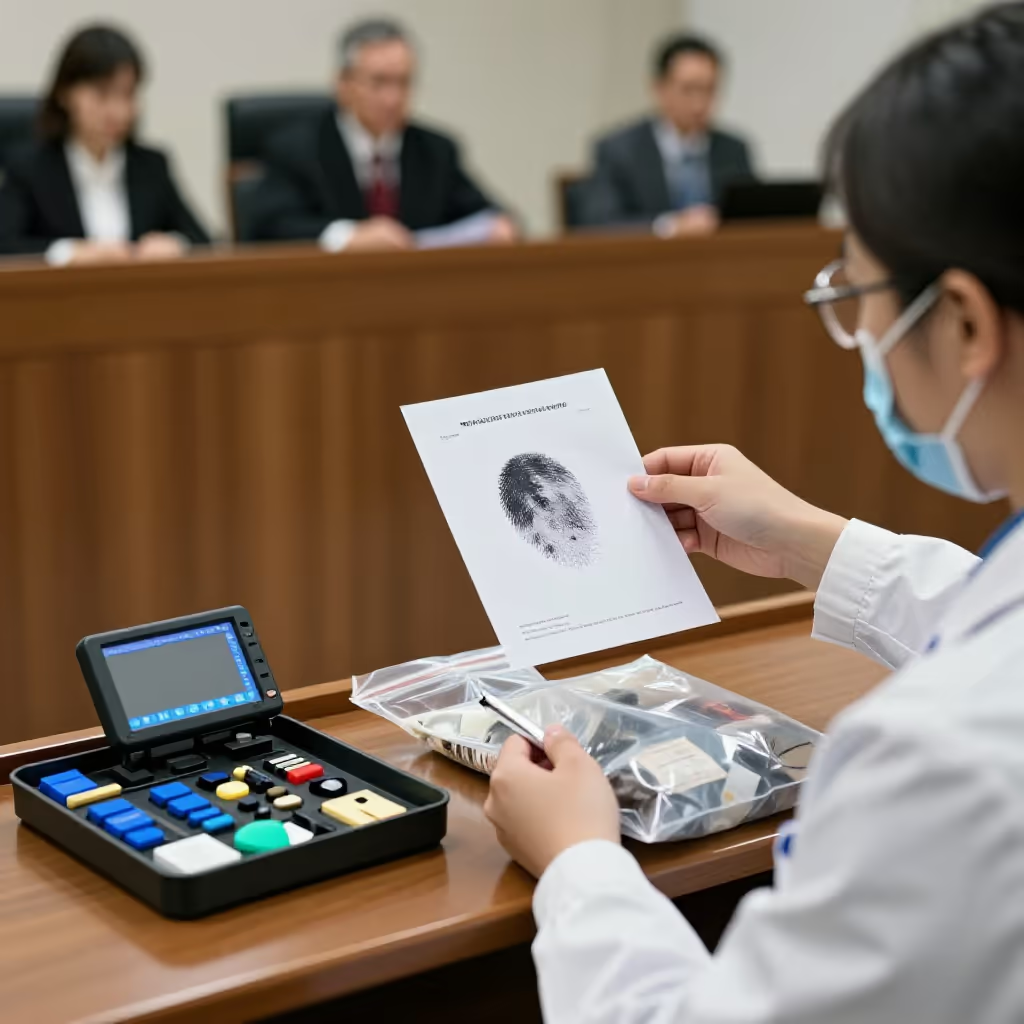
When it comes to a statement in court, the fixed expression 'Zeugnis ablegen' (to give testimony) is almost always used. The verb 'ablegen' is a fixed partner of the noun here.
EXAMPLE
Der Hauptzeuge musste als Erster sein Zeugnis ablegen.
The main witness had to give his testimony first.
Elevated style
In the meaning of 'Beweis' (proof) or 'Beleg' (evidence), 'Zeugnis' (evidence / testimony) belongs to elevated written language. It is often found in historical, artistic, or philosophical texts.
EXAMPLE
Die Architektur des Gebäudes ist ein beeindruckendes Zeugnis seiner Zeit.
The architecture of the building is an impressive testimony to its time.
Sentence structure with preposition
When 'Zeugnis' (evidence / testimony) serves as proof of something, it is often combined with the prepositions 'von + dative' (of / to) or 'für + accusative' (for). The construction is typically 'ein Zeugnis von/für etwas sein' (to be evidence/testimony of/for something).
EXAMPLE
Sein Engagement ist ein Zeugnis von seinem starken Charakter.
His commitment is evidence of his strong character.
Compare with
near_synonym · confusable
Zeugnis vs Zeichen
sign / symbol
'das Zeichen' and 'das Zeugnis' can both show that something is or was a certain way. 'Zeichen' is a general indication that points to a condition or a development. 'Zeugnis' sounds more like evidence or proof of something. It can also be an official document, but in this relation the focus is on the figurative meaning. They can be confused when something visibly points to a quality. For a simple indication, you would more likely say 'Zeichen'; for stronger evidence, 'Zeugnis' is more likely.
Zeugnis
Die alten Mauern sind ein Zeugnis der langen Geschichte dieser Stadt.
The old walls are evidence of this city's long history.
Zeichen
Die dunklen Wolken sind ein Zeichen dafür, dass bald Regen kommt.
The dark clouds are a sign that rain is coming soon.