

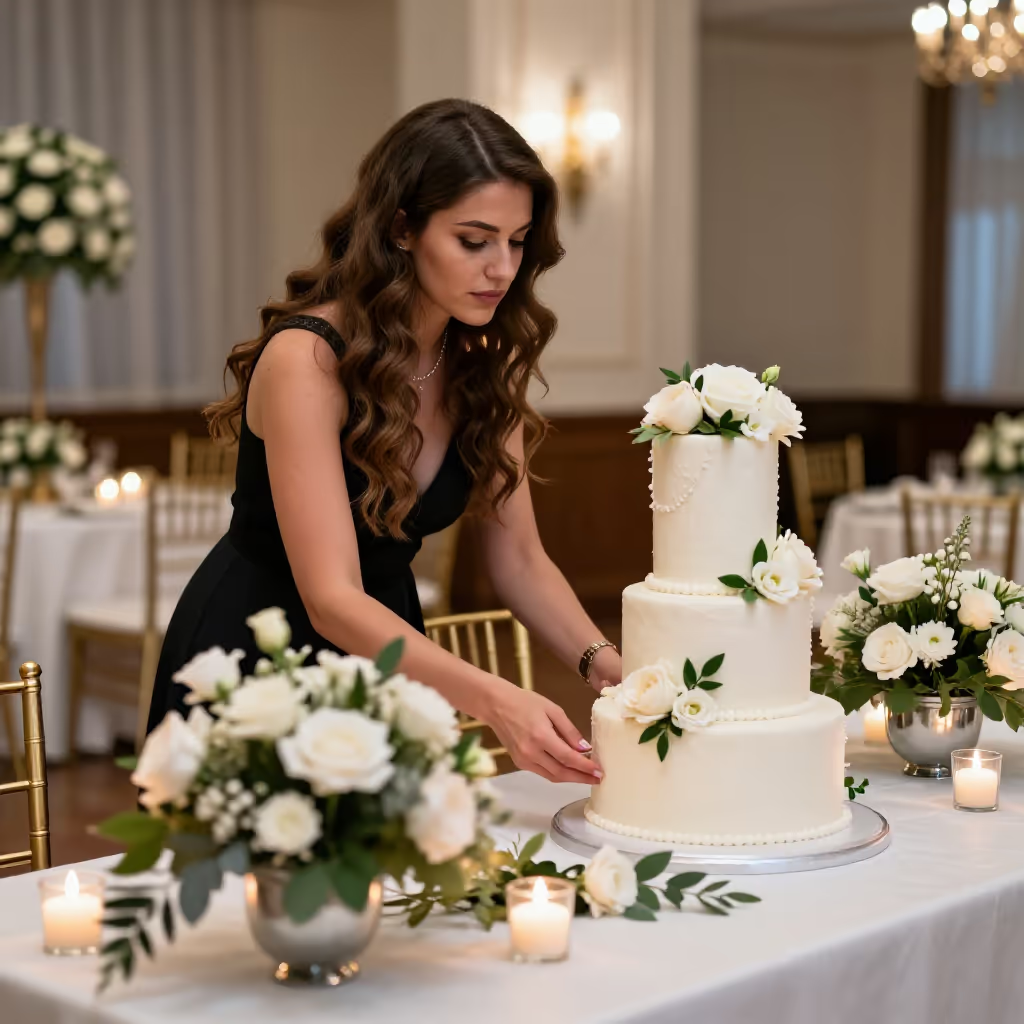
zieren
to adorn
To embellish or decorate something in order to make it more beautiful.
EXAMPLE
Ein wunderschönes Gemälde ziert die Wand über dem Kamin.
A beautiful painting adorns the wall above the fireplace.
to adorn / be coy
Loading your saved state.
to adorn
To embellish or decorate something in order to make it more beautiful.
Ein wunderschönes Gemälde ziert die Wand über dem Kamin.
A beautiful painting adorns the wall above the fireplace.

to be coy
To hesitate to accept or do something out of, often affected, shyness or modesty.
Zier dich nicht so und nimm dir doch noch ein Stück von dem leckeren Kuchen!
Don't be so coy and go ahead and have another piece of that delicious cake!
Pay attention to the reflexive pronoun 'sich' (oneself). Without 'sich,' 'zieren' means to adorn. With 'sich,' 'sich zieren' means to hesitate out of shyness or for show.
Alte Bäume zieren den Park.
Old trees adorn the park.
When 'zieren' means 'schmücken' (to decorate/adorn), the decoration is the subject of the sentence, and the place or object being decorated is the accusative object. This structure is typical of an elevated register.
Zahlreiche Trophäen zieren sein Büro.
Numerous trophies adorn his office.
The command 'Zier dich nicht!' (Don't be coy!) is a very common colloquial expression. You say it to someone who hesitates to accept an offer, in order to encourage them.
Ach komm, zier dich nicht so und sing mit uns!
Oh come on, don't be so coy and sing with us!
to decorate
Both Schmücken and zieren can refer to making something more beautiful with decorations. Schmücken is the usual, broad verb for the active action. Zieren often sounds more literary and frequently describes a decoration that is already visibly attached to a place or object.

Während des Festes ziert ein Blumenkranz die Eingangstür.
During the celebration, a wreath of flowers adorns the front door.
Für das Fest schmückt Mia die Eingangstür mit einem Blumenkranz.
For the celebration, Mia decorates the front door with a wreath of flowers.