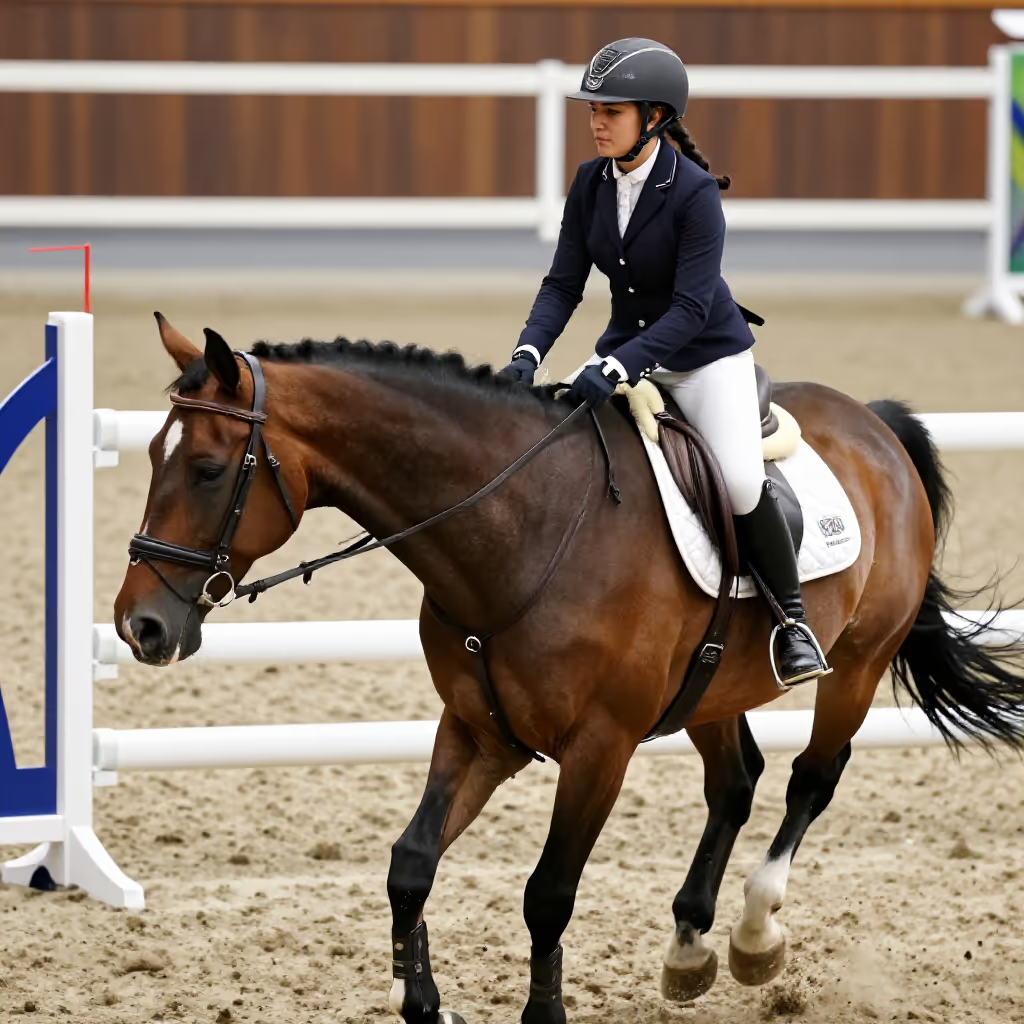
A long strap, usually made of leather, attached to the bit of a riding or draft animal, especially a horse, in order to steer and control it. It is almost always used in the plural.
example
Der Reiter hielt die Zügel fest in der Hand.
The rider held the reins firmly in his hand.

Usage tips
The central metaphor
The word 'Zügel' (reins) is often used metaphorically for 'Kontrolle' (control) or 'Führung' (leadership). All the idioms are based on the idea of steering a horse with reins: sometimes tightly, sometimes loosely.
EXAMPLE
In diesem Projekt braucht es jemanden, der die Zügel in die Hand nimmt.
This project needs someone who takes the reins.
Use in the plural
Although you may think of a single control instrument, 'Zügel' is almost always used in the plural as 'die Zügel' (the reins). This applies to both the literal and the figurative meaning.
EXAMPLE
Der neue Chef hat die Zügel sofort fest in die Hände genommen.
The new boss immediately took firm hold of the reins.
Context clue
You can recognize the literal meaning from the context. If it is about horses, riding, or carriages, the leather straps are meant. In all other contexts (management, upbringing, projects), the figurative meaning 'Kontrolle' (control) is meant.
EXAMPLE
Die Reitlehrerin erklärte, wie man die Zügel richtig hält.
The riding instructor explained how to hold the reins correctly.
Fixed expression
The idiom 'die Zügel in der Hand haben' or '... in der Hand halten' means to have full control. It is often formed with verbs like 'haben' (to have) or 'halten' (to hold).
EXAMPLE
Die Geschäftsführerin hält die Zügel des Unternehmens fest in der Hand.
The managing director keeps a firm hold on the company's reins.
Fixed expression
The idiom 'die Zügel anziehen' means to become stricter or exercise more control. The verb in this expression is 'anziehen' (to tighten).
EXAMPLE
Da die Kinder immer unpünktlicher wurden, mussten die Eltern die Zügel anziehen.
Since the children were becoming more and more unpunctual, the parents had to tighten the reins.
Dative construction
The expression 'jemandem die Zügel schießen lassen' means to give a person a lot of freedom. Note that the person who receives the freedom is in the dative.
EXAMPLE
Ein guter Chef lässt seinen Mitarbeitern auch mal die Zügel schießen.
A good boss sometimes gives his employees free rein too.
Compare with
near_synonym · confusable
Zügel vs Kontrolle
control / check
'die Kontrolle' and 'der Zügel' can both have to do with leading and directing. 'Kontrolle' is the direct, general word for power or control over a situation. 'Zügel' literally means a rein for steering a horse, but it is also used figuratively in fixed expressions. 'Die Zügel in der Hand haben' (to hold the reins), for example, means to be in control. The words can be confused because the figurative expressions with 'Zügel' have almost the same theme as 'Kontrolle'. In a normal sentence, you usually say 'Kontrolle'; 'Zügel' fits especially in idioms and sounds more figurative.
Zügel
Ab nächster Woche hat die neue Leiterin die Zügel in der Hand.
Starting next week, the new manager will hold the reins.
Kontrolle
Nach dem Streit verlor der Trainer kurz die Kontrolle über die Gruppe.
After the argument, the coach briefly lost control of the group.