


abends
in the evenings
In the evening or every evening; at the time between afternoon and night.
EXAMPLE
Abends gehe ich oft noch eine Runde spazieren.
In the evenings, I often go for a short walk.
in the evenings
Loading your saved state.
in the evenings
In the evening or every evening; at the time between afternoon and night.
Abends gehe ich oft noch eine Runde spazieren.
In the evenings, I often go for a short walk.
The adverb 'abends' (in the evenings) is formed from the noun 'der Abend' (the evening) by adding an 's'. This pattern also works for other times of day, for example 'morgens' (in the mornings), 'mittags' (at noon/in the afternoons), and 'nachts' (at night).
Morgens trinke ich Kaffee, abends trinke ich Tee.
In the mornings I drink coffee; in the evenings I drink tea.
As an adverb, 'abends' (in the evenings) can stand in different positions in the sentence. If it stands in position 1, the conjugated verb follows directly. But it can also stand after the verb and the subject.
Abends liest mein Vater immer die Zeitung.
In the evenings, my father always reads the newspaper.
'Abends' (in the evenings) is typically used to describe a regular habit or a repeated action that takes place every evening or on most evenings.
Wir essen abends meistens zusammen als Familie.
In the evenings, we usually eat together as a family.
evening
“Abends” is a temporal adverb and says when something happens. “Abendlich” is an adjective and describes something that belongs to the evening or is typical of it. Use “abends” for the time of an action and “abendlich” before a noun or as a description.
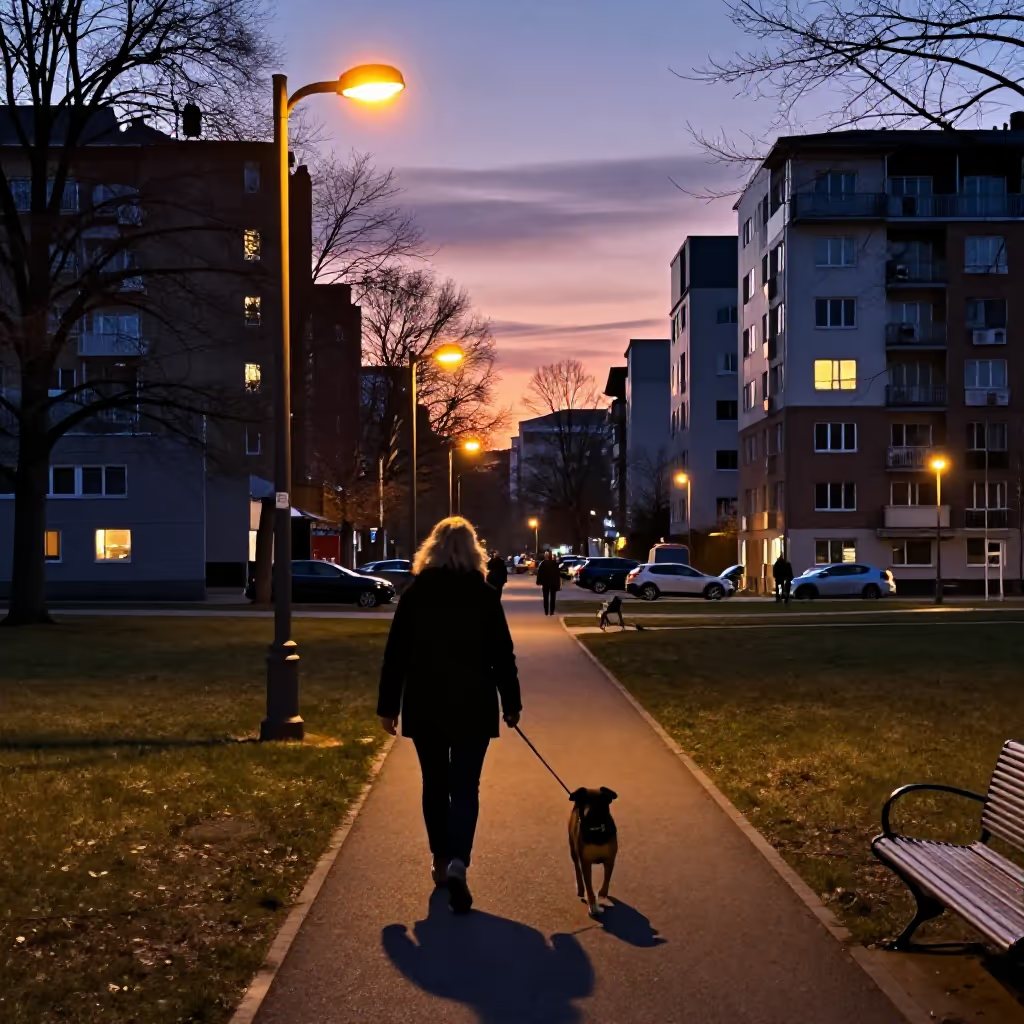
Wir treffen uns abends vor dem Kino.
We meet in the evenings in front of the cinema.
Wir genießen den abendlichen Spaziergang vor dem Kino.
We enjoy the evening stroll in front of the cinema.