

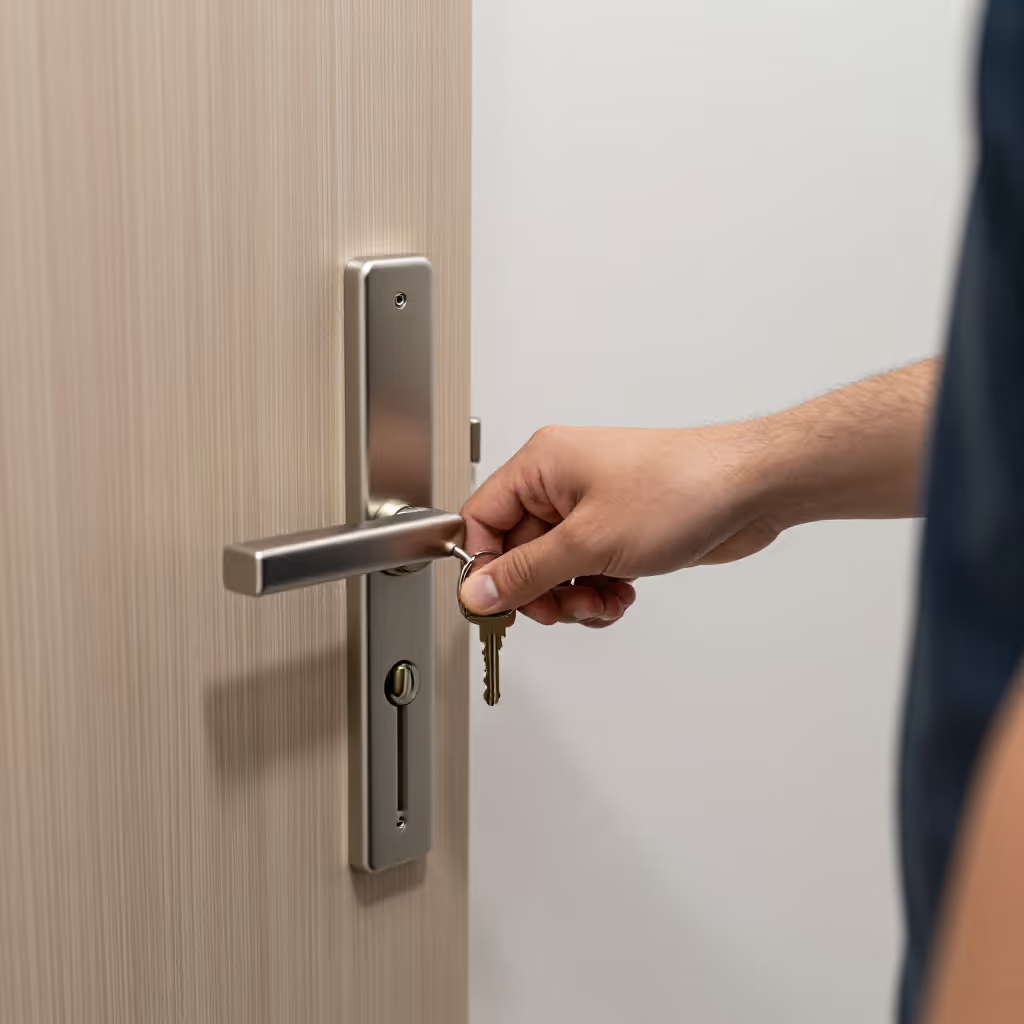
abschließen
to lock
To secure a door, window, or container with a key or bolt so that it cannot be opened.
EXAMPLE
Hast du daran gedacht, die Haustür abzuschließen?
Did you remember to lock the front door?
to lock / to complete
Loading your saved state.
to lock
To secure a door, window, or container with a key or bolt so that it cannot be opened.
Hast du daran gedacht, die Haustür abzuschließen?
Did you remember to lock the front door?

to complete
To successfully bring an activity, project, or course of education to an end.
Nächstes Jahr wird sie ihr Medizinstudium abschließen.
Next year she will complete her medical studies.

to take out
To enter into a contract, insurance policy, or bet in a legally valid way.
Wir haben gestern eine neue Haftpflichtversicherung abgeschlossen.
Yesterday we took out a new liability insurance policy.

to move on from
To emotionally process a past, often negative experience and leave it behind.
Nach der Trennung brauchte er lange, um mit der Beziehung abzuschließen.
After the breakup, it took him a long time to move on from the relationship.
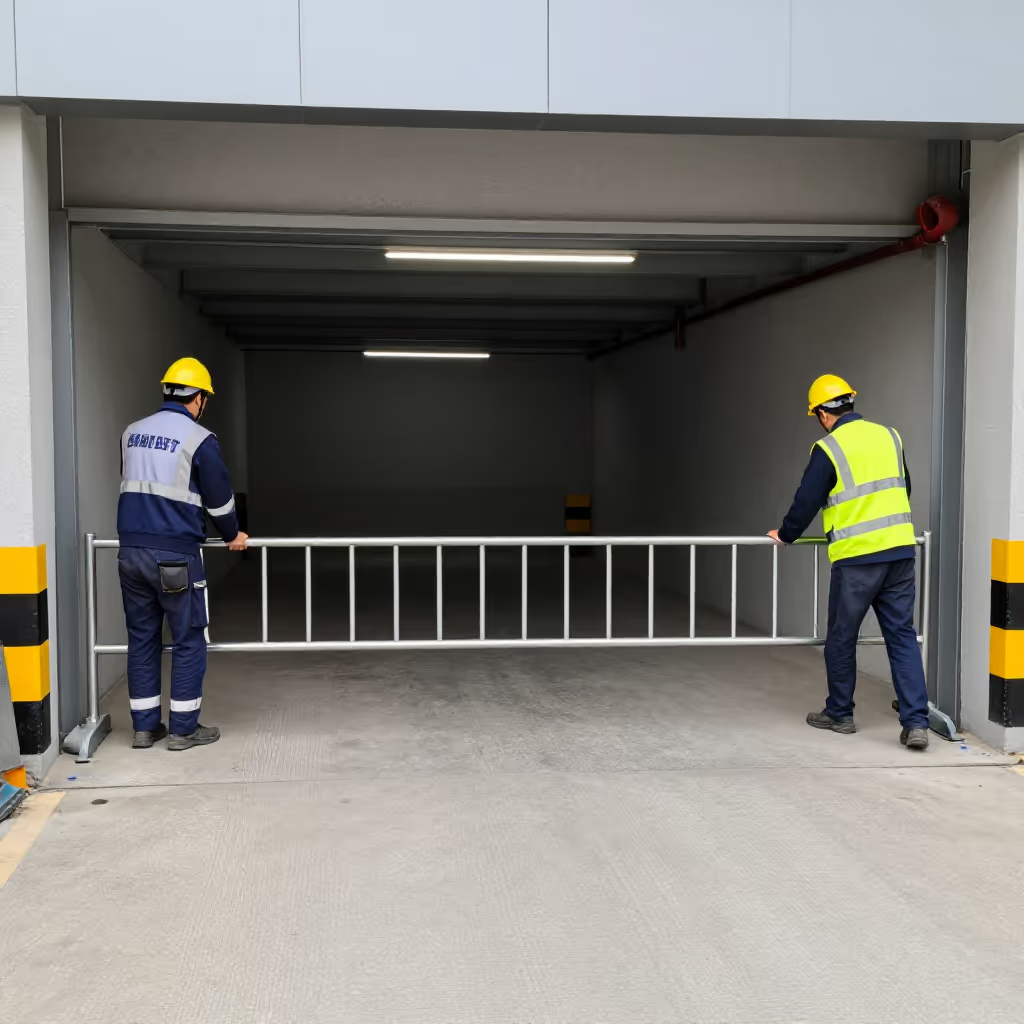
to cordon off
To block access to an area or space or make it inaccessible.
Die Polizei musste das Gelände weiträumig abschließen.
The police had to cordon off a wide area around the site.
'Abschließen' (to lock / to complete) is a separable verb. In a main clause, the prefix 'ab' goes at the end. In subordinate clauses and in the infinitive with 'zu', the verb stays together.
Bitte schließ die Tür ab, wenn du gehst.
Please lock the door when you leave.
The prefix 'ab-' often expresses completion or an end. This helps you understand the figurative meaning: you bring a course of study to an end or emotionally move on from something.
Er hat sein Projekt letzte Woche erfolgreich abgeschlossen.
He successfully completed his project last week.
The object of the verb reveals the meaning. A physical object like 'die Tür' (the door) means 'to lock'. An abstract goal like 'das Studium' (the course of study) means 'to complete'. A document like 'ein Vertrag' (a contract) means 'to enter into a contract'.
Ich muss noch schnell das Fahrrad abschließen.
I still need to quickly lock up the bike.
In the meaning 'to successfully complete', 'abschließen' (to complete) is often combined with goals from education and work. Typical phrases are: 'ein Studium abschließen' (to complete a degree/course of study), 'eine Ausbildung abschließen' (to complete vocational training), or 'ein Projekt abschließen' (to complete a project).
Nach drei Jahren hat sie ihre Lehre als Tischlerin abgeschlossen.
After three years, she completed her apprenticeship as a carpenter.
When it comes to formal agreements, 'abschließen' (to take out / enter into) is used frequently. You can say 'einen Vertrag abschließen' (to enter into a contract), 'eine Versicherung abschließen' (to take out insurance), 'ein Abonnement abschließen' (to take out a subscription), or 'eine Wette abschließen' (to make a bet).
Für die neue Wohnung mussten wir einen Mietvertrag abschließen.
For the new apartment, we had to sign a rental contract.
To express that you have processed an emotional issue, you use the fixed expression 'mit etwas abschließen' (to move on from something). The preposition 'mit' always requires the dative.
Er versucht, mit seiner Vergangenheit abzuschließen.
He is trying to move on from his past.
to end
“Abschließen” and “beenden” can both indicate that an activity or project comes to an end. “Abschließen” usually emphasizes a planned or successful completion, while “beenden” initially only states that something has ended. Use “abschließen” when the result is considered complete, and “beenden” when only the stopping matters.

Nach vielen Monaten konnte das Team das Projekt erfolgreich abschließen.
After many months, the team was able to successfully complete the project.
Nach vielen Monaten musste das Team das Projekt wegen Geldmangels beenden.
After many months, the team had to end the project because of a lack of funding.