

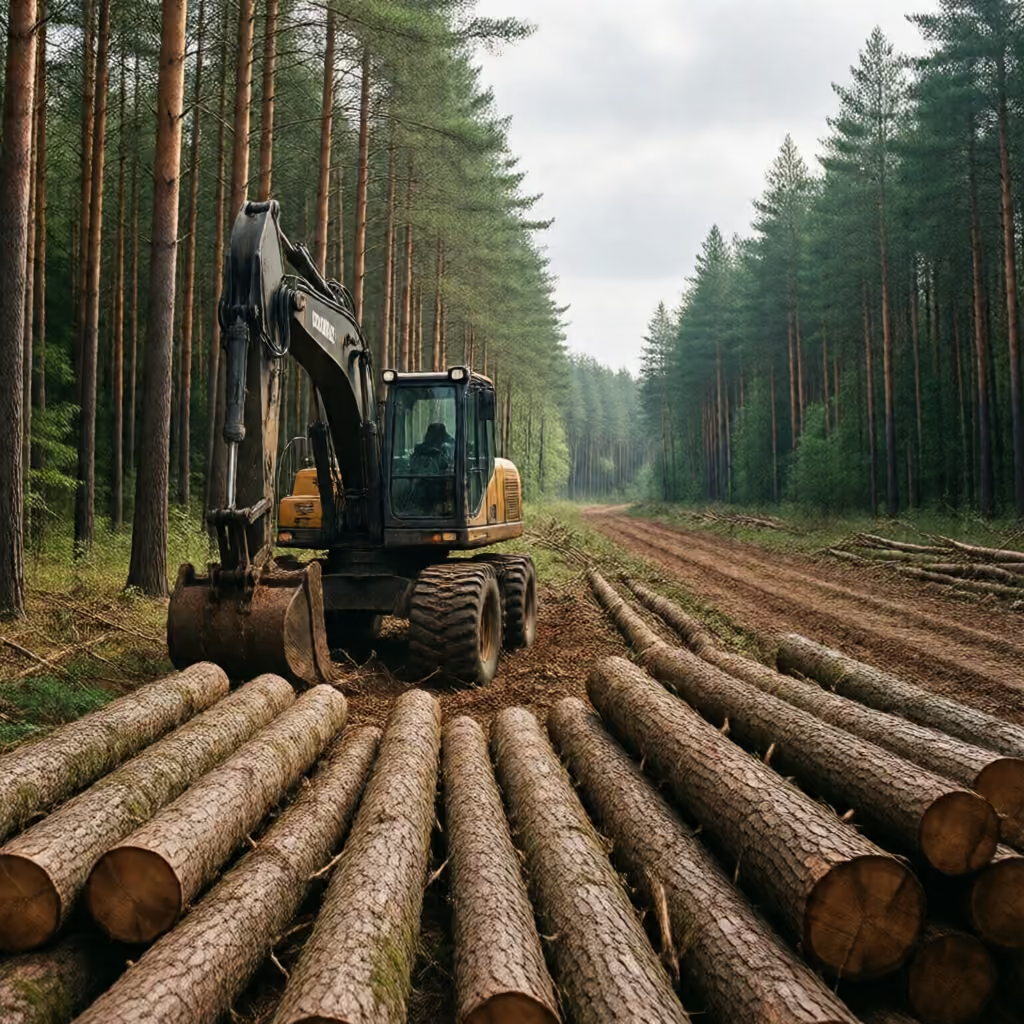
abholzen
to clear-cut
To cut down trees or a forest and remove the wood as a result.
EXAMPLE
Die Firma will den alten Wald abholzen.
The company wants to clear-cut the old forest.
to clear-cut
abholzen – holzte ab – hat abgeholzt
Loading your saved state.
to clear-cut
To cut down trees or a forest and remove the wood as a result.
Die Firma will den alten Wald abholzen.
The company wants to clear-cut the old forest.
| ich | holze ab |
|---|---|
| du | holzt ab |
| er/sie/es | holzt ab |
| wir | holzen ab |
| ihr | holzt ab |
| sie | holzen ab |
| ich | holzte ab |
|---|---|
| du | holztest ab |
| er/sie/es | holzte ab |
| wir | holzten ab |
| ihr | holztet ab |
| sie | holzten ab |
| ich | habe abgeholzt |
|---|---|
| du | hast abgeholzt |
| er/sie/es | hat abgeholzt |
| wir | haben abgeholzt |
| ihr | habt abgeholzt |
| sie | haben abgeholzt |
| du | holze ab! holz ab! |
|---|---|
| ihr | holzt ab! |
| Sie | holzen Sie ab! |
| ich | hatte abgeholzt |
|---|---|
| du | hattest abgeholzt |
| er/sie/es | hatte abgeholzt |
| wir | hatten abgeholzt |
| ihr | hattet abgeholzt |
| sie | hatten abgeholzt |
| ich | werde abholzen |
|---|---|
| du | wirst abholzen |
| er/sie/es | wird abholzen |
| wir | werden abholzen |
| ihr | werdet abholzen |
| sie | werden abholzen |
| ich | holze ab |
|---|---|
| du | holzest ab |
| er/sie/es | holze ab |
| wir | holzen ab |
| ihr | holzet ab |
| sie | holzen ab |
Used for reported speech.
| ich | holzte ab |
|---|---|
| du | holztest ab |
| er/sie/es | holzte ab |
| wir | holzten ab |
| ihr | holztet ab |
| sie | holzten ab |
Used for wishes and “would”.
| infinitive | abholzen |
|---|---|
| with zu | abzuholzen |
| present participle | abholzend |
| past participle | abgeholzt |
„Abholzen“ (to clear-cut) is a separable verb: In a main clause, „ab“ (off) appears at the end of the sentence, while in a subordinate clause, the verb remains together. In the infinitive with „zu“, „zu“ comes between the prefix and the verb.
Die Arbeiter holzen den Wald im Herbst ab.
The workers are clear-cutting the forest in the fall.
Die Anwohner protestieren, weil die Firma den Wald abholzt.
The residents are protesting because the company is clear-cutting the forest.
Die Stadt hat beschlossen, den alten Baumbestand abzuholzen.
The city has decided to clear-cut the old stand of trees.
„Abholzen“ (to clear-cut) is often used in the passive when the forest or area is more important than the person or company cutting down the trees. The perfect passive is formed with „ist … abgeholzt worden“ (has been clear-cut).
Für das neue Gewerbegebiet wurde ein ganzes Waldstück abgeholzt.
An entire section of forest was clear-cut for the new commercial development.
Der Hang ist im letzten Winter vollständig abgeholzt worden.
The slope was completely clear-cut last winter.
In the meaning related to cutting down trees, „abholzen“ (to clear-cut) is often used with „einen Wald“ (a forest), „Bäume“ (trees), or „eine Fläche“ (an area). The verb usually describes extensive or reckless intervention in the tree population.
Das Unternehmen will für die neue Straße eine große Fläche abholzen.
The company wants to clear-cut a large area for the new road.