


abmachen
to agree
To discuss something with one or more people and establish it as binding.
EXAMPLE
Wir haben abgemacht, dass wir uns morgen um 10 Uhr treffen.
We agreed that we would meet tomorrow at 10 o'clock.
to agree / remove
Loading your saved state.
to agree
To discuss something with one or more people and establish it as binding.
Wir haben abgemacht, dass wir uns morgen um 10 Uhr treffen.
We agreed that we would meet tomorrow at 10 o'clock.
to remove
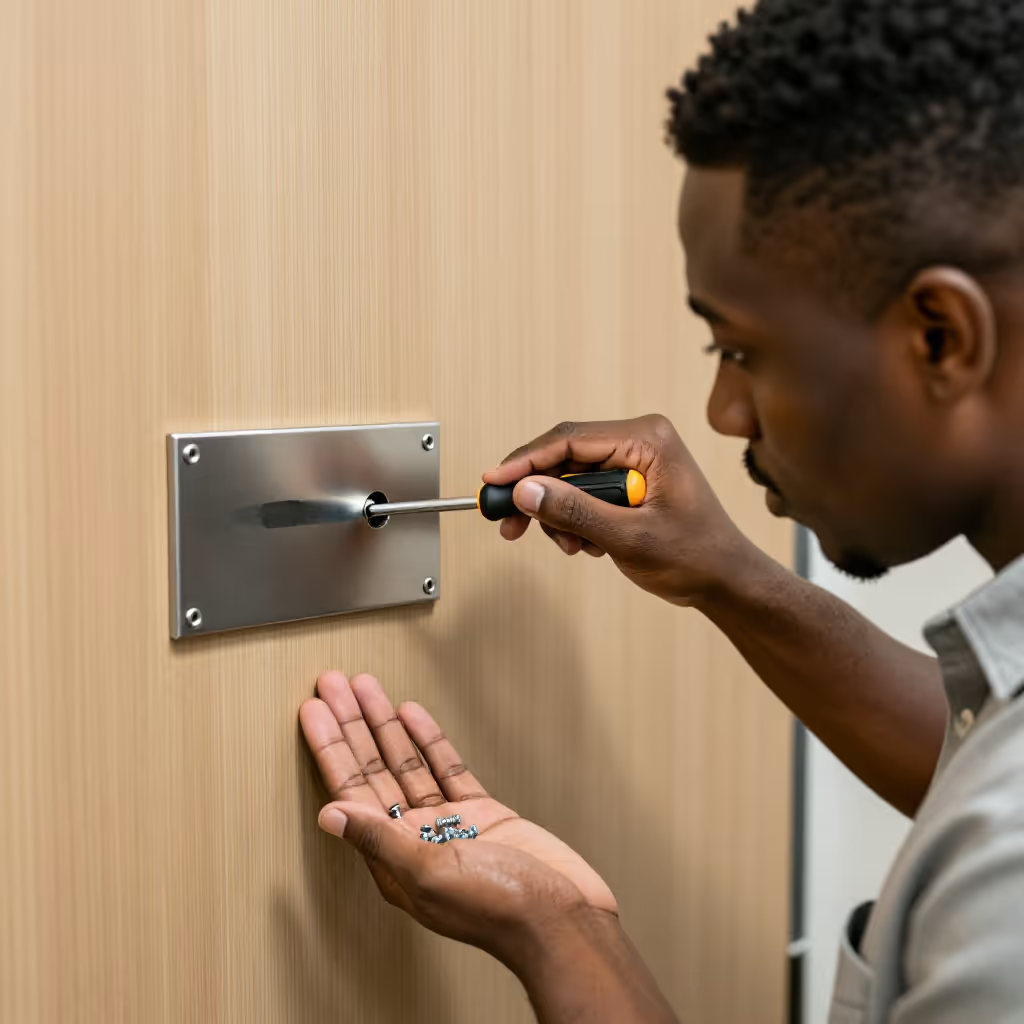
To detach and remove something that is attached to another thing.
Kannst du bitte das alte Preisschild von der Flasche abmachen?
Can you please remove the old price tag from the bottle?
to decide for oneself
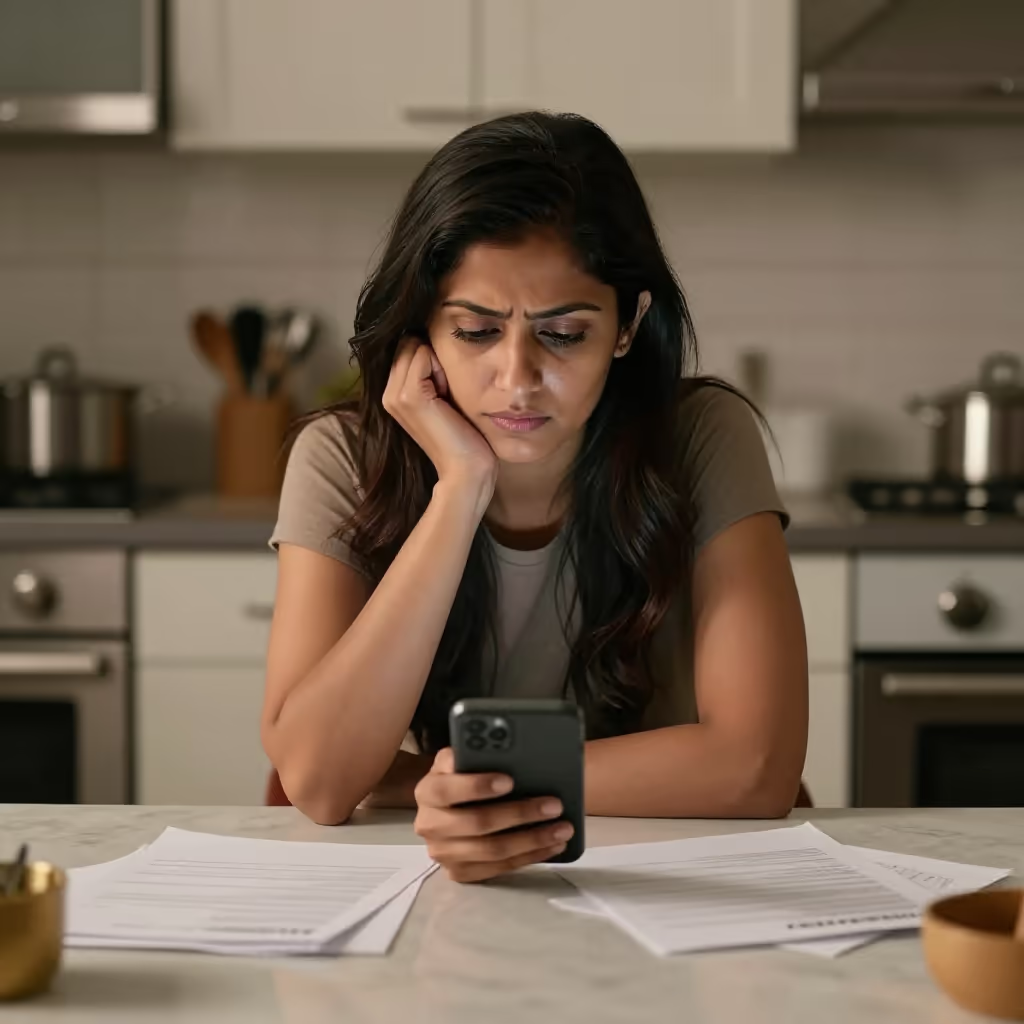
To make a decision on one's own or settle a matter internally without involving other people.
Ob du den Job annimmst oder nicht, musst du ganz allein mit dir selbst abmachen.
Whether you accept the job or not is something you have to decide entirely for yourself.
'Abmachen' (to agree / remove) is a separable verb. The prefix 'ab-' comes at the end in a main clause; in subordinate clauses the verb stays together, and in the infinitive with 'zu', 'zu' stands between 'ab' and 'machen'.
Wir machen für morgen einen Termin ab.
We arrange an appointment for tomorrow.
You can recognize the meaning from the context: if it is about an agreement between people, 'vereinbaren' (to agree/arrange) is meant. If an object is detached from another object, it means 'entfernen' (to remove). The expression 'mit sich selbst abmachen' means 'entscheiden' (to decide).
Die beiden Firmen haben einen neuen Vertrag abgemacht.
The two companies agreed on a new contract.
When you want to express what was agreed, you often use a subordinate clause with 'dass' or an infinitive construction with 'zu'.
Wir haben abgemacht, dass jeder die Hälfte bezahlt.
We agreed that everyone would pay half.
When you remove something, the surface it is removed from is introduced with the preposition 'von' and the dative.
Er macht das Kaugummi von seiner Schuhsohle ab.
He removes the chewing gum from the sole of his shoe.
The meaning 'to decide for oneself' is used almost exclusively in the fixed expression 'etwas mit sich (selbst) abmachen' (to decide something for oneself). The pronoun 'sich' is necessary here.
Diese Entscheidung muss jeder mit sich selbst abmachen.
Everyone has to make this decision for themselves.
to remove
Both verbs can describe taking away an attached object. Abmachen emphasizes loosening the attachment; entfernen focuses more neutrally on taking something away or getting rid of it. When an object is clearly attached, both often work, but with a different emphasis.
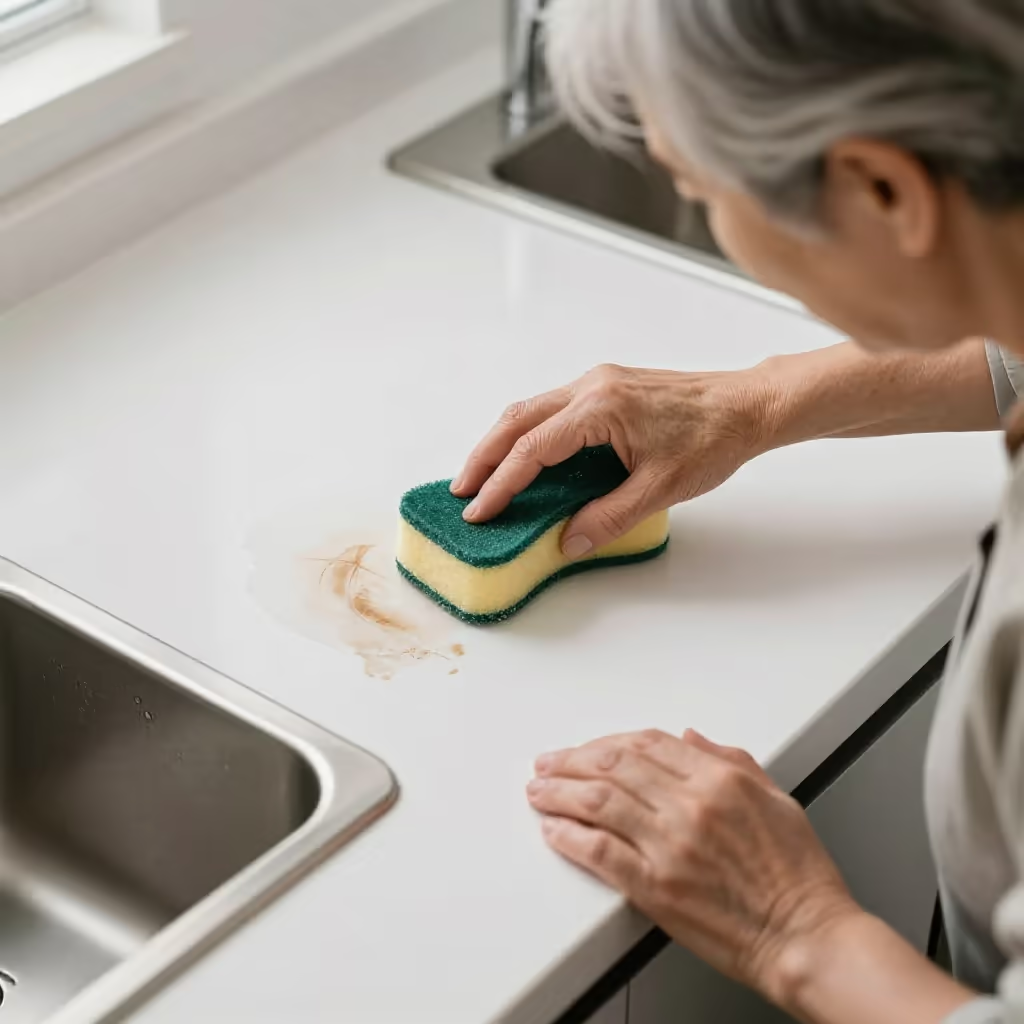
Vor dem Streichen macht Lea das festgeklebte Schild von der Tür ab.
Before painting, Lea takes the sign that is glued to the door off.
Vor dem Streichen entfernt Lea das festgeklebte Schild von der Tür.
Before painting, Lea removes the sign that is glued to the door.