


ablösen
to replace
To replace someone in an activity or position, especially after a certain period of time.
EXAMPLE
Die Nachtschicht wird um 6 Uhr morgens von der Frühschicht abgelöst.
The night shift is replaced by the early shift at 6 a.m.
to replace / remove
Loading your saved state.
to replace
To replace someone in an activity or position, especially after a certain period of time.
Die Nachtschicht wird um 6 Uhr morgens von der Frühschicht abgelöst.
The night shift is replaced by the early shift at 6 a.m.

to remove
To remove or take off something that is attached to a surface, often carefully.
Sie löste vorsichtig das Pflaster von der Wunde ab.
She carefully removed the bandage from the wound.
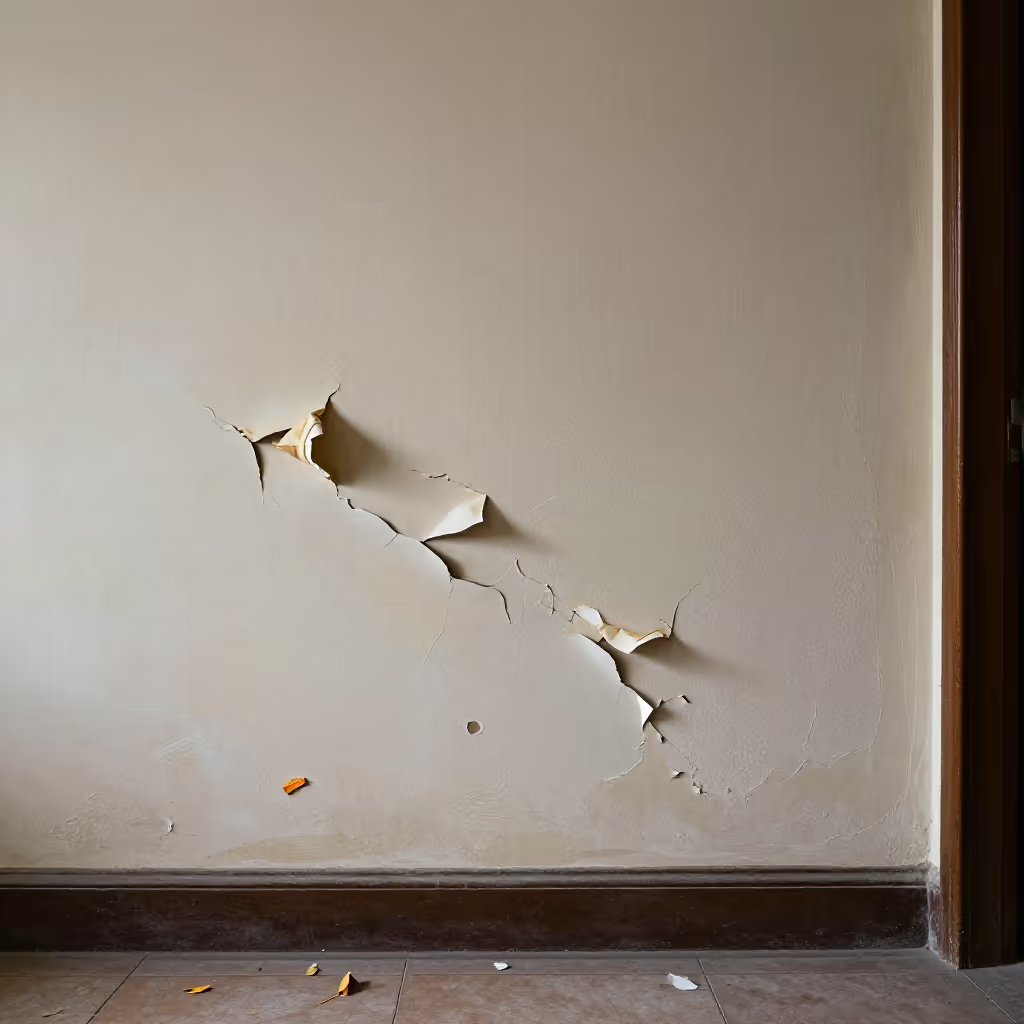
to come off
To detach from a surface by itself and fall off.
Wegen der Feuchtigkeit im Keller löst sich die Farbe von der Wand ab.
Because of the moisture in the basement, the paint is coming off the wall.

to pay off
To settle a debt or loan by paying it in full.
Mit dem Erbe konnte er endlich die Hypothek auf sein Haus ablösen.
With the inheritance, he was finally able to pay off the mortgage on his house.
'Ablösen' (to replace/remove) is a separable verb. The prefix 'ab-' separates from the verb stem 'lösen' (to loosen/solve) in a main clause and goes to the end. Here, the prefix 'ab-' strengthens the idea of removing or separating.
Der neue Direktor löst den alten im Januar ab.
The new director replaces the old one in January.
You can recognize the meaning from the object: if it is a person, 'ersetzen' (to replace) is meant. If it is an object, it is about 'entfernen' (to remove). With financial terms like 'Kredit' (loan), it means 'bezahlen' (to pay). If the verb is reflexive ('sich ablösen'), something comes off by itself.
Die Wache wird um Mitternacht abgelöst.
The guard is replaced at midnight.
In the meaning 'jemanden ersetzen' (to replace someone), 'ablösen' (to replace) is often used in work contexts. Typical formulations are 'die Nachtschicht ablösen' (to relieve/replace the night shift) or 'einen Kollegen bei der Arbeit ablösen' (to take over for a colleague at work).
Ich muss früher gehen, kannst du mich für die letzte Stunde ablösen?
I have to leave early; can you take over for me for the last hour?
When something comes off by itself, the verb is used reflexively: 'sich ablösen' (to come off). The surface that something comes off from is indicated with the preposition 'von' + dative.
Die alte Tapete löst sich schon von den Wänden ab.
The old wallpaper is already coming off the walls.
In finance, 'ablösen' (to pay off) means the complete repayment of a larger debt. People talk about 'einen Kredit ablösen' (to pay off a loan) or 'eine Hypothek ablösen' (to pay off a mortgage).
Sie haben hart gespart, um den Baukredit vorzeitig ablösen zu können.
They saved hard so they could pay off the construction loan early.
to remove
With an attached label, both verbs can work. „Entfernen“ generally describes taking it away and leaves the exact method open. „Ablösen“ emphasizes that the label is separated from the surface it is attached to.
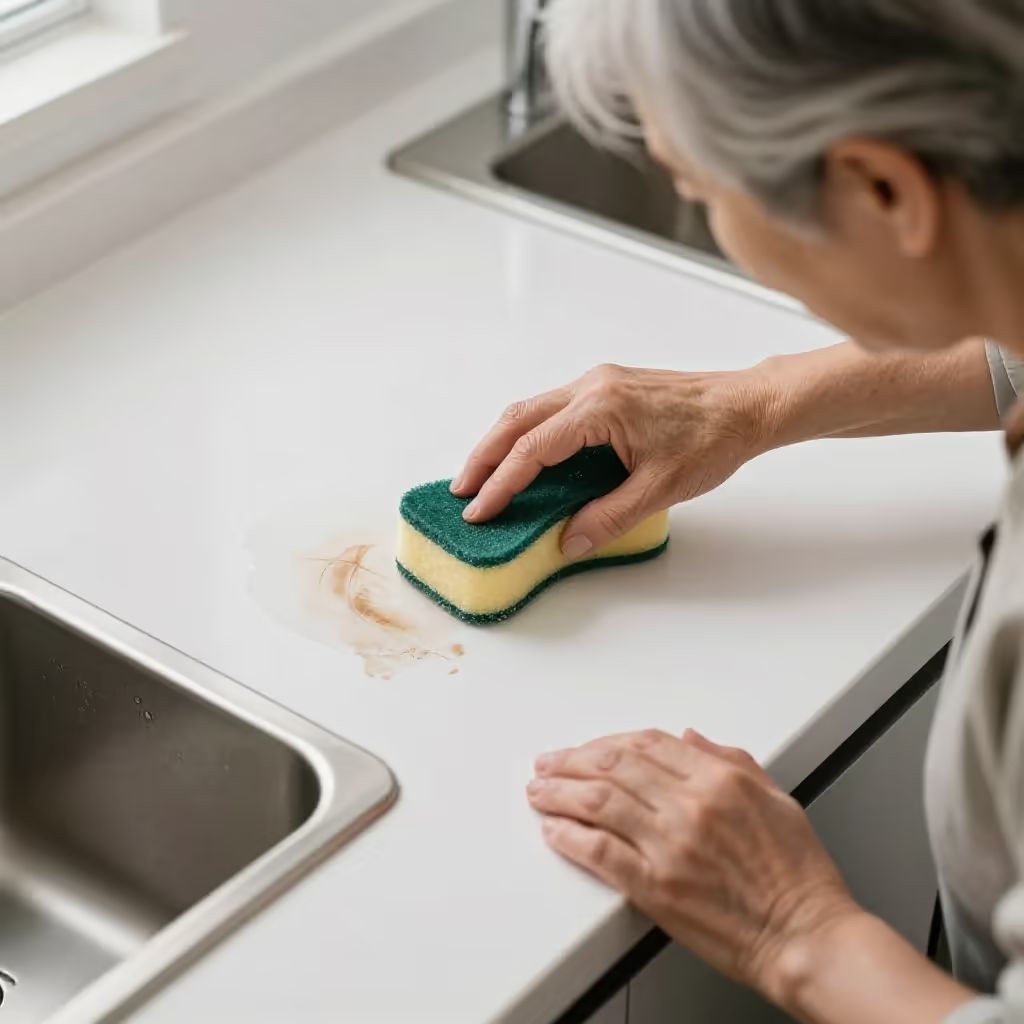
Jonas löst das festgeklebte Etikett vorsichtig vom Glas ab.
Jonas carefully peels the firmly stuck label off the jar.
Jonas entfernt das Etikett vom Glas.
Jonas removes the label from the jar.