

abpassen
to waylay
To wait for someone in order to meet or intercept them at a particular place.
EXAMPLE
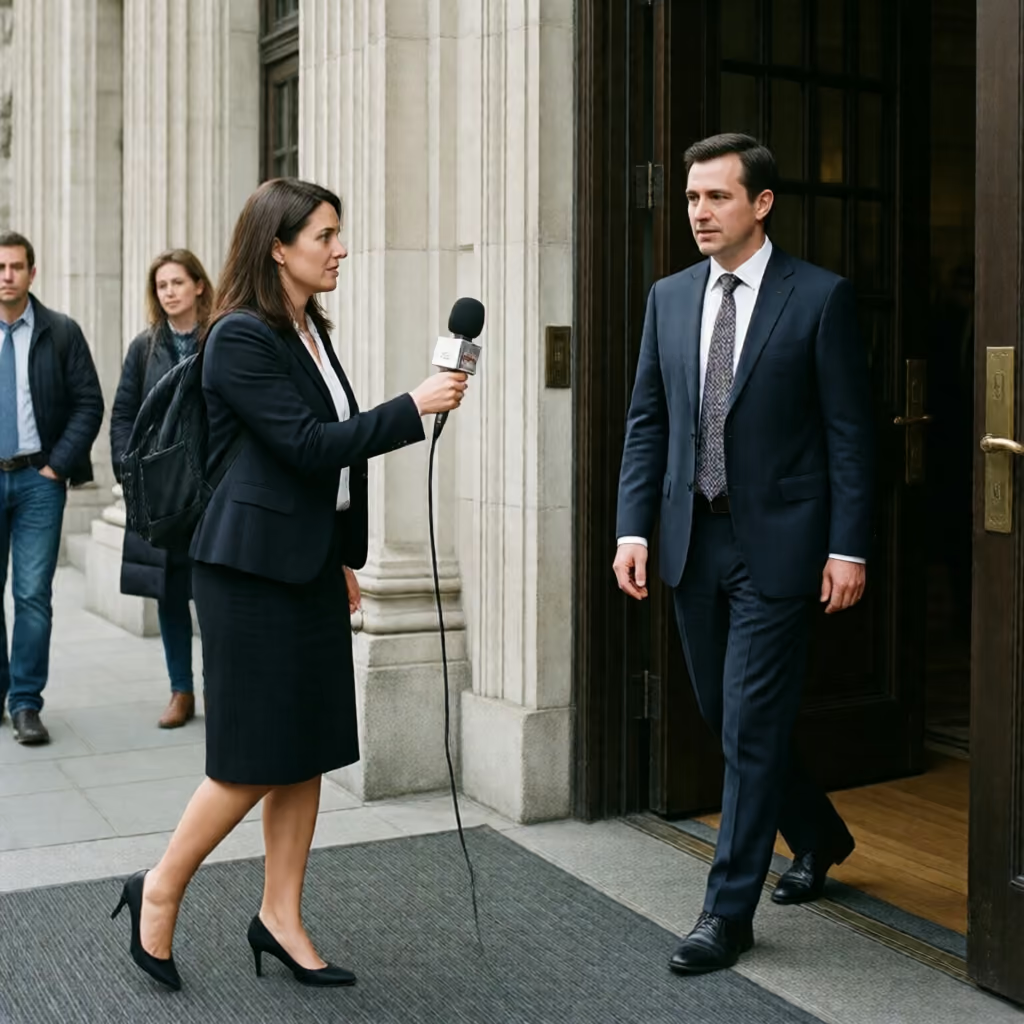
Die Reporterin passte den Minister vor dem Gebäude ab.
The reporter waylaid the minister in front of the building.
to waylay / to wait for the right moment
abpassen – passte ab – hat abgepasst
Loading your saved state.
to waylay
To wait for someone in order to meet or intercept them at a particular place.
Die Reporterin passte den Minister vor dem Gebäude ab.
The reporter waylaid the minister in front of the building.

to wait for the right moment
To wait for the right time or a favorable opportunity to do something.
Er passte einen günstigen Moment ab, um mit ihr zu sprechen.
He waited for a favorable moment to talk to her.
| ich | passe ab |
|---|---|
| du | passt ab |
| er/sie/es | passt ab |
| wir | passen ab |
| ihr | passt ab |
| sie | passen ab |
| ich | passte ab |
|---|---|
| du | passtest ab |
| er/sie/es | passte ab |
| wir | passten ab |
| ihr | passtet ab |
| sie | passten ab |
| ich | habe abgepasst |
|---|---|
| du | hast abgepasst |
| er/sie/es | hat abgepasst |
| wir | haben abgepasst |
| ihr | habt abgepasst |
| sie | haben abgepasst |
| du | pass ab! passe ab! |
|---|---|
| ihr | passt ab! |
| Sie | passen Sie ab! |
| ich | hatte abgepasst |
|---|---|
| du | hattest abgepasst |
| er/sie/es | hatte abgepasst |
| wir | hatten abgepasst |
| ihr | hattet abgepasst |
| sie | hatten abgepasst |
| ich | werde abpassen |
|---|---|
| du | wirst abpassen |
| er/sie/es | wird abpassen |
| wir | werden abpassen |
| ihr | werdet abpassen |
| sie | werden abpassen |
| ich | passe ab |
|---|---|
| du | passest ab |
| er/sie/es | passe ab |
| wir | passen ab |
| ihr | passet ab |
| sie | passen ab |
Used for reported speech.
| ich | passte ab |
|---|---|
| du | passtest ab |
| er/sie/es | passte ab |
| wir | passten ab |
| ihr | passtet ab |
| sie | passten ab |
Used for wishes and “would”.
| infinitive | abpassen |
|---|---|
| with zu | abzupassen |
| present participle | abpassend |
| past participle | abgepasst |
“Abpassen” (to waylay / to wait for the right moment) is separable: In a main clause, “ab” appears at the end of the sentence, while in a subordinate clause with the verb at the end, “abpassen” stays together. With the infinitive marker “zu,” “zu” comes between “ab” and “passen.”
Ich passe den Hausmeister vor seinem Büro ab.
I waylay the caretaker in front of his office.
Sie bekam die Auskunft, weil sie den Hausmeister vor seinem Büro abpasste.
She got the information because she waylaid the caretaker in front of his office.
Ich versuche, den Hausmeister vor seinem Büro abzupassen.
I’m trying to waylay the caretaker in front of his office.
The person you want to meet comes directly in the accusative: “jemanden abpassen” (to waylay someone), without a preposition before the person. The location is often added as well, for example “am Eingang” (at the entrance) or “vor dem Büro” (in front of the office).
Nach der Sitzung passte sie ihren Chef am Ausgang ab.
After the meeting, she waylaid her boss at the exit.
Typical collocations include “den richtigen Zeitpunkt abpassen” (to wait for the right time), “einen günstigen Moment abpassen” (to wait for a favorable moment), and “eine günstige Gelegenheit abpassen” (to wait for a good opportunity). “Um … zu” can be added to say what you intend to do afterward.
Sie passte den richtigen Zeitpunkt ab, um ihren Chef um eine Gehaltserhöhung zu bitten.
She waited for the right moment to ask her boss for a raise.