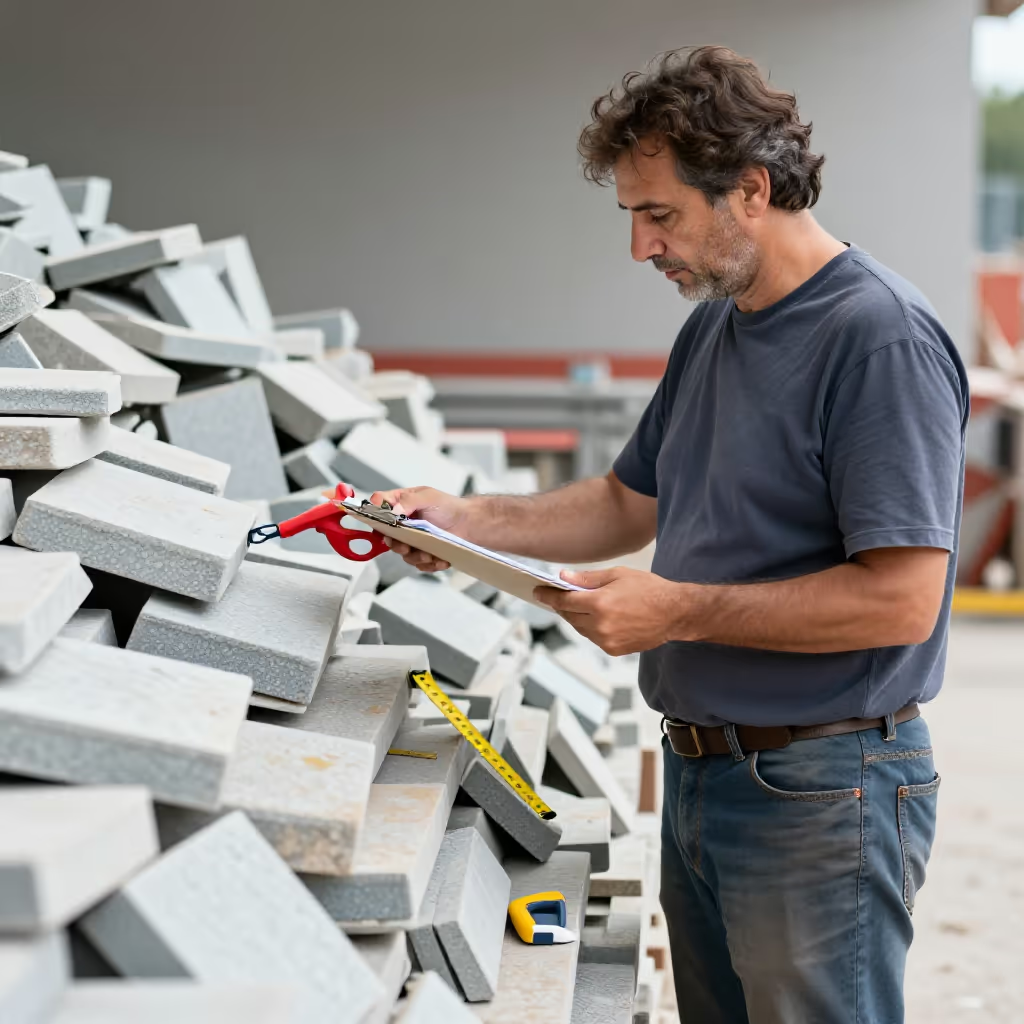
To determine the value, amount, size, or duration of something approximately, without measuring it exactly. It is an informed guess.
example
Ich kann nur schwer abschätzen, wie lange die Reparatur dauern wird.
I can only estimate with difficulty how long the repair will take.
Usage tips
Separable verb
'Abschätzen' (to estimate / assess) is a separable verb. The prefix 'ab-' comes at the end in a main clause, while it remains attached to the verb in a subordinate clause. In the infinitive with 'zu', 'zu' comes between the prefix and the verb.
EXAMPLE
Schätzen Sie die Kosten bitte genau ab.
Please estimate the costs accurately.
Word structure
The verb is made up of the prefix 'ab-' and the verb 'schätzen' (to estimate/guess). While 'schätzen' can be a general guess, 'abschätzen' emphasizes a targeted assessment based on experience or facts.
EXAMPLE
Ein erfahrener Handwerker kann den Materialbedarf gut abschätzen.
An experienced craftsperson can estimate the material requirements well.
Context clue
You can tell whether it is about an amount or a situation from the object. If 'abschätzen' refers to numbers and measurements (costs, distance, time), the first meaning is intended. If it is about abstract things (danger, consequences, situation), the second meaning is intended.
EXAMPLE
Können Sie abschätzen, wie viele Leute kommen werden?
Can you estimate how many people will come?
Typical collocations
'Abschätzen' is often used with quantifiable nouns. Typical combinations are: 'die Kosten abschätzen' (to estimate the costs), 'die Entfernung abschätzen' (to estimate the distance), 'den Zeitaufwand abschätzen' (to estimate the time required), or 'die Menge abschätzen' (to estimate the amount).
EXAMPLE
Ich habe versucht, die Entfernung zum nächsten Dorf abzuschätzen.
I tried to estimate the distance to the nearest village.
Typical collocations
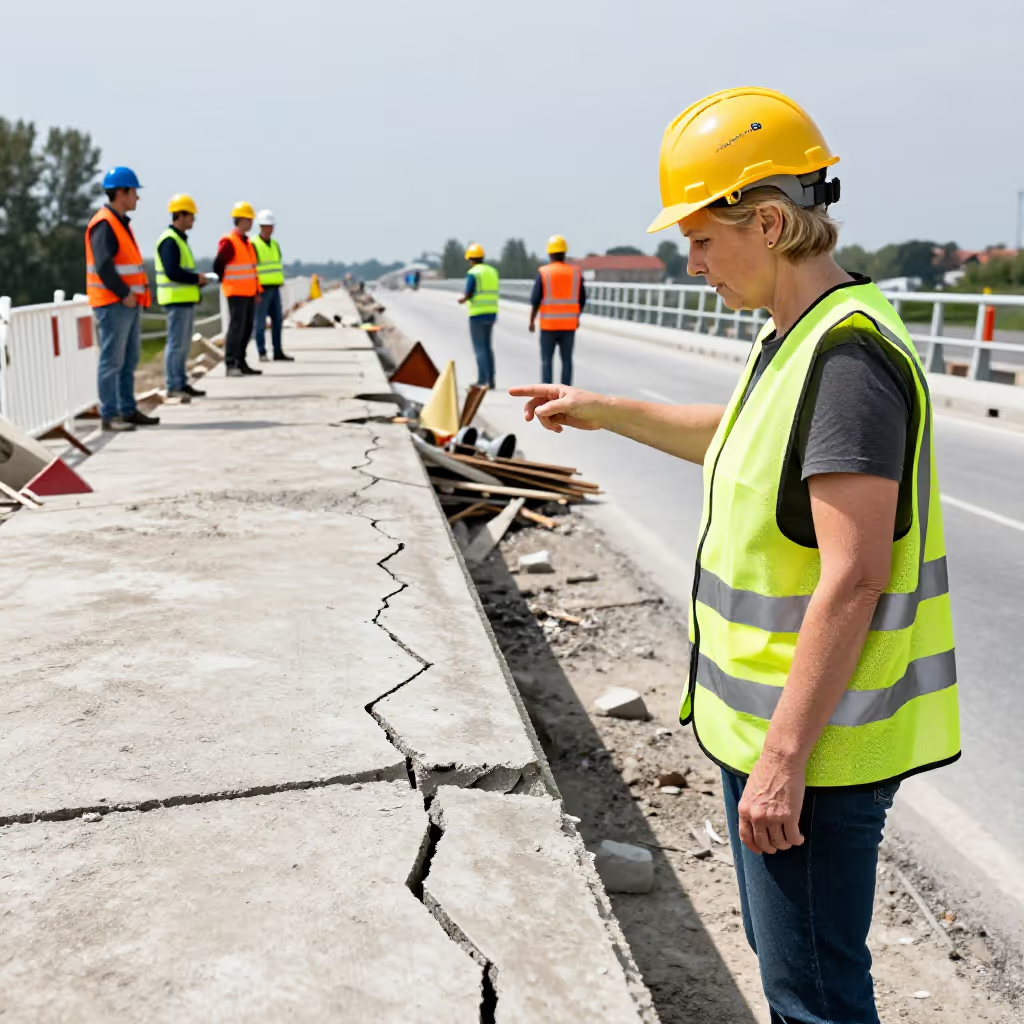
When it is about assessing situations, 'abschätzen' is often combined with abstract nouns. Common phrases are: 'die Folgen abschätzen' (to assess the consequences), 'das Risiko abschätzen' (to assess the risk), or 'die Lage abschätzen' (to assess the situation).
EXAMPLE
Vor einer großen Investition sollte man die finanziellen Risiken genau abschätzen.
Before making a large investment, you should assess the financial risks carefully.
Compare with
near_synonym · confusable
abschätzen vs schätzen
to estimate / appreciate
'schätzen' and 'abschätzen' can both mean determining something approximately. 'schätzen' is more general and can be a simple approximate number or guess. It can also mean to appreciate or value someone; 'abschätzen' does not have this meaning. 'abschätzen' often sounds a bit more deliberate: you look at information and try to assess a size, duration, danger, or consequence as realistically as possible. Learners can confuse the words because both fit with approximate statements. If it is just about a quick number, 'schätzen' is enough. If you are assessing a situation or possible consequences, 'abschätzen' is more natural.
abschätzen
Sie wartet kurz am Bahnhof, weil sie die Verspätung besser abschätzen will.
She waits briefly at the station because she wants to better estimate the delay.
schätzen
David schätzt die Fahrzeit im Sommer auf etwa drei Stunden.
David estimates the travel time in summer at about three hours.