
To separate and remove a part from a whole by cutting, tearing, or a similar action.
example
Trennen Sie bitte den unteren Abschnitt des Gutscheins an der perforierten Linie ab.
Please detach the lower section of the voucher along the perforated line.
Usage tips
Separable verb
'Abtrennen' (to separate/detach) is a separable verb. The prefix 'ab-' comes at the end in a main clause. In subordinate clauses and in the infinitive with 'zu', the verb stays together.
EXAMPLE
Er trennt den Anhänger vom Auto ab.
He detaches the trailer from the car.
Sentence structure with 'von'
When you want to state what something is being separated from, you use the preposition 'von' with the dative. The pattern is: etwas (accusative) von etwas (dative) abtrennen.
EXAMPLE
Die Köchin trennte das Fett vom Fleisch ab.
The cook separated the fat from the meat.
Context clue
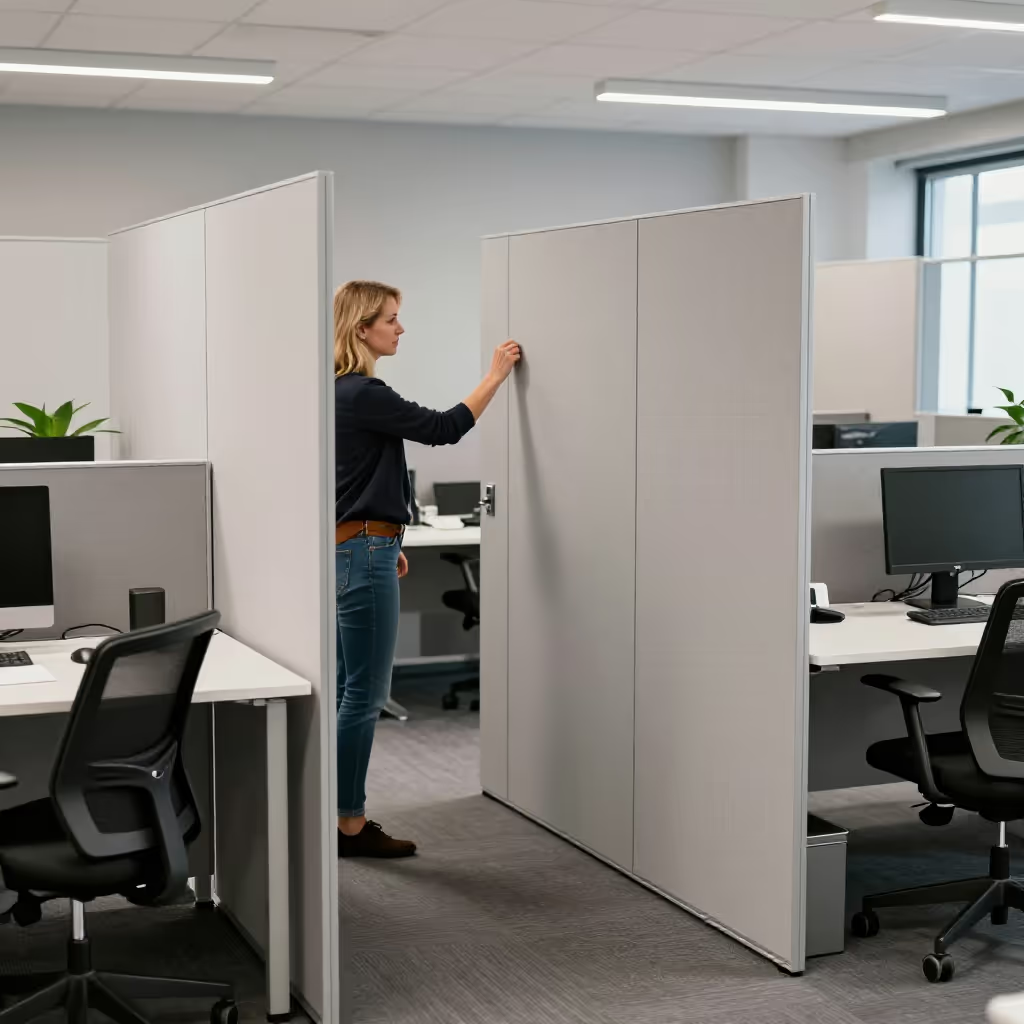
You can recognize the meaning from the object: if it is about small, removable parts (e.g. 'Coupon', 'Etikett'), physical removal is meant. If it is about rooms (e.g. 'Zimmer', 'Bereich'), dividing or partitioning is meant.
EXAMPLE
Bitte trennen Sie den unteren Abschnitt ab und behalten Sie ihn.
Please detach the lower section and keep it.
Compare with
near_synonym
abtrennen vs entfernen
to remove
'entfernen' and 'abtrennen' both have to do with something being taken away from a place or from a whole. 'entfernen' is more general and can be used for many kinds of taking away or getting rid of something. 'abtrennen' is more specific: a part is separated from a whole, often by cutting, tearing, or a similar action. When talking about a stain, a file, or trash, you normally say 'entfernen'. When a piece is really cut off or detached from something, 'abtrennen' fits better.
abtrennen
In der Werkstatt trennt Amira ein kleines Stück Holz vom Brett ab.
In the workshop, Amira detaches a small piece of wood from the board.
entfernen
Nach dem Einkauf entferne ich die leeren Kartons aus dem Flur.
After shopping, I remove the empty boxes from the hallway.