


der Abwasch
dishwashing
The activity of washing used dishes, cutlery, and cooking utensils.
EXAMPLE
Wer ist heute mit dem Abwasch dran?
Whose turn is it to do the dishes today?
dishwashing / dirty dishes
der Abwasch, die Abwäsche
Loading your saved state.
dishwashing
The activity of washing used dishes, cutlery, and cooking utensils.
Wer ist heute mit dem Abwasch dran?
Whose turn is it to do the dishes today?
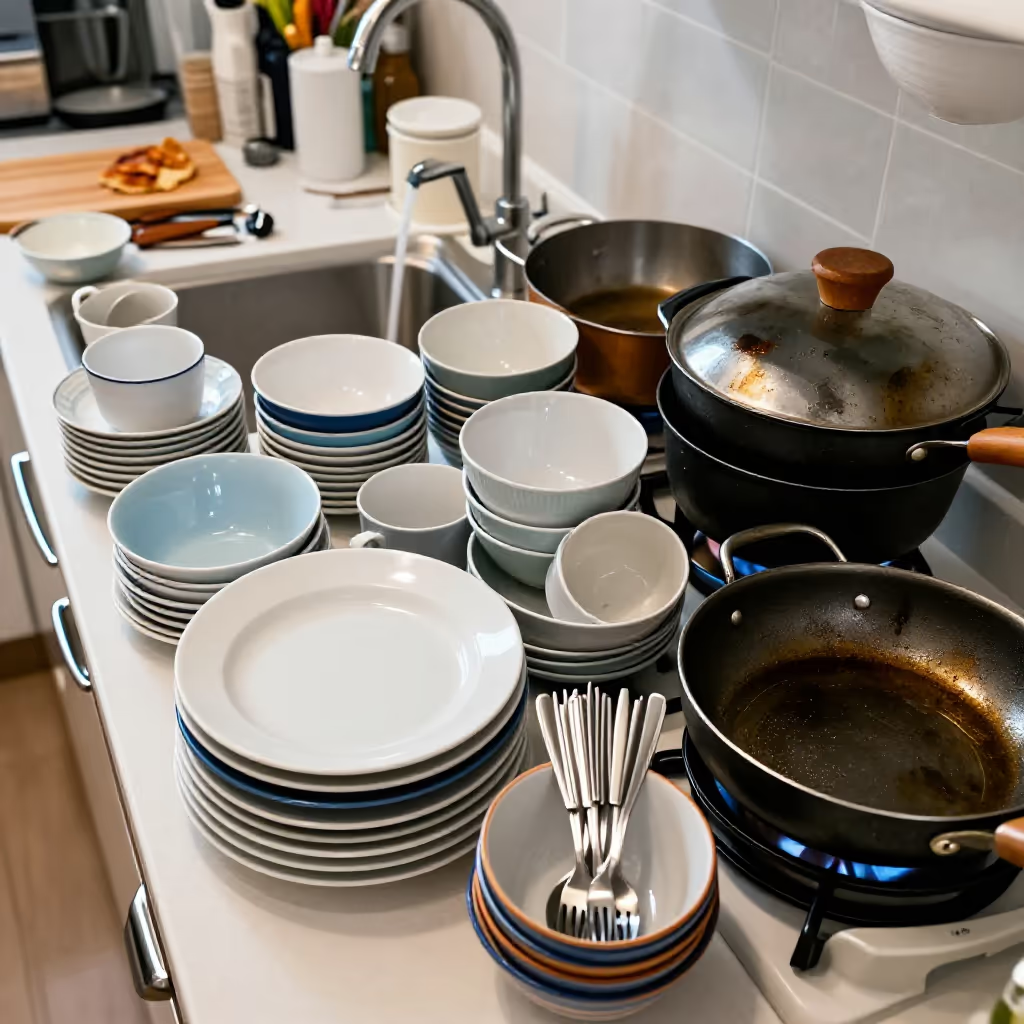
dirty dishes
All the dirty dishes that need to be washed.
Nach der Feier stand der ganze Abwasch in der Küche.
After the party, all the dirty dishes were sitting in the kitchen.
| gender | masculine der |
|---|---|
| plural | die Abwäsche |
| genitive | des Abwaschs |
| singular | plural | |
|---|---|---|
| nominative | der Abwasch | die Abwäsche |
| accusative | den Abwasch | die Abwäsche |
| dative | dem Abwasch | den Abwäschen |
| genitive | des Abwaschs des Abwasches | der Abwäsche |
The article changes with the case; it is shown in colour.
| gender | feminine die |
|---|---|
| plural | die Abwäschen |
| genitive | der Abwasch |
| singular | plural | |
|---|---|---|
| nominative | die Abwasch | die Abwäschen |
| accusative | die Abwasch | die Abwäschen |
| dative | der Abwasch | den Abwäschen |
| genitive | der Abwasch | der Abwäschen |
The article changes with the case; it is shown in colour.
'Der Abwasch' is the nominalization of the separable verb 'abwaschen' (to wash up / to wash the dishes). So it describes either the result or the action of this verb.
Nach dem Kochen müssen wir noch abwaschen.
After cooking, we still have to wash the dishes.
The most common and important combination in everyday life is 'den Abwasch machen' (to do the dishes). This expression means to wash the dishes.
Ich koche heute das Abendessen, machst du dann den Abwasch?
I'm cooking dinner today; will you do the dishes afterward?
The word 'Abwasch' is used almost exclusively in the singular. This also applies when talking about a large amount of dirty dishes.
Nach der Party hatten wir unglaublich viel Abwasch.
After the party, we had an incredible amount of dirty dishes.
When 'der Abwasch' refers to the activity, it is often combined with verbs like 'machen' (to do), 'erledigen' (to take care of), or 'übernehmen' (to take over). When it refers to the dirty dishes, verbs like 'stehen' (to be standing/sitting), 'sich stapeln' (to pile up), or 'haben' (to have) are typical.
Kannst du bitte den Abwasch erledigen?
Can you please take care of the dishes?
Der ganze Abwasch vom Wochenende steht noch in der Spüle.
All the dirty dishes from the weekend are still sitting in the sink.
to wash / rinse / flush
Spülen describes the activity as a verb, while Abwasch is the colloquial noun for this activity. Abwasch can also refer to the dirty dishes themselves. Use spülen for the action and Abwasch when you mean the task or the dishes that still need to be washed.
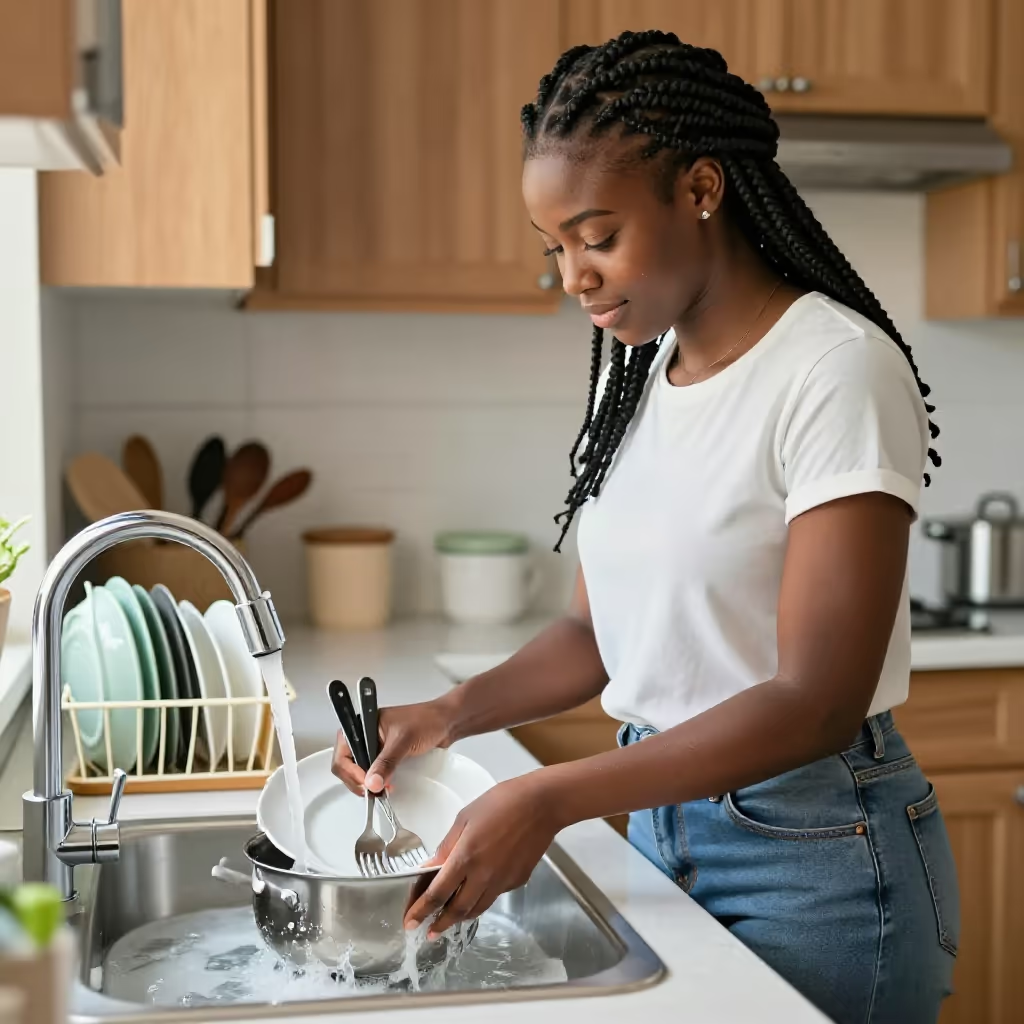
Nach dem Essen wartet in der Küche noch der Abwasch auf mich.
After the meal, I still have the dishes to wash in the kitchen.
Nach dem Essen muss ich noch das Geschirr spülen.
After the meal, I still have to wash the dishes.