


abwechselnd
alternating
Following one after another in a regular alternation; first one thing, then the other.
Die beiden Brüder übernahmen abwechselnd die Pflege ihrer kranken Mutter.
The two brothers took turns caring for their sick mother.
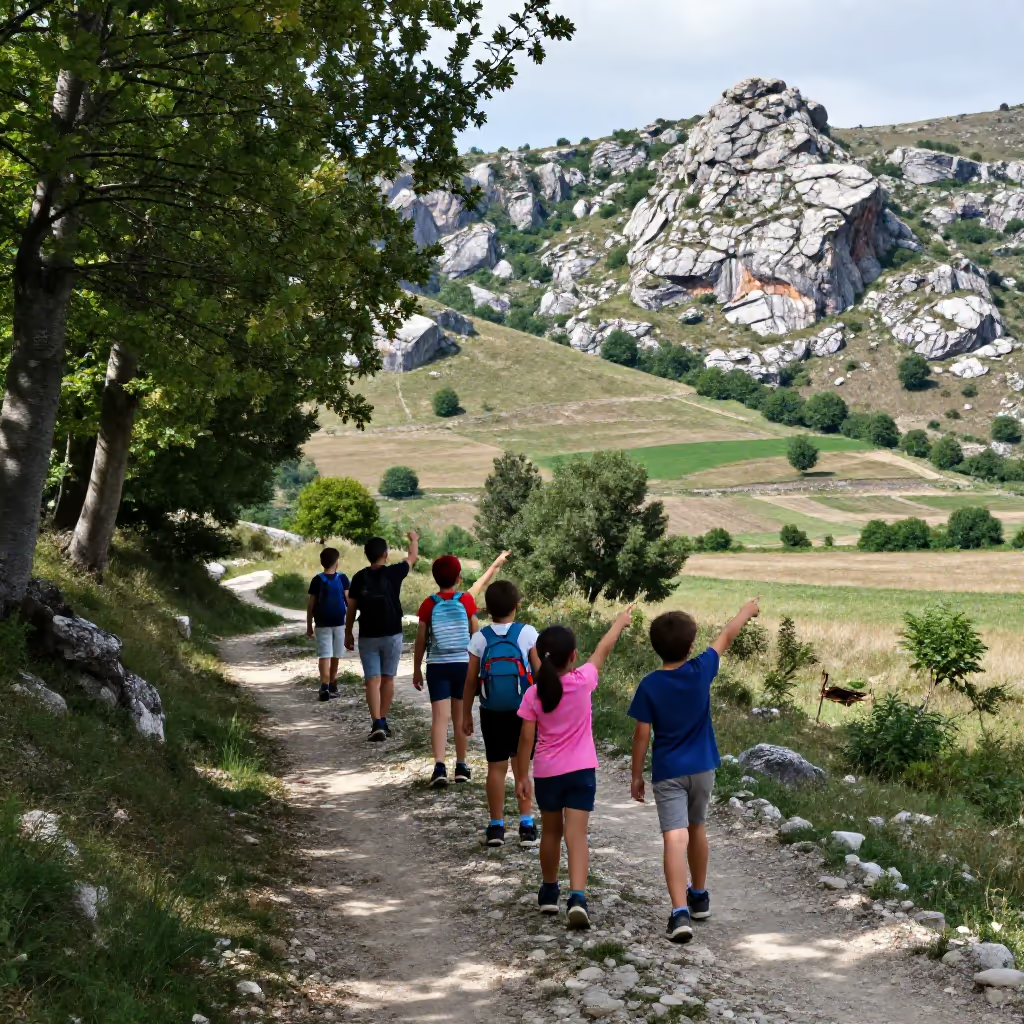
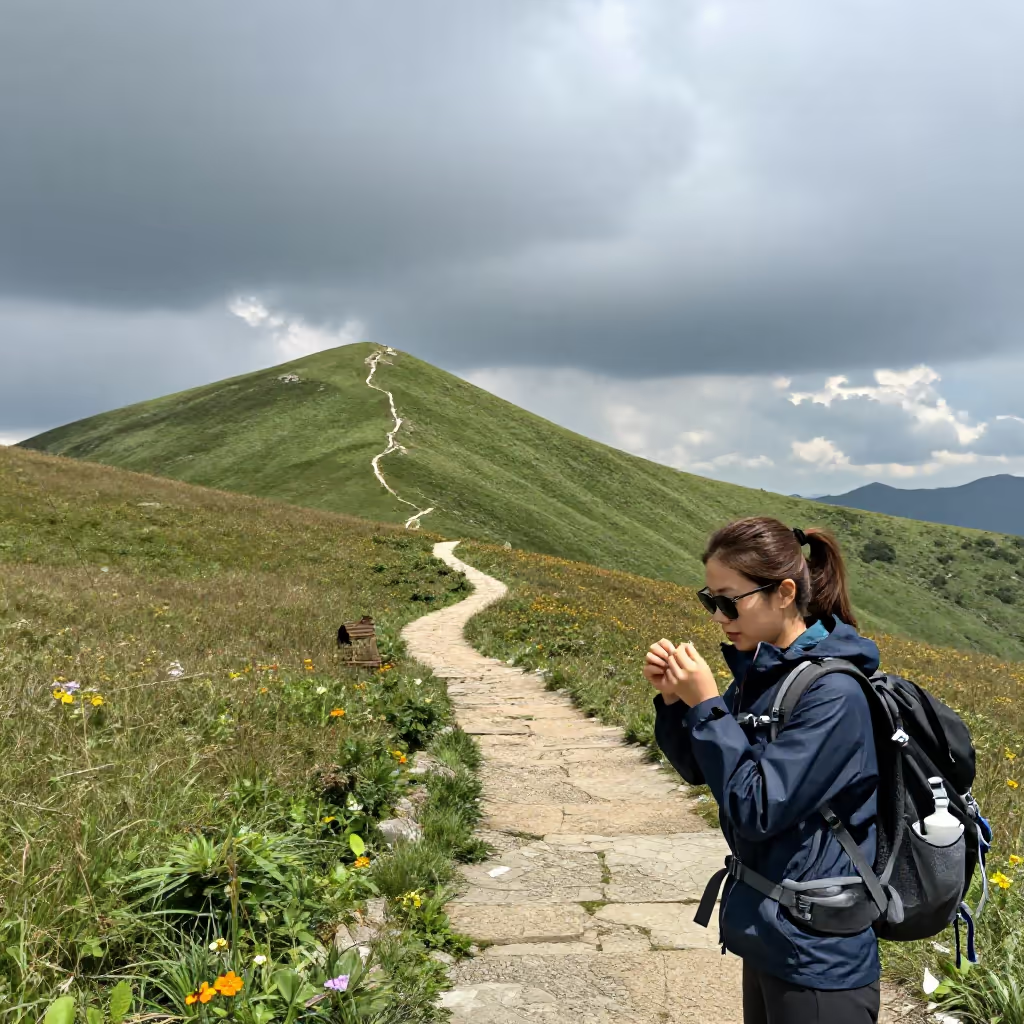
alternating / varied
Loading your saved state.
alternating
Following one after another in a regular alternation; first one thing, then the other.
Die beiden Brüder übernahmen abwechselnd die Pflege ihrer kranken Mutter.
The two brothers took turns caring for their sick mother.

The word 'abwechselnd' (alternating/varied) comes from the verb 'wechseln' (to change/switch). It describes an action in which two or more things or people switch places or roles, meaning one comes after the other.
Wir können uns beim Fahren abwechseln.
We can take turns driving.
'Abwechselnd' (alternating/varied) can be used as an adverb to describe how an action is carried out. But it can also stand before a noun as an adjective and is then declined like any other adjective.
Die Kinder spielten abwechselnd mit dem Ball.
The children played with the ball in turns.
When 'abwechselnd' (alternating) describes an order or sequence, it often refers to two opposite or different states or actions. These are frequently connected with 'und' (and).
Das Wetter war abwechselnd sonnig und bewölkt.
The weather was alternating between sunny and cloudy.
In the meaning 'vielfältig' (varied), 'abwechselnd' (varied) often describes abstract nouns. Typical combinations are 'ein abwechselndes Programm' (a varied program), 'eine abwechselnde Ernährung' (a varied diet), or 'eine abwechselnde Landschaft' (a varied landscape).
Für eine gute Gesundheit ist eine abwechselnde Ernährung wichtig.
A varied diet is important for good health.
once / times
'mal … mal' and 'abwechselnd' both describe switching between two or more things. 'mal … mal' sounds more casual and often describes that something is one way at one time and different another time. The change does not have to be completely regular. 'abwechselnd' fits better when things happen one after another in a clear order, for example first person A, then person B, then person A again. Remember: 'mal … mal' describes variety more, while 'abwechselnd' describes an ordered sequence more.

Beim Training laufen die Kinder abwechselnd eine Runde und machen dann eine Pause.
During training, the children alternate between running one lap and then taking a break.
Am Abend vor der Reise essen wir mal Brot, mal eine warme Suppe.
On the evening before the trip, we sometimes eat bread and sometimes a warm soup.