


abwenden
to avert
To prevent a danger, disaster, or other negative development from happening.
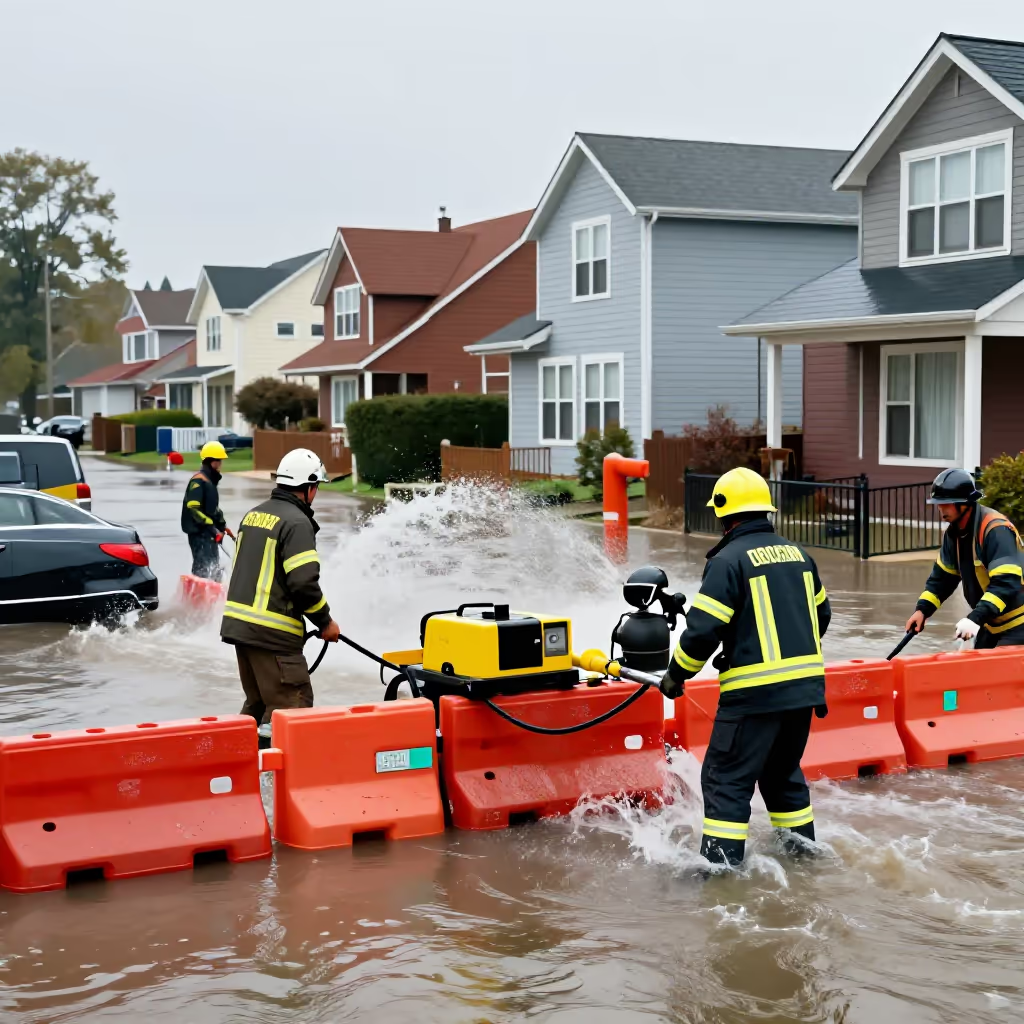
Durch schnelles Handeln konnte die Feuerwehr eine Katastrophe abwenden.
Through quick action, the fire department was able to avert a catastrophe.


to avert / to turn away
Loading your saved state.
to avert
To prevent a danger, disaster, or other negative development from happening.
Durch schnelles Handeln konnte die Feuerwehr eine Katastrophe abwenden.
Through quick action, the fire department was able to avert a catastrophe.
'Abwenden' (to avert / to turn away) is a separable verb. The prefix 'ab-' goes at the end in a main clause. The prefix 'ab-' here means 'away', and the base verb 'wenden' means 'to turn'.
Der Torwart wendet den Ball mit einer schnellen Reaktion ab.
The goalkeeper averts the ball with a quick reaction.
Pay attention to whether the verb is reflexive. Non-reflexive ('etwas abwenden' — to avert something) means 'to prevent'. Reflexive ('sich abwenden' — to turn away) means that a person turns away from something or someone.
Die Regierung versucht, eine Wirtschaftskrise abzuwenden.
The government is trying to avert an economic crisis.
In the meaning 'to prevent', 'abwenden' (to avert) is always combined with something negative. Typical objects are 'Gefahr' (danger), 'Schaden' (damage), 'Unglück' (misfortune/disaster), or 'Katastrophe' (catastrophe).
Durch sein schnelles Eingreifen konnte er größeren Schaden abwenden.
Through his quick intervention, he was able to avert greater damage.
When it means to break off contact with someone, the verb is reflexive and needs the preposition 'von' with the dative. The structure is: sich von jemandem/etwas abwenden (to turn away from someone/something).
Nach dem Verrat wandte sie sich endgültig von ihm ab.
After the betrayal, she turned away from him for good.
to prevent
'verhindern' and 'abwenden' can both mean that something negative does not happen. 'verhindern' is more general and fits many events, plans, or problems. 'abwenden' is used especially for a danger, disaster, or bad development that is already threatening to happen. It often sounds somewhat more serious or formal. Learners may confuse the words because both describe something not occurring. If it is just about a normal problem, 'verhindern' is usually more natural. If a danger is stopped at the last moment, 'abwenden' fits better.

Durch die schnelle Reparatur konnte die Firma einen großen Schaden abwenden.
Thanks to the quick repair, the company was able to avert major damage.
Lea verhindert mit einem Anruf, dass der Termin vergessen wird.
With a phone call, Lea prevents the appointment from being forgotten.