

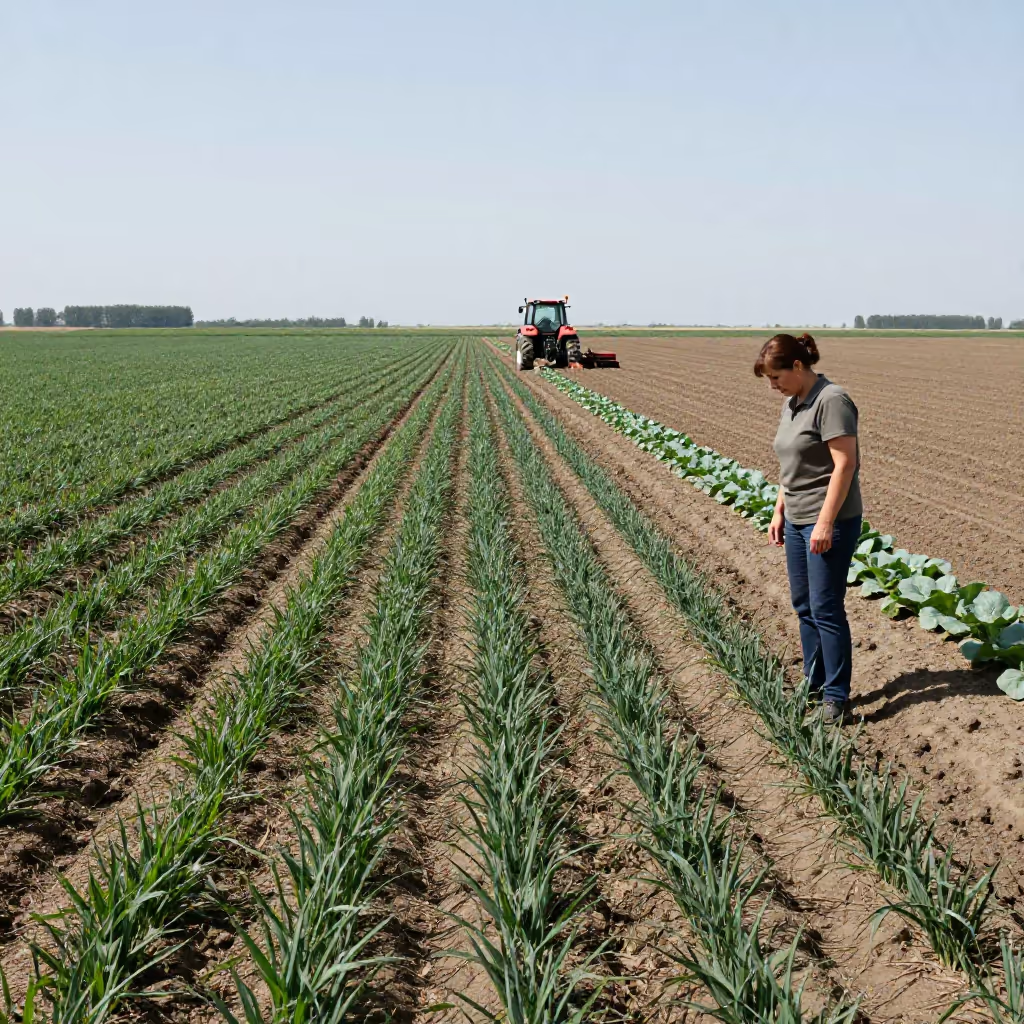
der Acker
field
A piece of land used for agriculture to grow plants such as grain or vegetables.
EXAMPLE
Im Frühling pflügt der Bauer seinen Acker.
In spring, the farmer plows his field.
field
Loading your saved state.
field
A piece of land used for agriculture to grow plants such as grain or vegetables.
Im Frühling pflügt der Bauer seinen Acker.
In spring, the farmer plows his field.
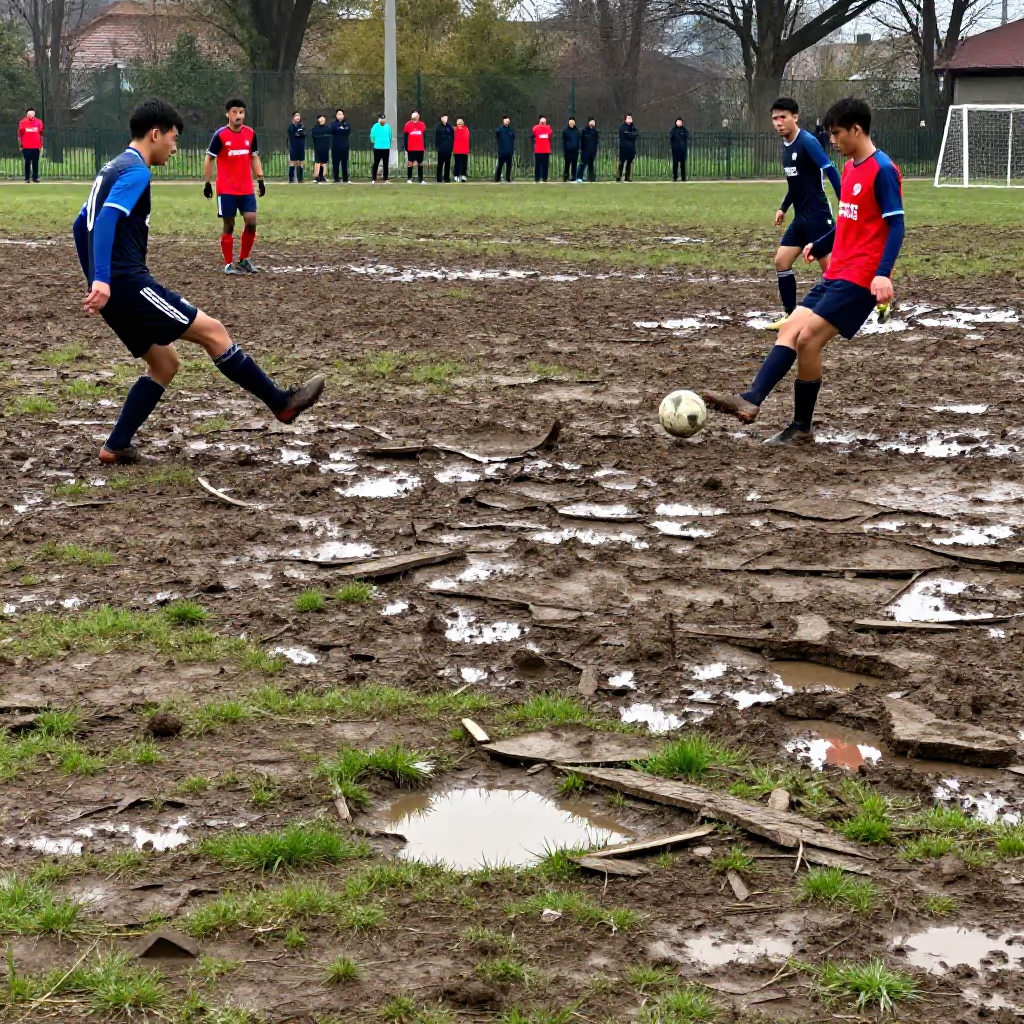
muddy pitch
A colloquial, derogatory term for a playing field, especially a soccer field, that is in very poor condition.
Auf diesem Acker kann man doch keinen vernünftigen Fußball spielen.
You can't play proper soccer on this muddy pitch.
The noun 'der Acker' is closely related to the verb 'ackern'. 'Ackern' originally means to work a field, but colloquially it is also used for 'to work hard' or 'to slog away'.
Für diese Prüfung habe ich wirklich wochenlang geackert.
I really worked hard for weeks for this exam.
In an agricultural context, 'Acker' is often combined with typical verbs, such as 'einen Acker bestellen' (to cultivate a field), 'pflügen' (to plow), or 'säen' (to sow).
Nach der Ernte muss der Acker für das nächste Jahr gepflügt werden.
After the harvest, the field has to be plowed for the next year.
Using 'Acker' for a bad playing field is purely colloquial and has a negative, derogatory meaning. It is used to complain about the poor condition of the pitch.
Bei dem Regen verwandelt sich der Fußballplatz in einen echten Acker.
In this rain, the soccer field turns into a real muddy pitch.
place / space
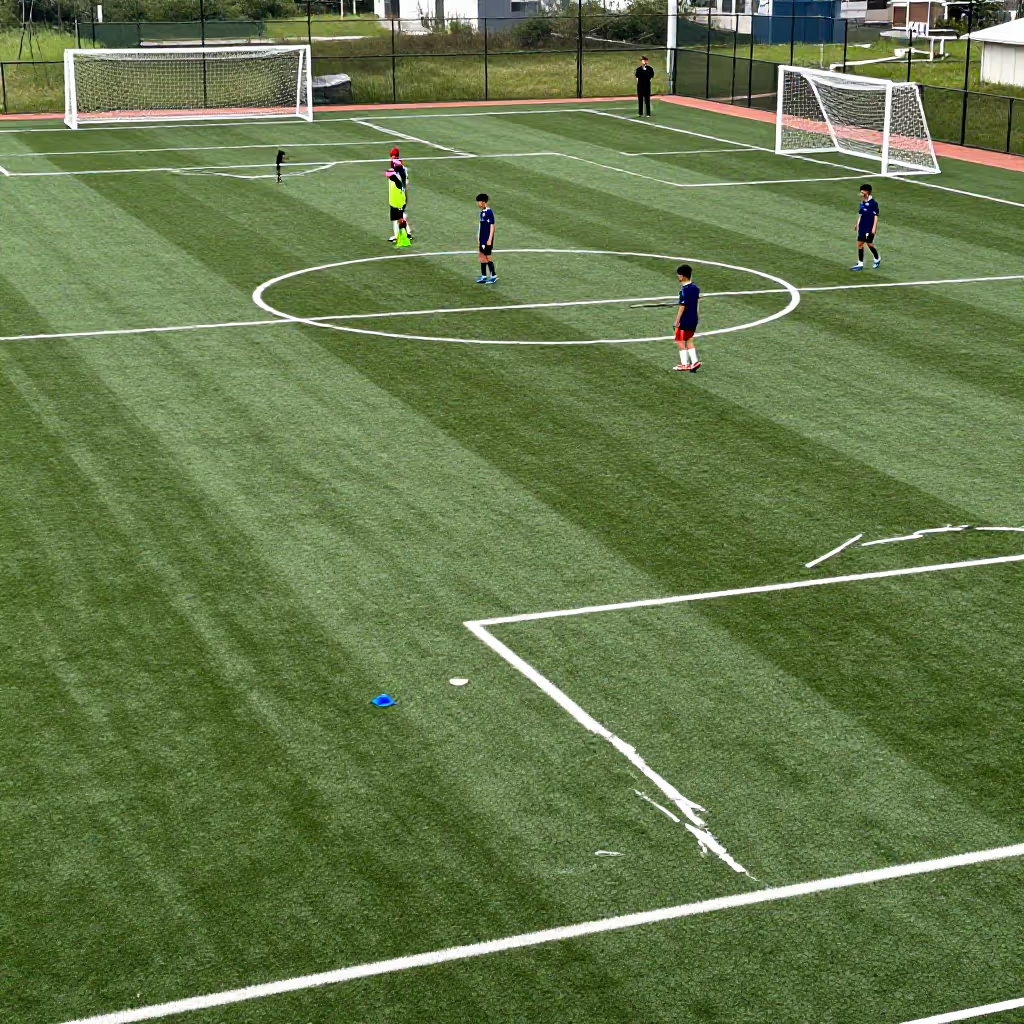
Platz refers to a playing field in a neutral way. Acker can refer to the same playing field, but colloquially adds a derogatory evaluation: its condition is very poor. Platz works for a factual statement, while Acker can fit when strongly criticizing a soccer field.
Der Acker ist nach dem Regen kaum bespielbar.
The pitch is barely playable after the rain.
Der Platz ist nach dem Regen schwer bespielbar.
The pitch is difficult to play on after the rain.