


der Ägypter
Egyptian
A man who has Egyptian citizenship or comes from Egypt.
EXAMPLE
Mein neuer Kollege ist Ägypter und kommt aus Kairo.
My new colleague is Egyptian and comes from Cairo.
Egyptian
Loading your saved state.
Egyptian
A man who has Egyptian citizenship or comes from Egypt.
Mein neuer Kollege ist Ägypter und kommt aus Kairo.
My new colleague is Egyptian and comes from Cairo.
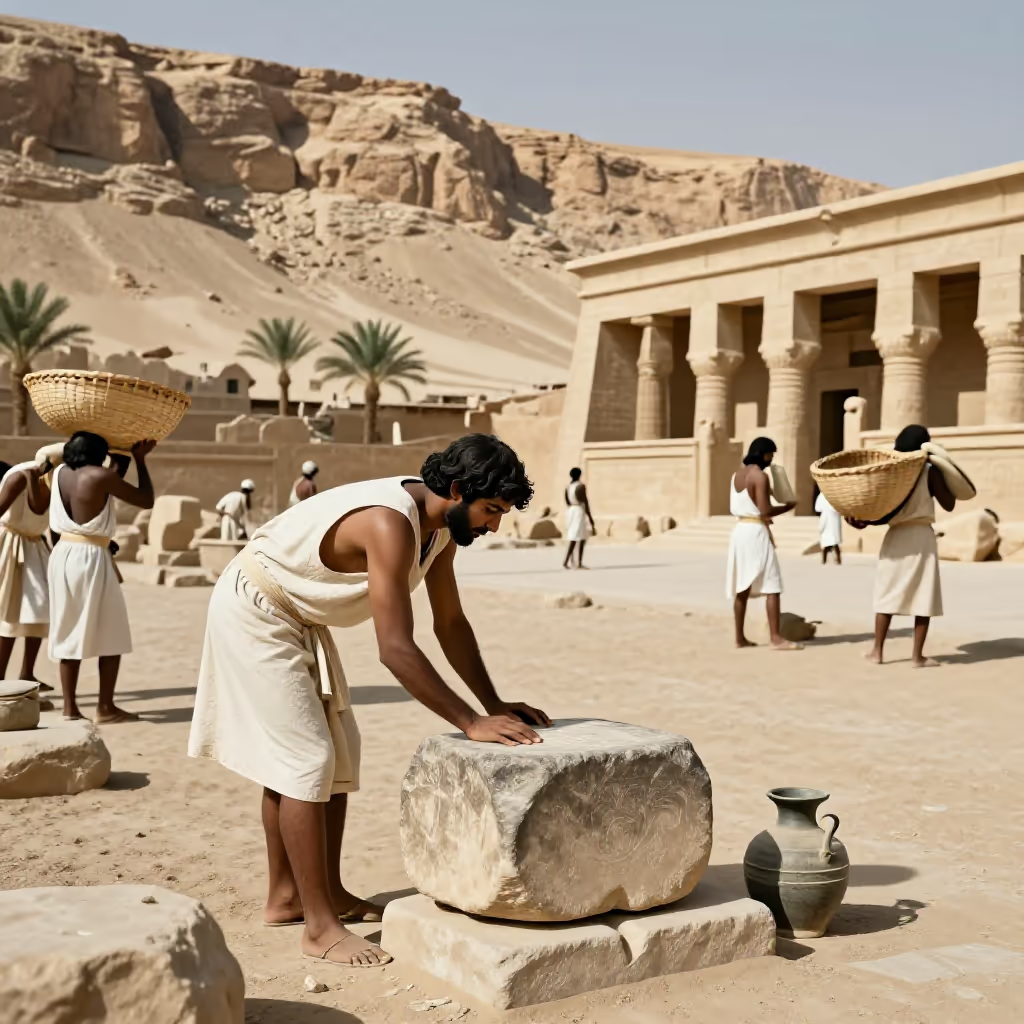
ancient Egyptian
A term for a member of the people of ancient Egypt. Mostly used in the plural.
Die alten Ägypter waren bekannt für ihre beeindruckenden Pyramiden.
The ancient Egyptians were known for their impressive pyramids.
'Der Ägypter' (the Egyptian) is a masculine noun of the N-declension. This means it takes the ending '-n' in the accusative, dative, and genitive singular. This is an important grammatical rule for this word.
Ich habe gestern einen Ägypter kennengelernt.
I met an Egyptian yesterday.
The word 'Ägypter' (Egyptian) is derived directly from the country name 'Ägypten' (Egypt). This pattern for forming nationality terms is very common in German.
Er kommt aus Ägypten, er ist also Ägypter.
He comes from Egypt, so he is Egyptian.
The context makes it clear whether modern or ancient Egyptians are meant. Words like 'alt' (ancient/old), 'Pharaonen' (pharaohs), 'Pyramiden' (pyramids), or use in the plural ('die Ägypter', the Egyptians) usually point to the historical people.
Die alten Ägypter entwickelten eine eigene Schrift.
The ancient Egyptians developed their own writing system.