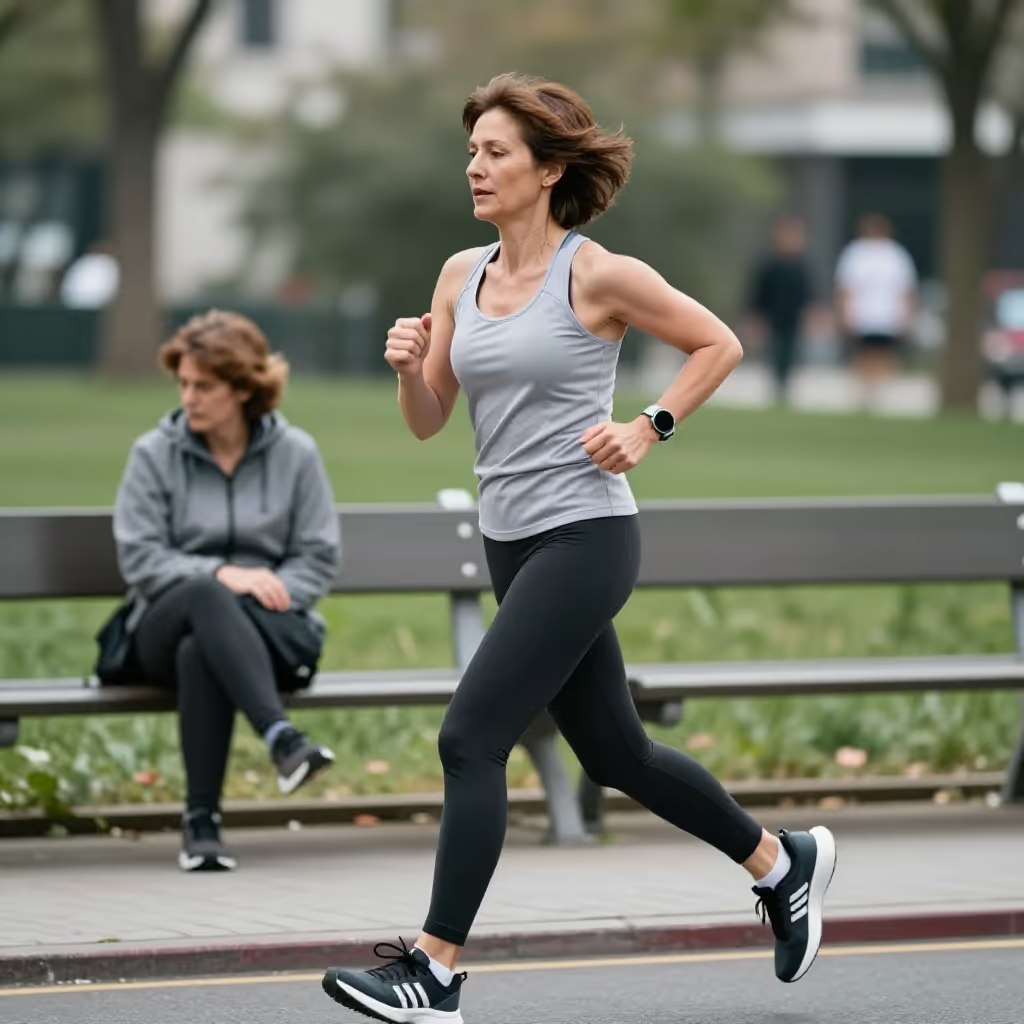
Physically or mentally lively and engaged; the opposite of passive or sluggish.
example
Obwohl sie schon über 80 ist, ist meine Oma noch sehr aktiv und geht jeden Tag spazieren.
Although she is already over 80, my grandma is still very active and goes for a walk every day.

Usage tips
Sentence structure with preposition
When 'aktiv' (active) means that someone is involved in something, it is often followed by the preposition 'in' with the dative case. This names the field or organization of the involvement.
EXAMPLE
Sie ist seit ihrer Jugend politisch aktiv.
She has been politically active since her youth.
Word family
The word family of 'aktiv' (active) includes the verb 'aktivieren' (to activate, to set something in motion) and the noun 'die Aktivität' (activity). If you know 'aktiv', you can understand these words more easily.
EXAMPLE
Sie müssen Ihr neues Bankkonto erst aktivieren.
You must activate your new bank account first.
Typical collocations
In the meaning 'rege' (lively) or 'tätig' (engaged/active), 'aktiv' (active) is often used in fixed combinations, for example 'ein aktives Leben führen' (to lead an active life), 'geistig aktiv bleiben' (to stay mentally active), or 'sexuell aktiv sein' (to be sexually active).
EXAMPLE
Es ist wichtig, auch im Alter geistig aktiv zu bleiben.
It is important to stay mentally active even in old age.
Context clue
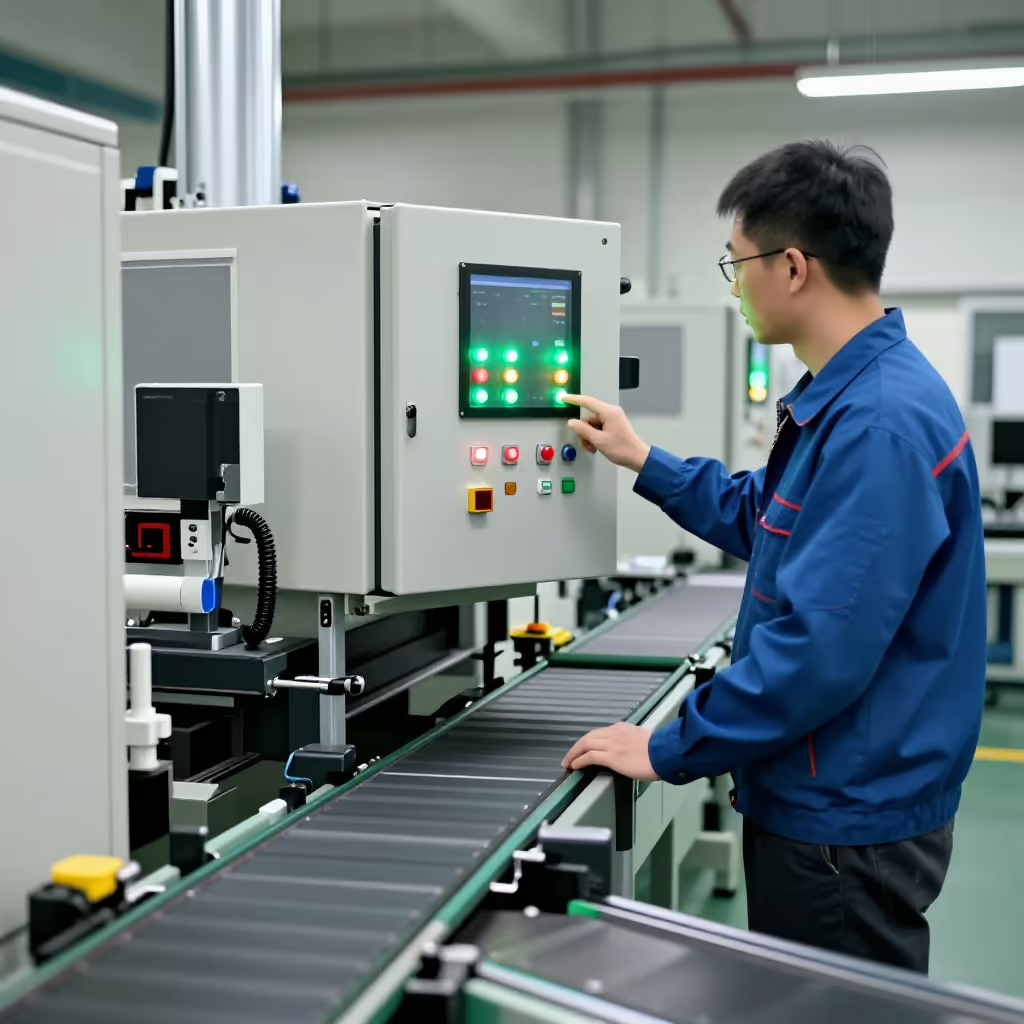
The meaning 'in Betrieb' (in operation) or 'wirksam' (effective) often refers to technical devices, natural phenomena, or chemical substances. Typical nouns in this context are 'Vulkan' (volcano), 'Konto' (account), or 'Wirkstoff' (active ingredient).
EXAMPLE
Der Alarm ist jetzt aktiv und wird bei Bewegung ausgelöst.
The alarm is now active and will be triggered by movement.
Grammatical term
This meaning of 'aktiv' (active) is purely a technical term from grammar. It describes sentences in which the subject performs the action. So the context is always a discussion about language.
EXAMPLE
Formulieren Sie den Satz vom Passiv ins Aktiv um.
Rewrite the sentence from the passive voice into the active voice.
Compare with
near_synonym · confusable
aktiv vs tätig
active / employed
'aktiv' and 'tätig' can both describe someone acting and not just waiting. 'aktiv' is more general: a person takes part, moves around, thinks along, or gets involved. 'tätig' is often used more formally, especially when someone works in a profession or field. In the phrase 'tätig werden' (to take action), it means to start acting in order to solve something. Learners may confuse the words because both can be the opposite of doing nothing. In everyday language, 'aktiv' often fits better; for work or official action, 'tätig' sounds more natural.
aktiv
Im Deutschkurs ist Mehmet sehr aktiv und stellt viele Fragen.
Mehmet is very active in the German course and asks many questions.
tätig
Frau Becker ist seit fünf Jahren als Ärztin im Krankenhaus tätig.
Ms. Becker has been employed as a doctor at the hospital for five years.