

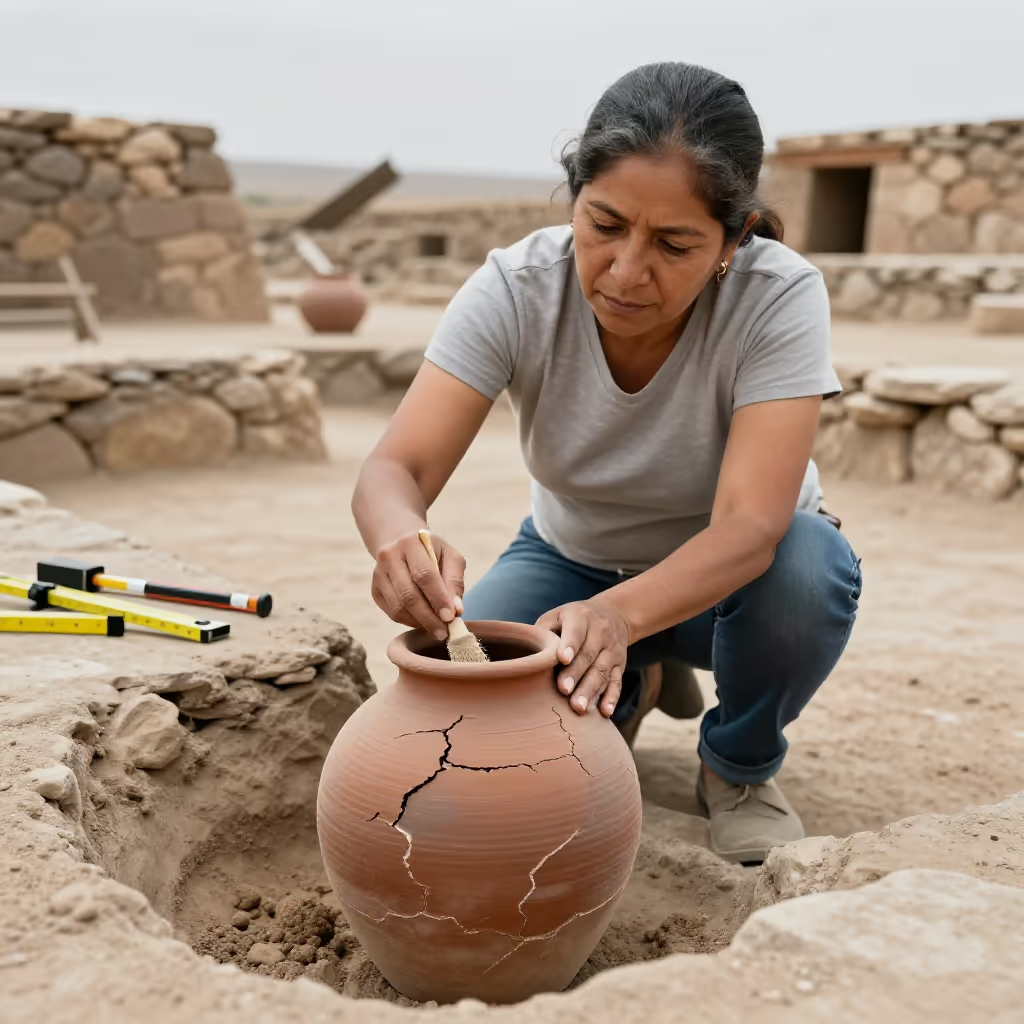
uralt
ancient
Extremely old, dating from a very long time ago. It is used to strongly emphasize great age.
EXAMPLE
In der Burg fanden sie ein uraltes Manuskript.
In the castle, they found an ancient manuscript.
ancient / outdated
Loading your saved state.
ancient
Extremely old, dating from a very long time ago. It is used to strongly emphasize great age.
In der Burg fanden sie ein uraltes Manuskript.
In the castle, they found an ancient manuscript.

outdated
Colloquial for something that is completely outdated, old-fashioned, or no longer current.
Mein Handy ist schon uralt, ich brauche dringend ein neues.
My phone is already outdated; I urgently need a new one.
The prefix 'ur-' intensifies the adjective 'alt' (old). It means 'very', 'extremely', or 'original'. So 'uralt' (ancient/very old) is much stronger than just 'alt' (old).
Dieser Baum im Garten ist schon uralt.
This tree in the garden is already ancient.
The noun that 'uralt' describes reveals the meaning. An 'uraltes Schloss' (ancient castle) is historically old, while an 'uraltes Handy' (outdated phone) is old-fashioned and obsolete.
Wir besichtigten eine uralte Ruine.
We visited an ancient ruin.
The meaning 'outdated' or 'old-fashioned' is mainly used in colloquial language, especially when talking about technology, fashion, or jokes.
Seine Methoden sind ja uralt, das macht heute niemand mehr so.
His methods are really outdated; nobody does it that way anymore.
old
Both words describe something that has existed for a very long time or is not new. “Alt” is the neutral way to state an age, while “uralt” strongly emphasizes extreme age and often suggests a time far in the past. Use “alt” factually and “uralt” when the exaggeration or emphasis is important.

Die uralte Burg auf dem Berg stammt aus einer sehr weit zurückliegenden Zeit.
The ancient castle on the mountain dates back to a very distant time.
Das alte Fahrrad steht seit vielen Jahren in unserem Keller.
The old bicycle has been in our basement for many years.