

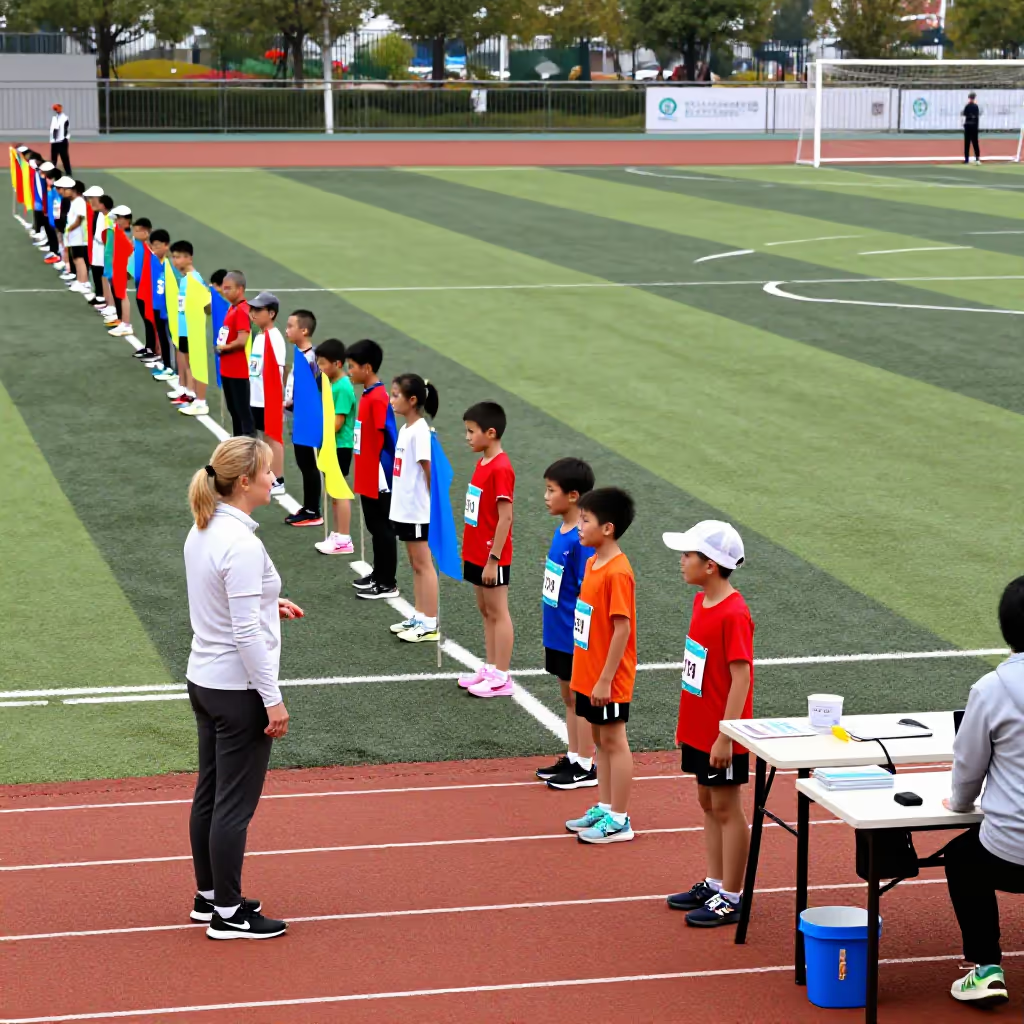
A group of people who are grouped together based on their similar age, especially in sports competitions, demography, or statistical surveys.
example
Bei dem Marathon startet er in der Altersklasse der 40- bis 45-Jährigen.
In the marathon, he starts in the 40-to-45-year-old age group.
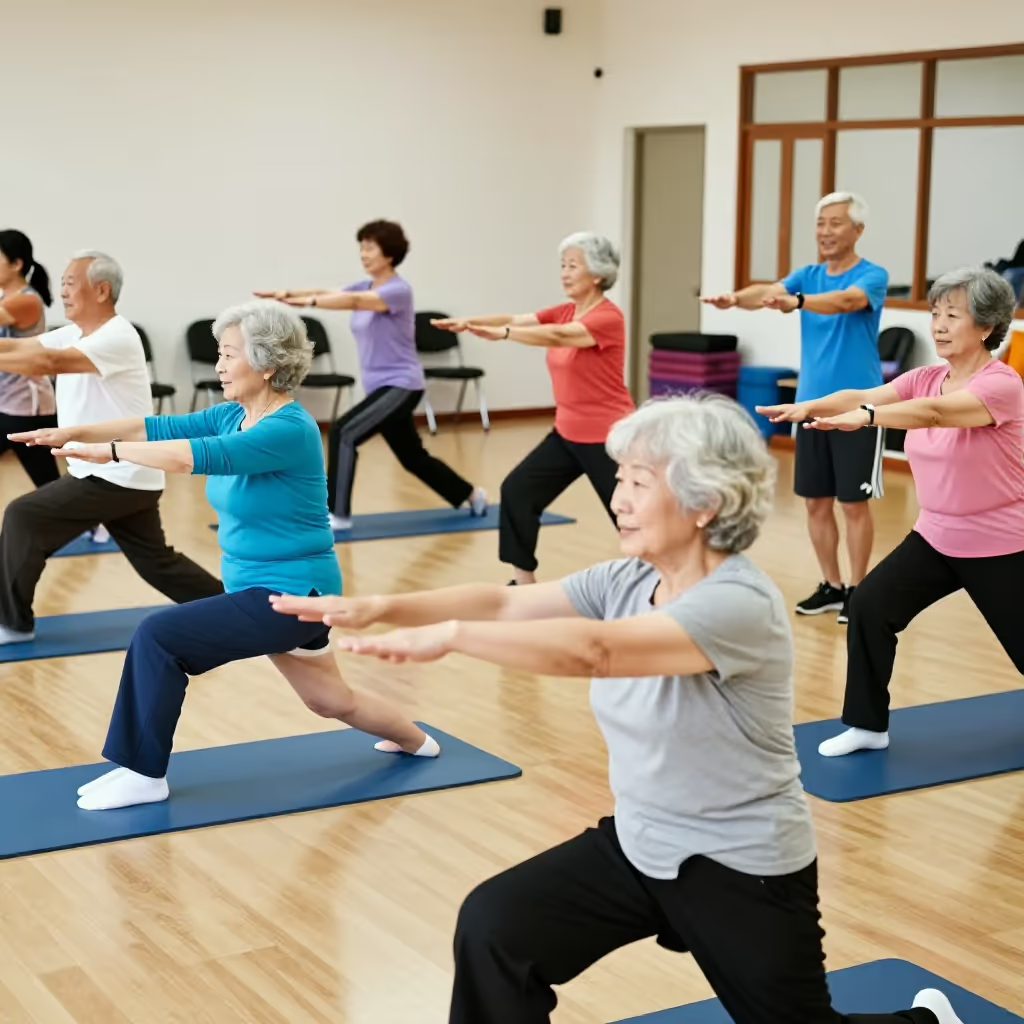
Usage tips
Compound structure
The word is made up of 'Alter' (age), the linking -s, and 'Klasse' (class/group). Its meaning is therefore literally a 'class' or group divided according to 'Alter' (age).
EXAMPLE
Für jede Altersklasse gibt es eine eigene Siegerehrung.
There is a separate awards ceremony for each age group.
Typical preposition
In connection with competitions, the preposition 'in' is almost always used. You start, compete, or win 'in' a particular age group.
EXAMPLE
Die Schwimmerin tritt in der Altersklasse der Juniorinnen an.
The female swimmer is competing in the junior age group.
Use in sports
In sports, age groups are often referred to with abbreviations such as 'U18' (for 'unter 18', under 18) or 'Ü50' (for 'über 50', over 50). These then come directly after the noun.
EXAMPLE
Das Turnier findet für die Altersklasse U16 statt.
The tournament is being held for the U16 age group.
Compare with
near_synonym · confusable
Altersklasse vs Generation
generation
'Generation' and 'Altersklasse' can both group people by age. 'Generation' sounds more general and often refers to people who grew up in the same period and share similar experiences. 'Altersklasse' is more precise and is used especially in sports, competitions, or statistics. The words can be confused because both describe groups by age. In everyday language, you are more likely to say 'Generation' when talking about a shared outlook on life or history. 'Altersklasse' fits better when there are fixed groups with age limits.
Altersklasse
Jonas startet beim Lauf in der Altersklasse der 18- bis 25-Jährigen.
Jonas is competing in the run in the 18-to-25-year-old age group.
Generation
Bei der Arbeit sprechen sie oft darüber, wie ihre Generation anders lernt als die Eltern.
At work, they often talk about how their generation learns differently from their parents.