

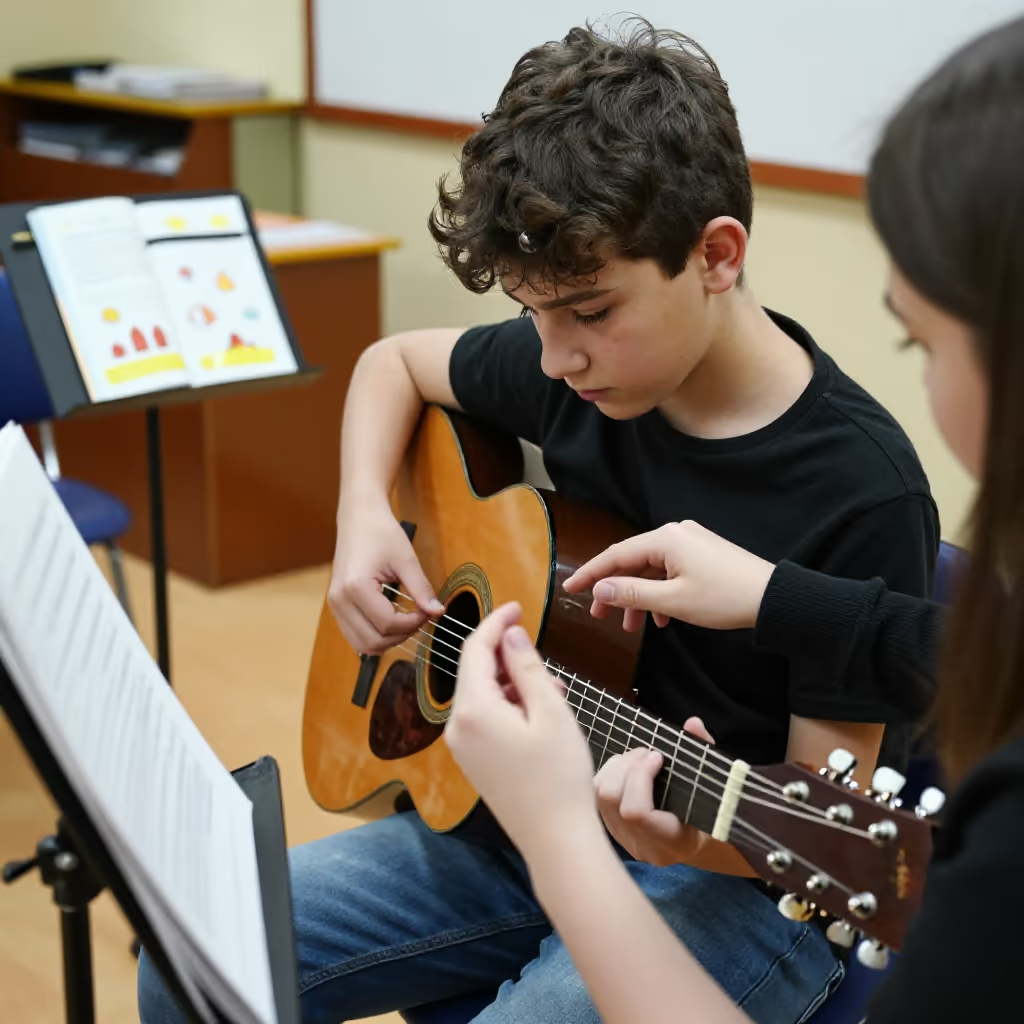
A person who is just starting to learn or do something and therefore still has little experience or knowledge.
example
Als Anfänger im Klettern sollte man mit einfachen Routen beginnen.
As a beginner in climbing, you should start with easy routes.

Usage tips
Word family
The word 'Anfänger' (beginner) is derived directly from the verb 'anfangen' (to begin/start). So an Anfänger is a person who is just starting something.
EXAMPLE
Wenn du eine neue Sprache lernst, machst du am Anfang viele typische Anfängerfehler.
When you learn a new language, you make many typical beginner mistakes at the beginning.
Sentence structure with 'in'
To say in which area someone is a beginner, you use the preposition 'in' followed by the dative.
EXAMPLE
Ich bin noch Anfänger im Programmieren.
I am still a beginner at programming.
Typical collocations
'Anfänger' (beginner) is often used in fixed combinations, for example in 'ein Kurs für Anfänger' (a course for beginners), 'ein typischer Anfängerfehler' (a typical beginner mistake), or 'für Anfänger geeignet sein' (to be suitable for beginners).
EXAMPLE
Dieses Kochbuch ist auch für absolute Anfänger geeignet.
This cookbook is also suitable for absolute beginners.
Compare with
antonym
Anfänger vs Meister
master / champion
'der Meister' and 'der Anfänger' are clear opposites when it comes to skill and experience. An 'Anfänger' is just starting out and has little practice. A 'Meister' can do something very well and has reached a high level. So 'Anfänger' fits at the beginning of a learning path, while 'Meister' fits more toward the end or after long practice. The contrast is especially clear in sports, music, art, or other skills.
Anfänger
Im Tanzkurs bekommen Anfänger zuerst einfache Schritte gezeigt.
In the dance class, beginners are first shown simple steps.