


angucken
to look at
Colloquial for looking at someone or something; directing your gaze toward someone or something.
EXAMPLE
Warum guckst du mich so komisch an?
Why are you looking at me so strangely?
to look at / to watch
Loading your saved state.
to look at
Colloquial for looking at someone or something; directing your gaze toward someone or something.
Warum guckst du mich so komisch an?
Why are you looking at me so strangely?
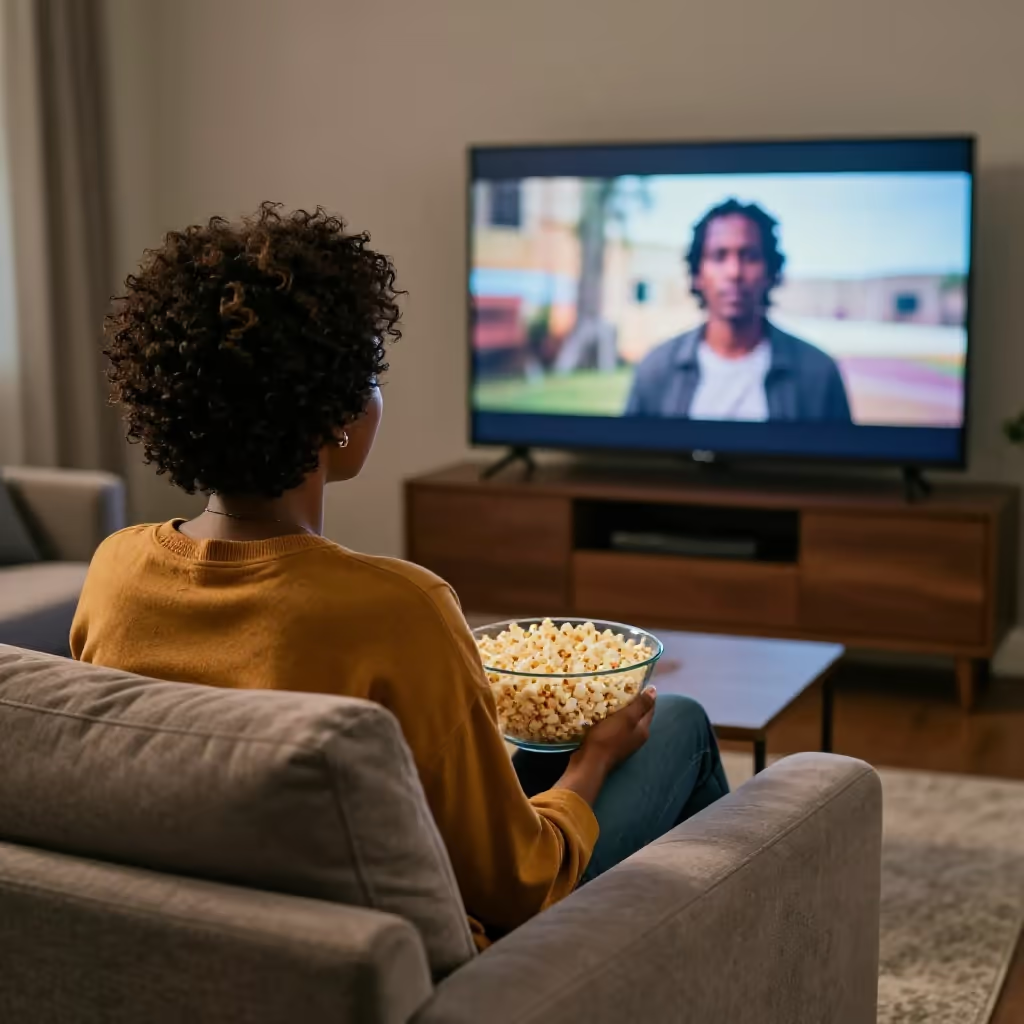
to watch
Colloquial for looking at something for entertainment or information, such as a film, a show, or pictures.
Wollen wir uns heute Abend einen Film angucken?
Do we want to watch a film tonight?

to have a look at
Colloquial for visiting or looking around a place or sight.
Im Urlaub haben wir uns die Altstadt von Lissabon angeguckt.
On vacation, we had a look around Lisbon's old town.
'Angucken' (to look at / to watch) is a colloquial word. It is used less often in formal or written contexts.
Lass uns mal die Urlaubsfotos angucken.
Let's have a look at the vacation photos.
As a separable verb, the prefix 'an-' goes at the end in a main clause. In subordinate clauses or in the infinitive, the verb stays together.
Er guckt sich gerade eine neue Wohnung an.
He is currently looking at a new apartment.
'Angucken' (to look at / to watch) is very often used reflexively with a dative pronoun: 'sich (dative) etwas (accusative) angucken' (to have a look at something). This emphasizes that you are looking at something for yourself or out of your own interest.
Ich gucke mir heute Abend eine Dokumentation an.
I'm watching a documentary tonight.
to look at / to watch
Ansehen and angucken can both refer to consciously watching a film or a show. Ansehen is neutral and suitable for standard language, whereas angucken sounds distinctly colloquial. Angucken is appropriate in casual conversations, while ansehen is usually used in neutral texts.
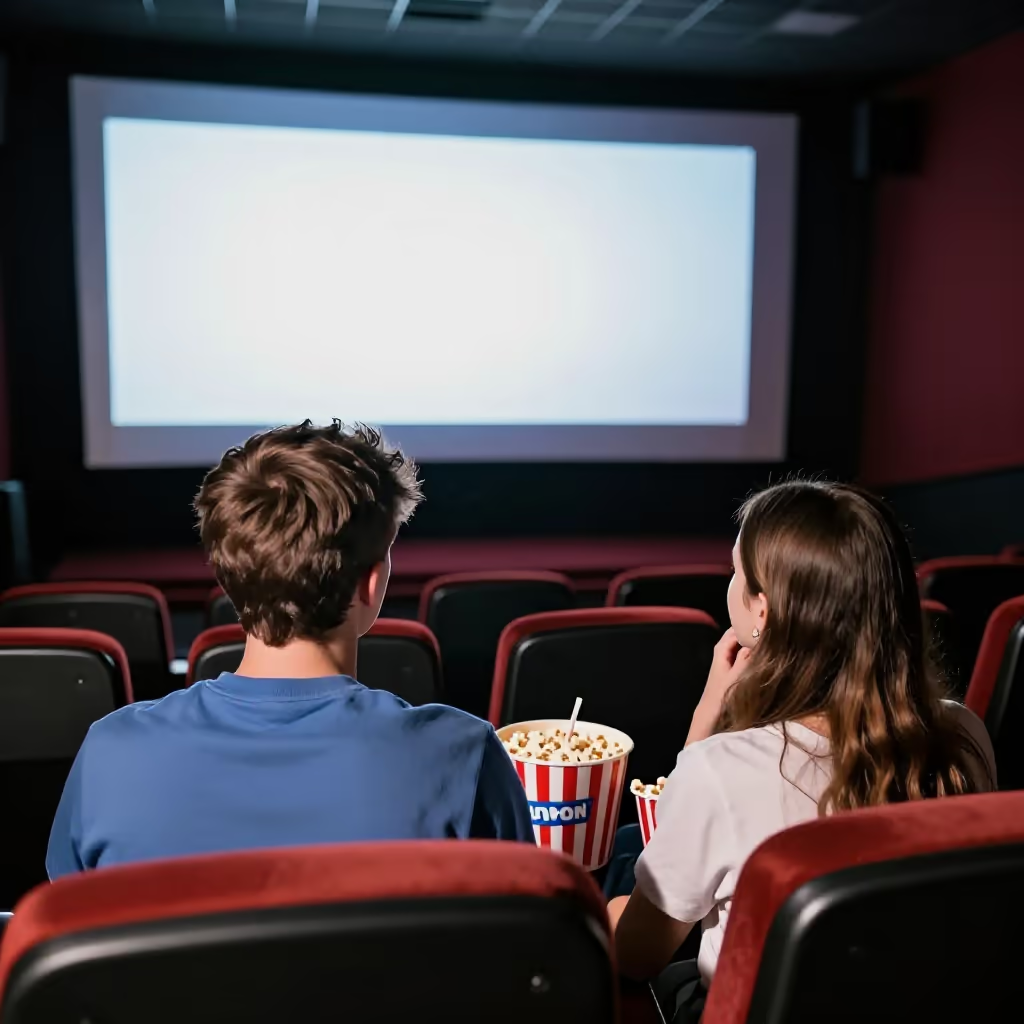
Komm, wir wollen uns heute Abend den neuen Film angucken.
Come on, let's watch the new movie tonight.
Am Abend möchten wir uns den neuen Film ansehen.
We would like to watch the new movie this evening.