


anschleppen
to lug over
To laboriously lug or bring something heavy over.
EXAMPLE
Die Arbeiter schleppten die schweren Kisten mühsam an.
The workers laboriously lugged the heavy crates over.
to lug over
anschleppen – schleppte an – hat angeschleppt
Loading your saved state.
to lug over
To laboriously lug or bring something heavy over.
Die Arbeiter schleppten die schweren Kisten mühsam an.
The workers laboriously lugged the heavy crates over.

to drag someone along
To bring someone somewhere, often even though that person is not expected or particularly welcome there.
Er hat gestern seine neue Freundin zur Party angeschleppt.
Yesterday, he dragged his new girlfriend along to the party.
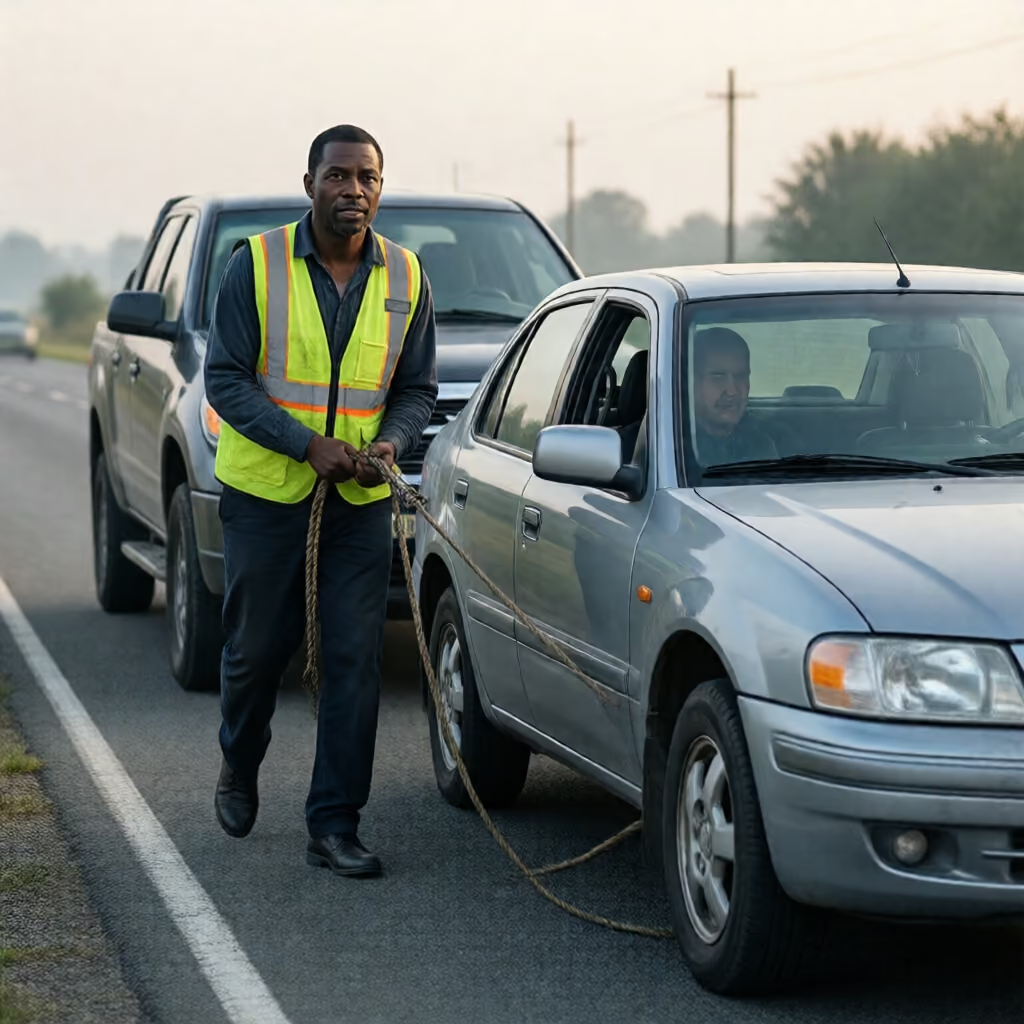
to tow-start
To tow one vehicle with another vehicle so that its engine starts, for example when the battery is dead.
Der Nachbar hat unser Auto mit seinem Wagen angeschleppt, weil die Batterie leer war.
The neighbor tow-started our car with his vehicle because the battery was dead.
| ich | schleppe an |
|---|---|
| du | schleppst an |
| er/sie/es | schleppt an |
| wir | schleppen an |
| ihr | schleppt an |
| sie | schleppen an |
| ich | schleppte an |
|---|---|
| du | schlepptest an |
| er/sie/es | schleppte an |
| wir | schleppten an |
| ihr | schlepptet an |
| sie | schleppten an |
| ich | habe angeschleppt |
|---|---|
| du | hast angeschleppt |
| er/sie/es | hat angeschleppt |
| wir | haben angeschleppt |
| ihr | habt angeschleppt |
| sie | haben angeschleppt |
| du | schlepp an! schleppe an! |
|---|---|
| ihr | schleppt an! |
| Sie | schleppen Sie an! |
| ich | hatte angeschleppt |
|---|---|
| du | hattest angeschleppt |
| er/sie/es | hatte angeschleppt |
| wir | hatten angeschleppt |
| ihr | hattet angeschleppt |
| sie | hatten angeschleppt |
| ich | werde anschleppen |
|---|---|
| du | wirst anschleppen |
| er/sie/es | wird anschleppen |
| wir | werden anschleppen |
| ihr | werdet anschleppen |
| sie | werden anschleppen |
| ich | schleppe an |
|---|---|
| du | schleppest an |
| er/sie/es | schleppe an |
| wir | schleppen an |
| ihr | schleppet an |
| sie | schleppen an |
Used for reported speech.
| ich | schleppte an |
|---|---|
| du | schlepptest an |
| er/sie/es | schleppte an |
| wir | schleppten an |
| ihr | schlepptet an |
| sie | schleppten an |
Used for wishes and “would”.
| infinitive | anschleppen |
|---|---|
| with zu | anzuschleppen |
| present participle | anschleppend |
| past participle | angeschleppt |
„Anschleppen“ (to lug over / to drag along) is a separable verb. In a main clause, „an“ appears at the end of the sentence; in a subordinate clause, the verb remains together. In the infinitive with „zu“, „zu“ comes between the prefix and the verb.
Die Helfer schleppten die schweren Möbel einzeln an.
The helpers lugged the heavy furniture over piece by piece.
Sie war erschöpft, weil sie die Kisten allein anschleppte.
She was exhausted because she lugged the crates over by herself.
Es war anstrengend, das alte Sofa anzuschleppen.
It was exhausting to lug the old sofa over.
„Anschleppen“ (to lug over / to drag along) consists of the prefix „an“ (to/toward) and the verb „schleppen“ (to lug). „An“ usually indicates movement toward the speaker: something or someone is laboriously lugged over. With a car, however, „an“ means to get it running, as in „anspringen“ (to start).
Was hast du denn da alles angeschleppt?
What on earth have you dragged along with you?
In the meaning of bringing something over, „anschleppen“ (to lug over) is often used with heavy or unwieldy things. Typical complements include furniture, crates, bags, or firewood.
Für das Lagerfeuer schleppten die Kinder Brennholz an.
The children lugged over firewood for the campfire.
When „anschleppen“ (to drag someone along) is used for a person, it often sounds colloquial and derogatory. The speaker is indicating that they consider the person brought along unexpected, annoying, or inappropriate.
Er schleppte schon wieder seine ganzen Freunde zur Besprechung an.
He dragged all his friends along to the meeting again.