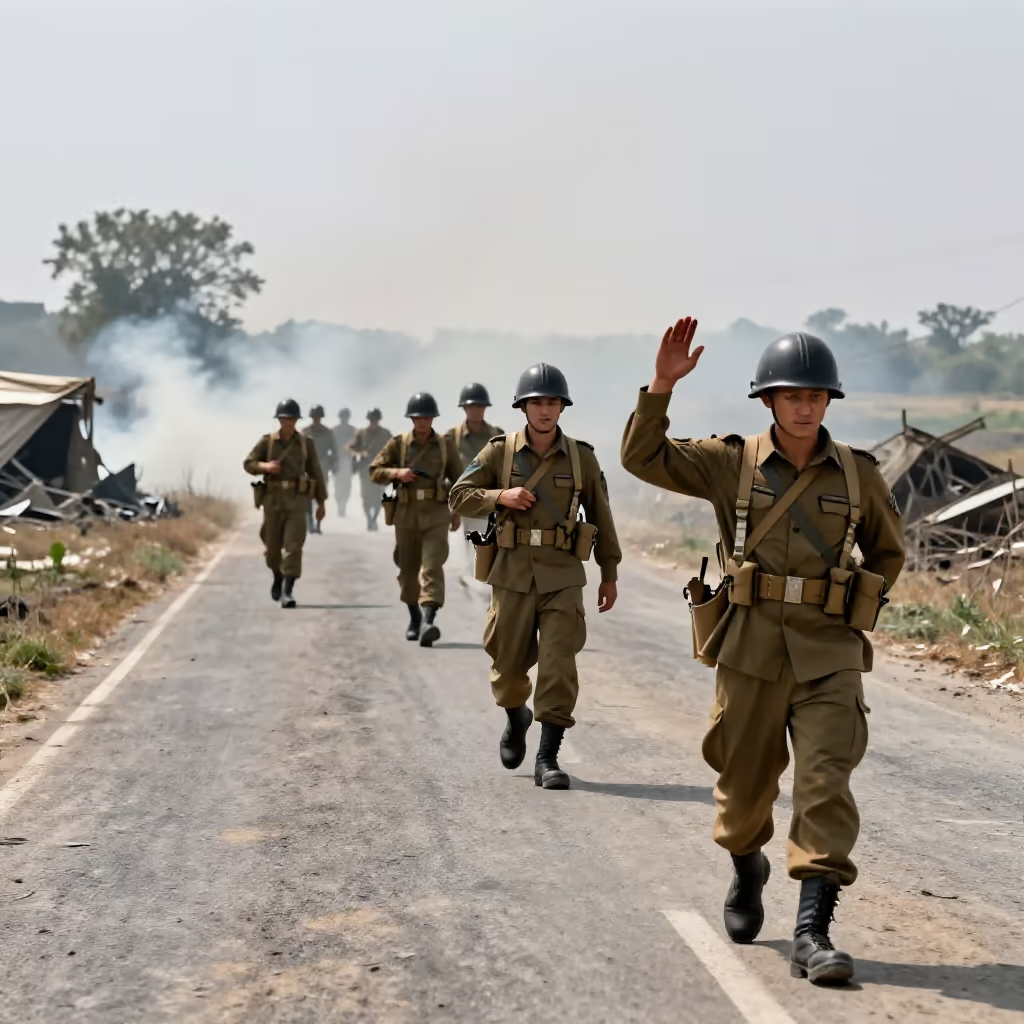
A large number of people moving to a place at the same time and often in a hurry because they want something specific. It also describes very high demand for a product or service.
example
Nach der Ankündigung des neuen iPhones gab es einen riesigen Ansturm auf die Apple-Geschäfte.
After the announcement of the new iPhone, there was a huge rush on the Apple stores.
Usage tips
Compound structure
The word is made up of 'an' and 'Sturm' (storm). Figuratively, it describes a 'storm' of people or demand directed 'at' a place or toward a product.
EXAMPLE
Der Ansturm auf die Konzertkarten war enorm.
The rush for the concert tickets was enormous.
Context clue
You can recognize the meaning from the context. If it is about commerce, tickets, or fans, it means a large crowd or high demand. In the context of the military, sports, or history, it means an attack.
EXAMPLE
Zum Winterschlussverkauf erlebten die Geschäfte einen großen Ansturm.
During the winter clearance sale, the stores experienced a big rush.
Use with 'auf'
When 'Ansturm' (rush) describes high demand, the target is given with the preposition 'auf' (on/for) and the accusative.
EXAMPLE
Es gab einen Ansturm auf die wenigen verfügbaren Plätze im Kurs.
There was a rush for the few available places in the course.
Typical verbs
In the context of an attack, 'Ansturm' (assault) is often used with verbs such as 'standhalten' (to withstand, with dative), 'abblocken' (to block), or 'abwehren' (to repel, with accusative).
EXAMPLE
Die Abwehr konnte dem Ansturm der gegnerischen Mannschaft nicht standhalten.
The defense could not withstand the assault by the opposing team.
Compare with
near_synonym
Ansturm vs Angriff
attack
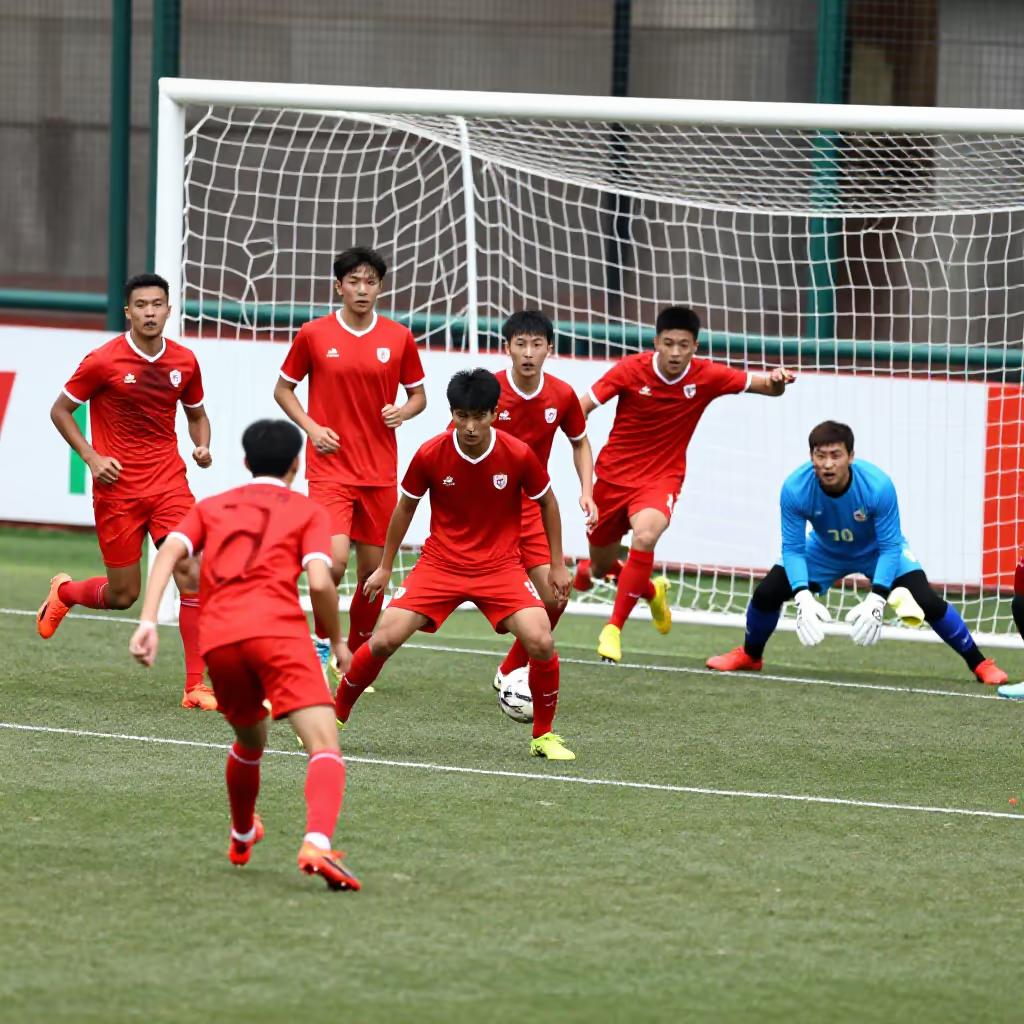
'der Angriff' and 'der Ansturm' can both describe a sudden, strong movement against a target, for example in the military or in sports. 'Der Angriff' is the more general word: it mainly says that someone is actively moving against someone or something. 'Der Ansturm' sounds more like a fast, fierce movement with a lot of pressure. In sports, a team can start an 'Angriff'; an 'Ansturm' often feels especially intense and hard to stop. 'Ansturm' also has another common meaning: many people come to a place at the same time or want to get something. 'Angriff' does not have this meaning.
Ansturm
In den letzten Minuten hält die Abwehr dem Ansturm der Gegner kaum noch stand.
In the final minutes, the defense can barely withstand the opponents' assault.
Angriff
Der Angriff der Heimmannschaft endet mit einem Schuss knapp neben das Tor.
The home team's attack ends with a shot just wide of the goal.