


der Sturm
storm
A weather event with very strong wind, often accompanied by rain, snow, or hail.
EXAMPLE
Der Sturm hat viele Bäume entwurzelt und Dächer abgedeckt.
The storm uprooted many trees and tore roofs off.
storm
Loading your saved state.
storm
A weather event with very strong wind, often accompanied by rain, snow, or hail.
Der Sturm hat viele Bäume entwurzelt und Dächer abgedeckt.
The storm uprooted many trees and tore roofs off.

storm
A violent outburst of emotions, such as anger, enthusiasm, or outrage.
Seine Rede löste einen Sturm der Entrüstung aus.
His speech triggered a storm of outrage.

assault / attack
A fast and energetic attack, for example in the military or in sports.
Der Sturm auf die gegnerische Festung begann im Morgengrauen.
The assault on the enemy fortress began at dawn.

to take by storm
To win over or excite someone or a group of people very quickly.
Mit ihrem ersten Lied hat die neue Band die Herzen des Publikums im Sturm erobert.
With their first song, the new band took the audience's hearts by storm.
'Der Sturm' (the storm) is the noun related to the verb 'stürmen' (to storm). 'Stürmen' means to move quickly and forcefully, which describes the core idea of the weather, an attack, or strong emotions.
Die Fans stürmten nach dem Sieg auf das Spielfeld.
The fans stormed onto the field after the victory.
'Sturm' (storm) is a common base word in compound nouns that describe the type of storm more precisely. Examples include 'Schneesturm' (snowstorm), 'Sandsturm' (sandstorm), 'Herbststurm' (autumn storm), and also 'Gefühlssturm' (storm of emotions).
Eine Sturmwarnung wurde für die gesamte Küste ausgegeben.
A storm warning was issued for the entire coast.
The idea of a violent storm is often transferred to strong emotions. The structure is typically 'ein Sturm der/des' (a storm of) followed by an emotion in the genitive.
Die Entscheidung löste einen Sturm der Entrüstung aus.
The decision triggered a storm of outrage.
In the meaning 'Angriff' (attack), 'Sturm' (assault/attack) is usually used in military, historical, or sports contexts. A typical combination is with the preposition 'auf' (on/against) and an accusative object.
Der Sturm auf das gegnerische Tor war erfolgreich.
The attack on the opposing goal was successful.
The idiom 'etwas/jemanden im Sturm erobern' (to take something/someone by storm) means to win someone's affection or approval very quickly and successfully. The object often stands between 'im Sturm' and 'erobern'.
Die neue Sängerin eroberte mit ihrer Stimme die Herzen des Publikums im Sturm.
The new singer took the audience's hearts by storm with her voice.
attack
Angriff is the general term for a hostile action. In this context, Sturm refers to a particularly fast and forceful attack. When the high speed and great force are important, Sturm is the better choice; otherwise, Angriff is usually sufficient.
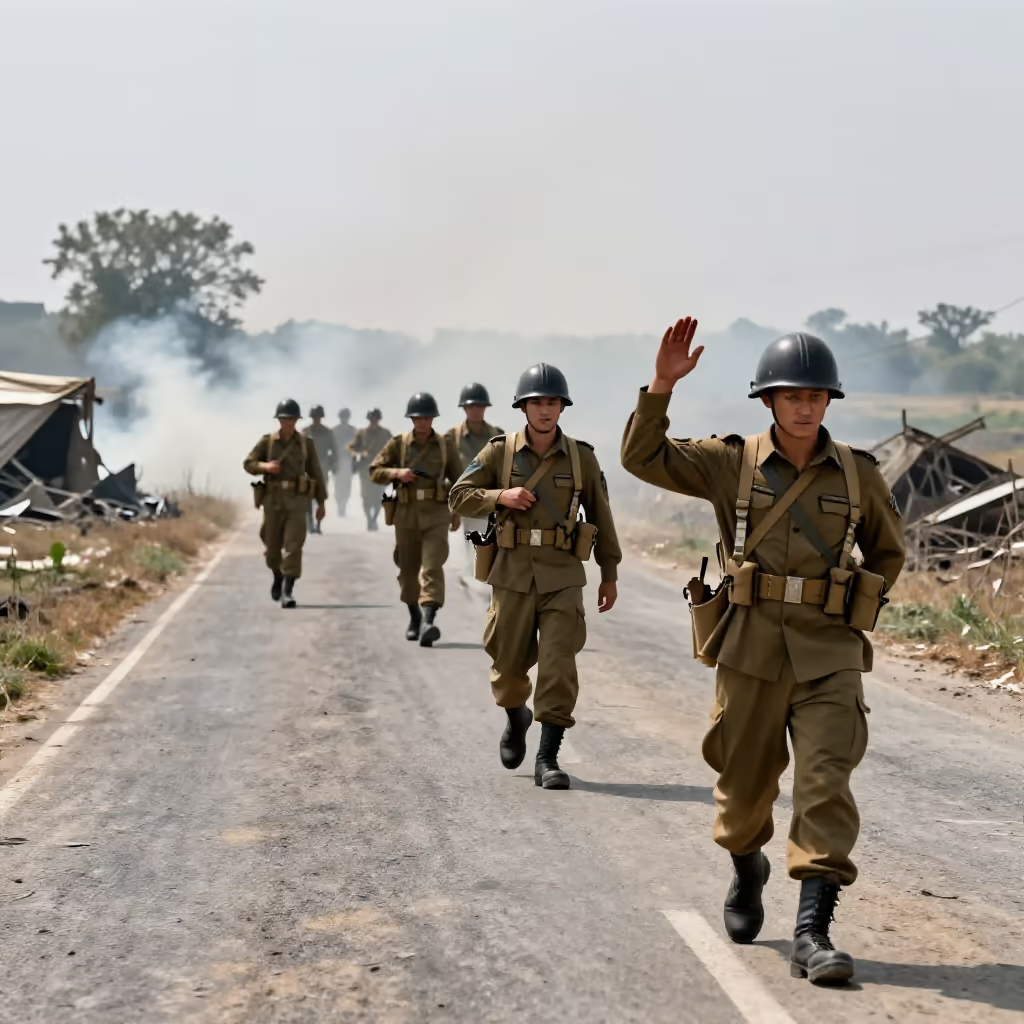
Der schnelle Sturm auf die gegnerische Stellung durchbrach sofort die erste Linie.
The rapid assault on the enemy position immediately broke through the first line.
Der Angriff auf die gegnerische Stellung begann am frühen Morgen.
The attack on the enemy position began early in the morning.