


anstoßen
to toast
To lightly clink glasses together in order to drink to someone or something; to make a toast.
EXAMPLE
Lasst uns auf das Brautpaar anstoßen!
Let's toast the bride and groom!
to toast / initiate / bump
Loading your saved state.
to toast
To lightly clink glasses together in order to drink to someone or something; to make a toast.
Lasst uns auf das Brautpaar anstoßen!
Let's toast the bride and groom!

to initiate
To initiate or set in motion a process, discussion, or change.
Die Regierung möchte eine Debatte über die Digitalisierung anstoßen.
The government wants to initiate a debate about digitalization.

to bump
To unintentionally touch something or someone lightly or bump against them.
Ich habe aus Versehen das Wasserglas angestoßen und es ist umgekippt.
I accidentally bumped the water glass, and it tipped over.

to bump oneself
To bump oneself against an object and possibly get slightly hurt in the process.
Aua, ich habe mich schon wieder am Tischbein angestoßen!
Ouch, I bumped myself on the table leg again!
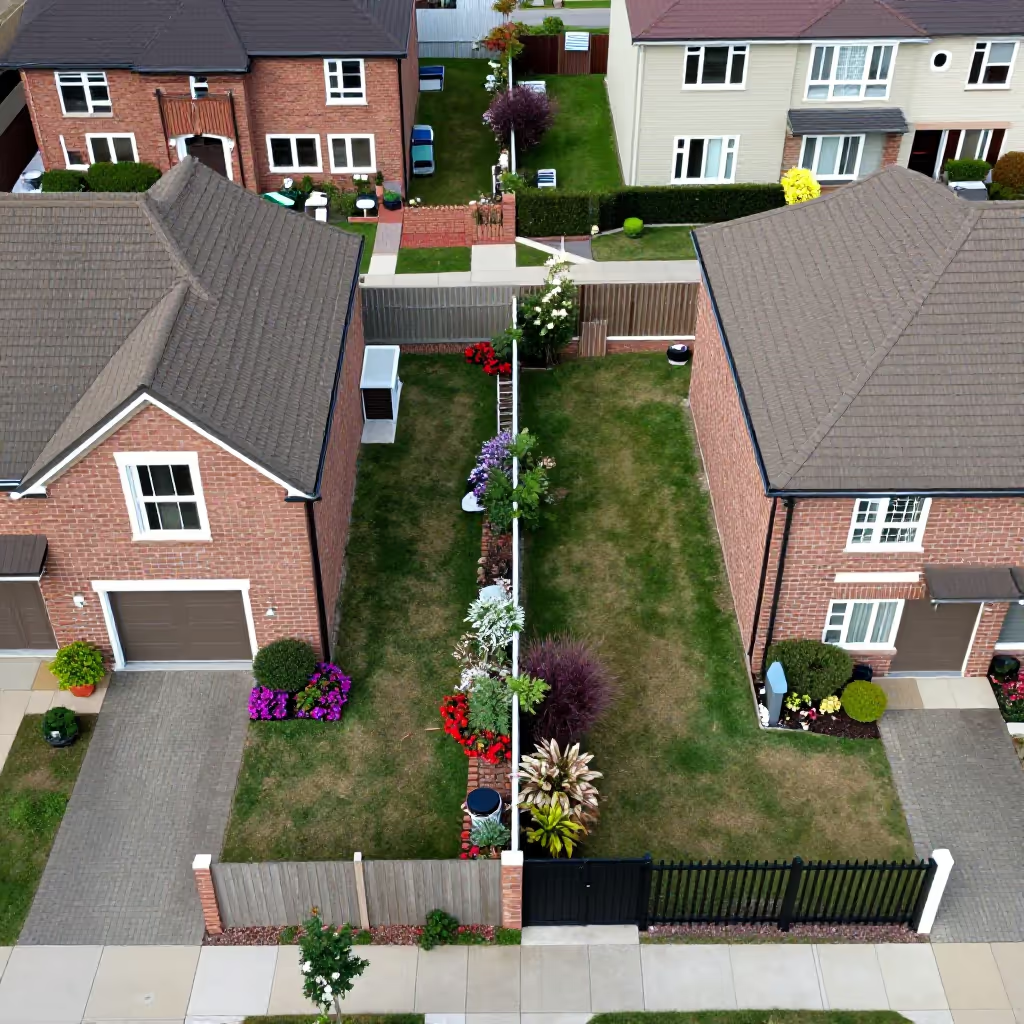
to border on
To border on something spatially; to lie directly next to it.
Unser Grundstück stößt direkt an ein Naturschutzgebiet an.
Our property borders directly on a nature reserve.
'Anstoßen' (to toast/initiate/bump) is a separable verb with the prefix 'an-'. In a main clause, the prefix goes at the end. In subordinate clauses or in the infinitive with 'zu', the verb stays together.
Er stößt eine wichtige Diskussion an.
He initiates an important discussion.
When drinking to something or someone with glasses, you use the preposition 'auf' (to) followed by the accusative. This structure is firmly connected with this meaning.
Wir wollen auf das neue Jahr anstoßen.
We want to toast the new year.
In the meaning 'initiieren' (to initiate), 'anstoßen' is almost always used with abstract nouns. Typical examples are: 'eine Debatte anstoßen' (to initiate a debate), 'eine Reform anstoßen' (to initiate a reform), 'eine Veränderung anstoßen' (to initiate a change), or 'ein Projekt anstoßen' (to initiate a project).
Mit ihrer Rede wollte die Politikerin eine neue Klimadebatte anstoßen.
With her speech, the politician wanted to initiate a new climate debate.
When you hurt yourself, the verb is reflexive: 'sich anstoßen' (to bump oneself). The object you bump into is in the dative.
Ich habe mich im Dunkeln an der Türkante angestoßen.
I bumped myself on the edge of the door in the dark.
In the meaning 'angrenzen' (to border on), 'anstoßen' is always used with the preposition 'an' and the accusative. This meaning is rather formal or written.
Der Park stößt direkt an unser Firmengelände an.
The park borders directly on our company premises.
to drink
“Trinken” can mean celebrating a person or event with a drink. “Anstoßen” refers more specifically to the social gesture of lightly clinking glasses and making a toast. Use “trinken” for the consumption and “anstoßen” when the shared celebratory gesture is meant.

Wir stießen mit den Gläsern auf ihren Erfolg an.
We clinked our glasses to her success.
Wir tranken auf ihren Erfolg und unterhielten uns weiter.
We drank to her success and continued our conversation.