


das Antlitz
countenance / face
An elevated or poetic expression for a person's face.
EXAMPLE
Im fahlen Mondlicht wirkte ihr Antlitz noch blasser.
In the pale moonlight, her countenance looked even paler.
countenance / face
Loading your saved state.
countenance / face
An elevated or poetic expression for a person's face.
Im fahlen Mondlicht wirkte ihr Antlitz noch blasser.
In the pale moonlight, her countenance looked even paler.
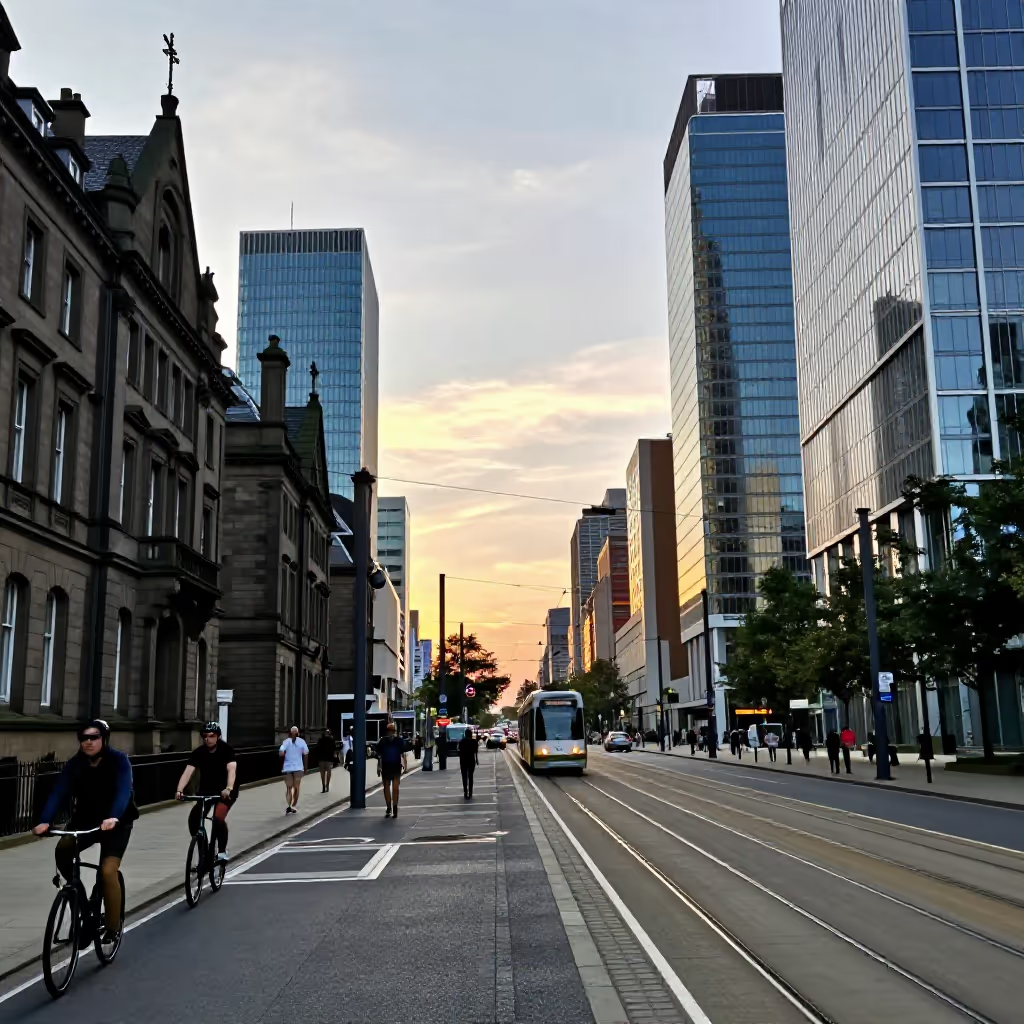
face / appearance
In a figurative sense, the appearance or character of something, for example a city or a landscape.
Die neuen Hochhäuser haben das Antlitz der Stadt für immer verändert.
The new high-rises have changed the face of the city forever.
'Antlitz' (countenance/face) is a very formal and poetic word for 'Gesicht' (face). You mainly find it in literature, in poems, or in very elevated written language, but not in everyday conversation.
Der Künstler malte das Antlitz einer jungen Frau.
The artist painted the countenance of a young woman.
When 'Antlitz' (countenance/face) describes a face, it is often combined with poetic adjectives. Typical collocations are 'ein edles Antlitz' (a noble countenance), 'ein bleiches Antlitz' (a pale countenance), or 'das Antlitz eines Engels' (the face of an angel).
Im Kerzenschein wirkte ihr Antlitz sanft und friedlich.
In the candlelight, her countenance looked gentle and peaceful.
In the figurative meaning, 'Antlitz' (face/appearance) describes the characteristic appearance of a place or an era. For example, people speak of the 'Antlitz einer Stadt' (face of a city) or 'dem Antlitz der Zeit' (the face of the times).
Die Industrialisierung veränderte das Antlitz der Landschaft nachhaltig.
Industrialization permanently changed the face of the landscape.
face
Gesicht and Antlitz refer here to the same part of the human head. Gesicht is neutral and suitable for everyday speech. Antlitz sounds elevated or poetic and is therefore used more in literary descriptions than in ordinary conversations.

Im Gedicht erscheint ihr blasses Antlitz im Mondlicht.
In the poem, her pale countenance appears in the moonlight.
Auf dem Foto ist ihr blasses Gesicht deutlich zu sehen.
Her pale face is clearly visible in the photo.