

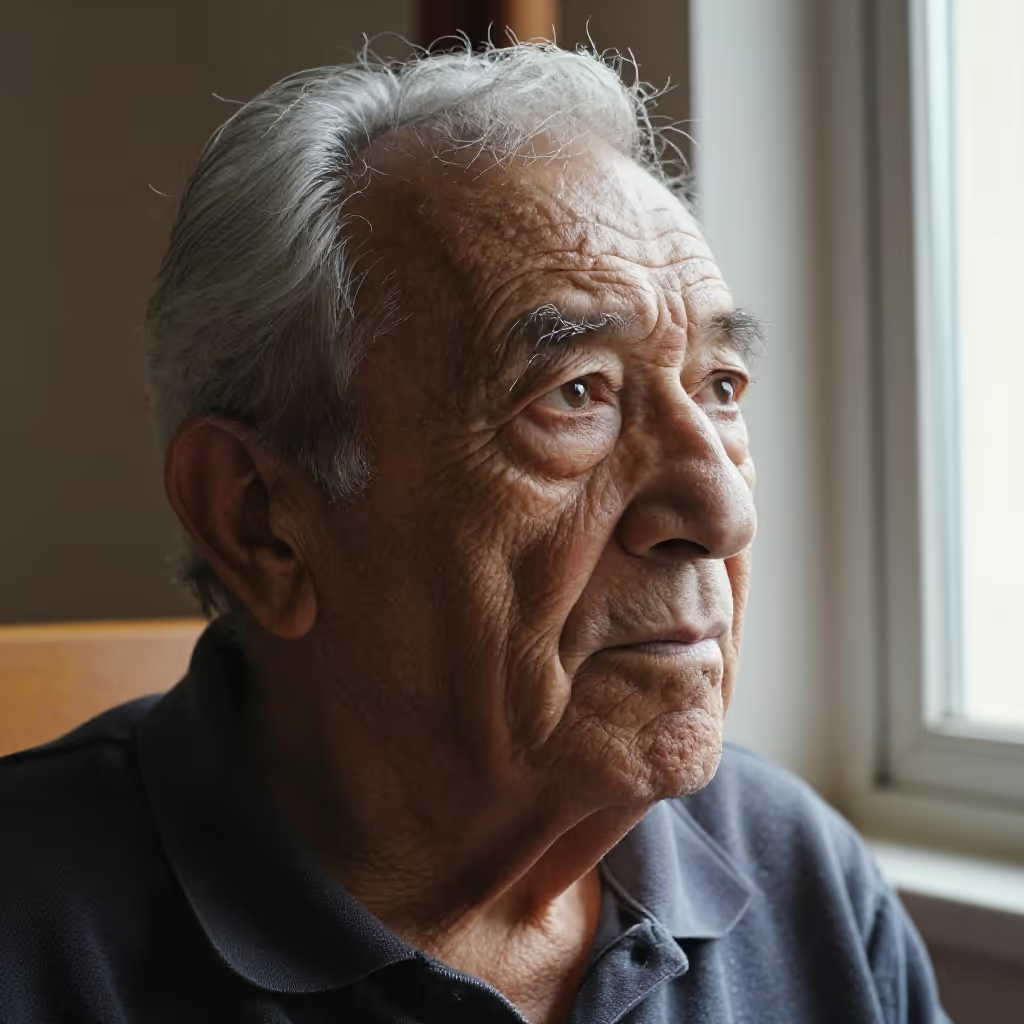
das Angesicht
countenance / face
An elevated, old-fashioned, or poetic term for a person's face.
EXAMPLE
Der Schweiß stand ihm auf dem Angesicht geschrieben.
The sweat was written all over his countenance.
countenance / face
Loading your saved state.
countenance / face
An elevated, old-fashioned, or poetic term for a person's face.
Der Schweiß stand ihm auf dem Angesicht geschrieben.
The sweat was written all over his countenance.

face to face
A fixed expression meaning that people are facing each other personally and directly.
Nach dem langen E-Mail-Wechsel wollten sie das Problem von Angesicht zu Angesicht klären.
After the long email exchange, they wanted to resolve the problem face to face.
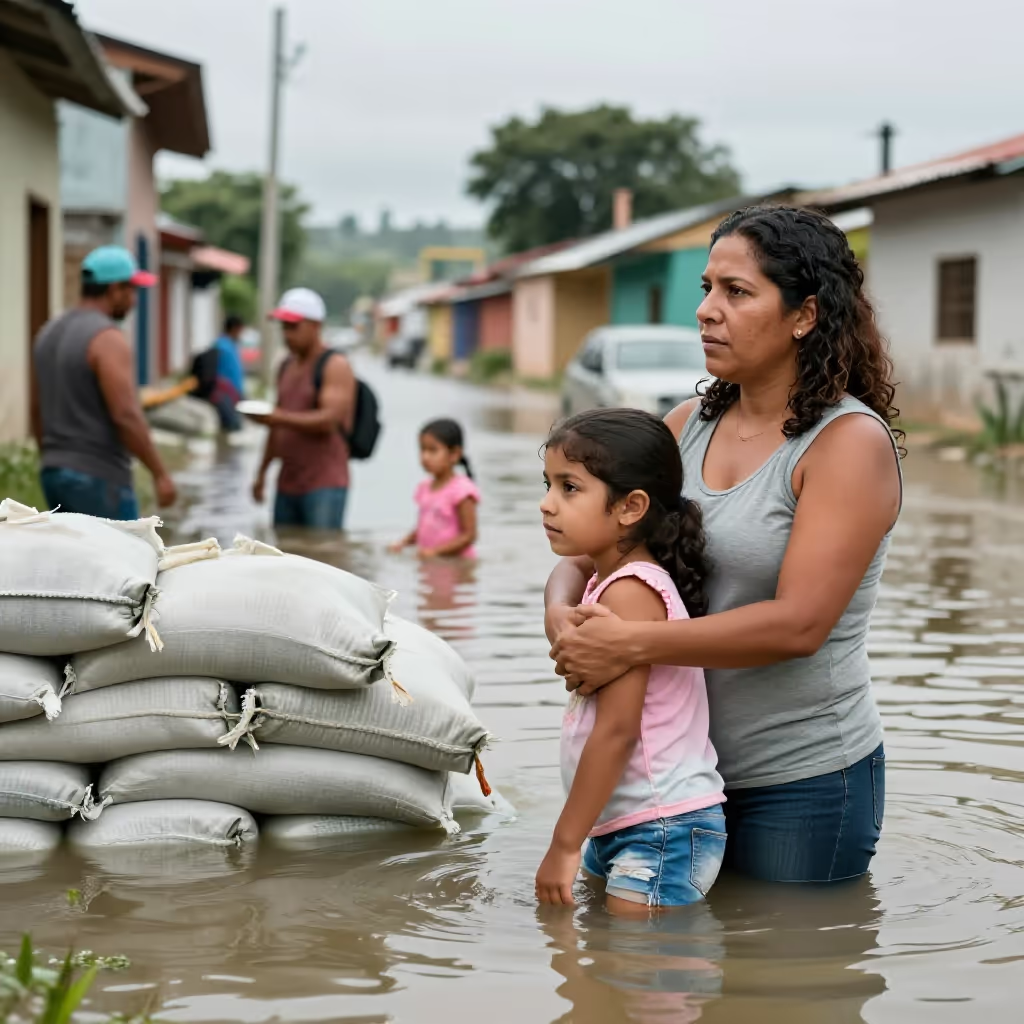
in the face of
A fixed expression meaning 'in view of' or 'considering', often describing a difficult or serious situation.
Im Angesicht der Gefahr bewahrte sie einen kühlen Kopf.
In the face of danger, she kept a cool head.
The word 'Angesicht' (countenance/face) by itself is rare today and sounds very formal or poetic. It is most often encountered in the fixed expressions 'von Angesicht zu Angesicht' (face to face) and 'im Angesicht von' (in the face of).
Wir sollten dieses heikle Thema von Angesicht zu Angesicht besprechen.
We should discuss this delicate topic face to face.
When 'Angesicht' (countenance/face) is used by itself to mean 'Gesicht' (face), it belongs to an elevated, literary, or religious style. It is not used in normal everyday speech.
Im fahlen Licht wirkte sein Angesicht noch blasser.
In the pale light, his countenance looked even paler.
The expression 'von Angesicht zu Angesicht' (face to face) always means 'personally' or 'directly opposite each other'. It is used as an adverbial phrase in the sentence.
Nach Jahren des Schreibens trafen sich die beiden Brieffreunde endlich von Angesicht zu Angesicht.
After years of writing, the two pen pals finally met face to face.
The expression 'im Angesicht von' (in the face of), or with the genitive: 'im Angesicht der Gefahr' (in the face of danger), functions like a preposition with the meaning 'in view of' or 'confronted with'. It often introduces a difficult situation.
Im Angesicht des drohenden Unwetters suchten die Wanderer Schutz in einer Hütte.
In the face of the approaching storm, the hikers sought shelter in a hut.
face
Gesicht and Angesicht refer here to the same part of the human head. Gesicht is the neutral term used in everyday language. Angesicht, by contrast, sounds elevated, poetic, or deliberately old-fashioned, so it is more suitable for literary texts or formal, ceremonial language.

Im Roman war eine feine Narbe in seinem Angesicht zu sehen.
In the novel, a fine scar could be seen on his countenance.
Die Ärztin bemerkte eine feine Narbe in seinem Gesicht.
The doctor noticed a fine scar on his face.