

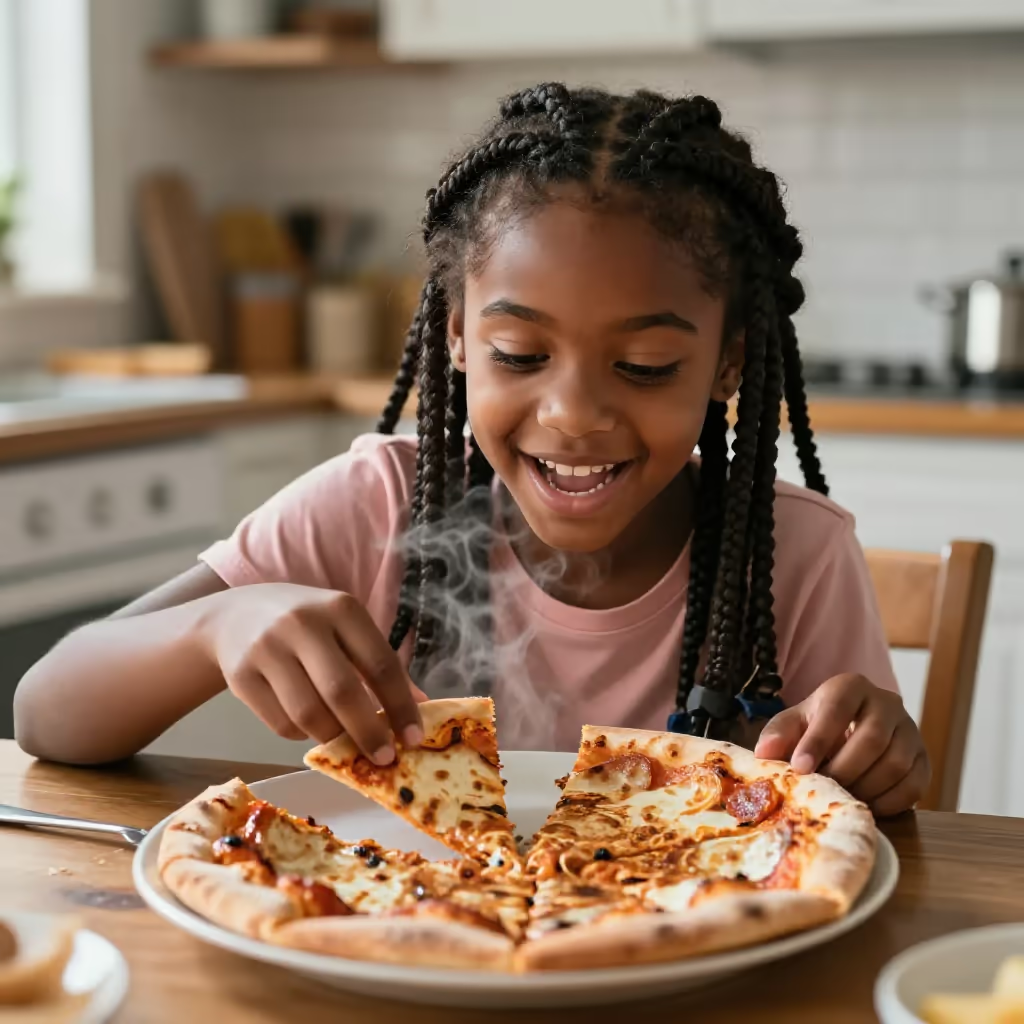
der Appetit
appetite
The natural desire or urge to eat something.
EXAMPLE
Vom Spaziergang an der frischen Luft habe ich richtig Appetit bekommen.
The walk in the fresh air really gave me an appetite.
appetite
Loading your saved state.
appetite
The natural desire or urge to eat something.
Vom Spaziergang an der frischen Luft habe ich richtig Appetit bekommen.
The walk in the fresh air really gave me an appetite.

to feel like something
In a figurative sense, to have the desire or urge for a particular thing or activity that has nothing to do with food.
Nach dem langen Arbeitstag hatte sie keinen Appetit mehr auf eine komplizierte Diskussion.
After the long workday, she no longer felt like having a complicated discussion.
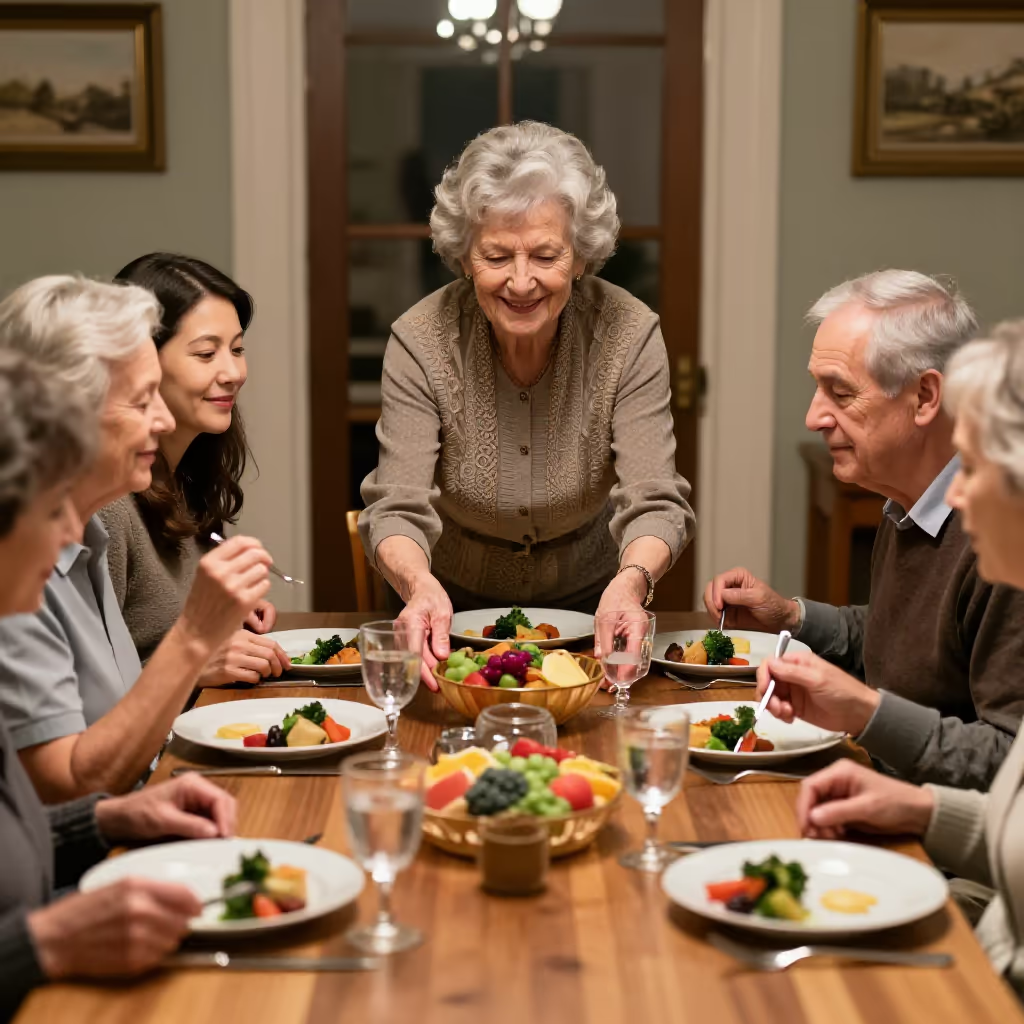
Enjoy your meal!
A fixed expression said to others at the start of a meal to wish that they enjoy the food.
Das Essen ist serviert, allen einen guten Appetit!
The food is served—enjoy your meal, everyone!
To express what someone has an appetite for, the preposition 'auf' is used with the accusative. This applies both to the desire for food and to the figurative desire for activities.
Ich habe Appetit auf eine große Pizza.
I have an appetite for a large pizza.
In connection with food, 'Appetit' (appetite) is often used with the verbs 'haben' (to have), 'bekommen' (to get), or 'machen' (to make). You can also 'verderben' (spoil) someone's appetite.
Der Duft aus der Küche macht mir Appetit.
The smell from the kitchen is giving me an appetite.
You can tell whether the literal or figurative meaning is meant from the object. If a food or drink follows, it is about eating. If an activity or an abstract noun follows, the figurative meaning is meant.
Er hatte keinen Appetit auf Streit.
He had no appetite for an argument.
The exclamation 'Guten Appetit!' (Enjoy your meal!) is a fixed social custom before eating. With it, you wish the others a pleasant meal. A typical response is 'Danke, ebenfalls!' (Thanks, you too!) or 'Danke, gleichfalls!' (Thanks, likewise!).
So, das Essen steht auf dem Tisch. Guten Appetit!
Right, the food is on the table. Enjoy your meal!
desire / pleasure
When talking about food, both Lust and Appetit can fit. Appetit refers more to the natural desire to eat, while Lust auf a particular food can arise even when you are not hungry. If you physically want to eat, Appetit is the better word; for a mere spontaneous desire, Lust fits better.

Da Lea seit dem Morgen nichts gegessen hat, hat sie Appetit auf ein Stück Kuchen.
Since Lea has not eaten anything since the morning, she has an appetite for a piece of cake.
Obwohl Lea gerade gegessen hat, hat sie Lust auf ein Stück Kuchen.
Although Lea has just eaten, she feels like having a piece of cake.