

arabisch
Arab
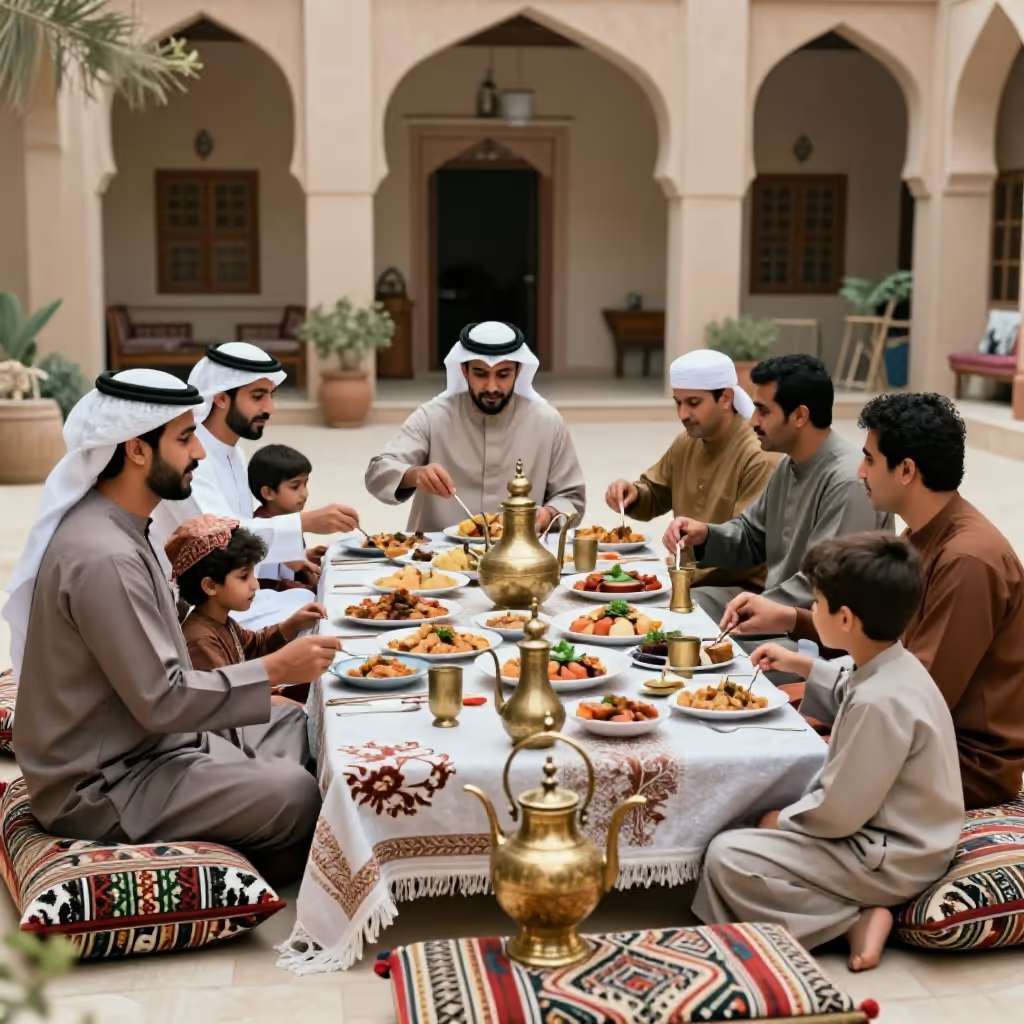
Relates to the culture, people, or geographical region of the Arab world.
EXAMPLE
Die arabische Küche ist für ihre intensiven Gewürze bekannt.
Arab cuisine is known for its intense spices.
Arabic
Loading your saved state.
Arab
Relates to the culture, people, or geographical region of the Arab world.
Die arabische Küche ist für ihre intensiven Gewürze bekannt.
Arab cuisine is known for its intense spices.
Arabic
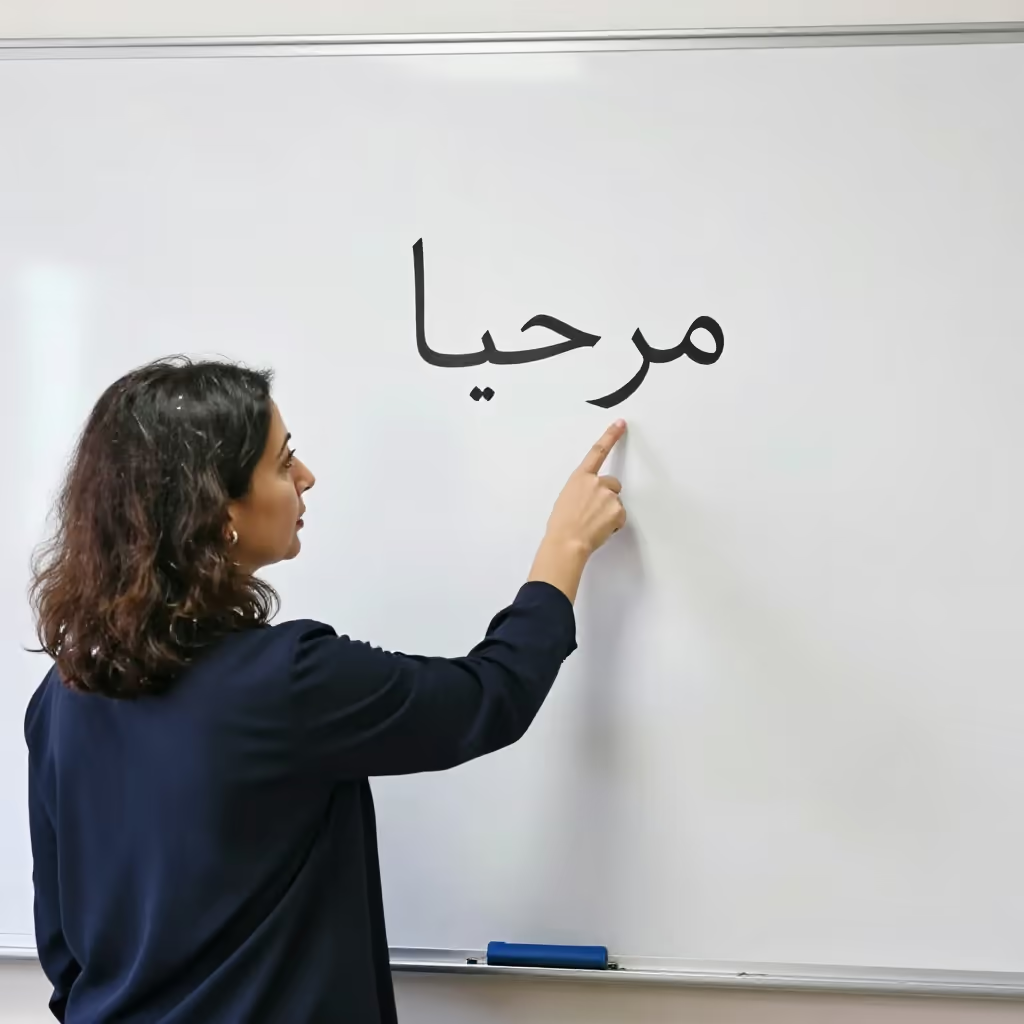
Relates to the Arabic language.
Sie lernt, arabische Buchstaben zu schreiben.
She is learning to write Arabic letters.
The adjective 'arabisch' (Arab/Arabic) is written in lowercase in German. But when it refers to the name of the language, it is treated as a noun and capitalized, for example 'Ich lerne Arabisch' (I am learning Arabic) or 'auf Arabisch' (in Arabic).
Viele arabische Länder sind reich an Geschichte.
Many Arab countries are rich in history.
To express that something happens in the language, you use the fixed phrase 'auf Arabisch' (in Arabic). When describing the ability, you say 'arabisch sprechen/verstehen' (to speak/understand Arabic).
Können Sie das bitte auf Arabisch wiederholen?
Could you please repeat that in Arabic?
The adjective 'arabisch' (Arab/Arabic) is often combined with geographical or cultural terms. Typical examples are 'die arabische Welt' (the Arab world), 'die arabische Halbinsel' (the Arabian Peninsula), or 'die arabische Kultur' (Arab culture).
Die arabische Kalligrafie ist eine beeindruckende Kunstform.
Arabic calligraphy is an impressive art form.
Egyptian
Arabisch refers to the entire Arab world, while ägyptisch refers specifically to Egypt. For a shared culture spanning several Arab countries, arabisch is appropriate; when origin in or characteristics of Egypt are important, ägyptisch is more precise.
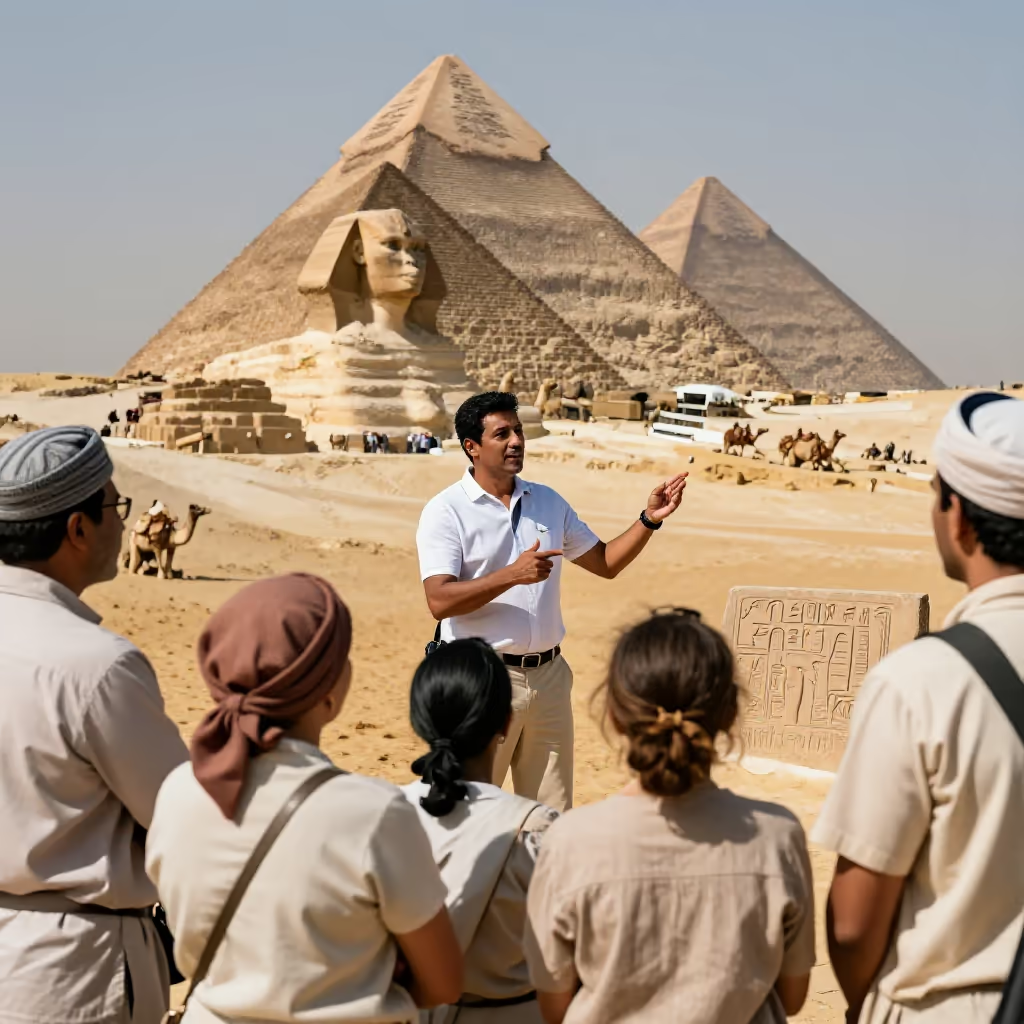
Das Festival zeigt arabische Musik aus mehreren Ländern.
The festival features Arabic music from several countries.
Das Festival zeigt ägyptische Musik aus Kairo.
The festival features Egyptian music from Cairo.