


der Ausgang
exit
A way or door through which one can leave a building or room; an exit.
EXAMPLE
Der Notausgang befindet sich am Ende des Ganges.
The emergency exit is located at the end of the corridor.
exit / outcome
Loading your saved state.
exit
A way or door through which one can leave a building or room; an exit.
Der Notausgang befindet sich am Ende des Ganges.
The emergency exit is located at the end of the corridor.
outcome
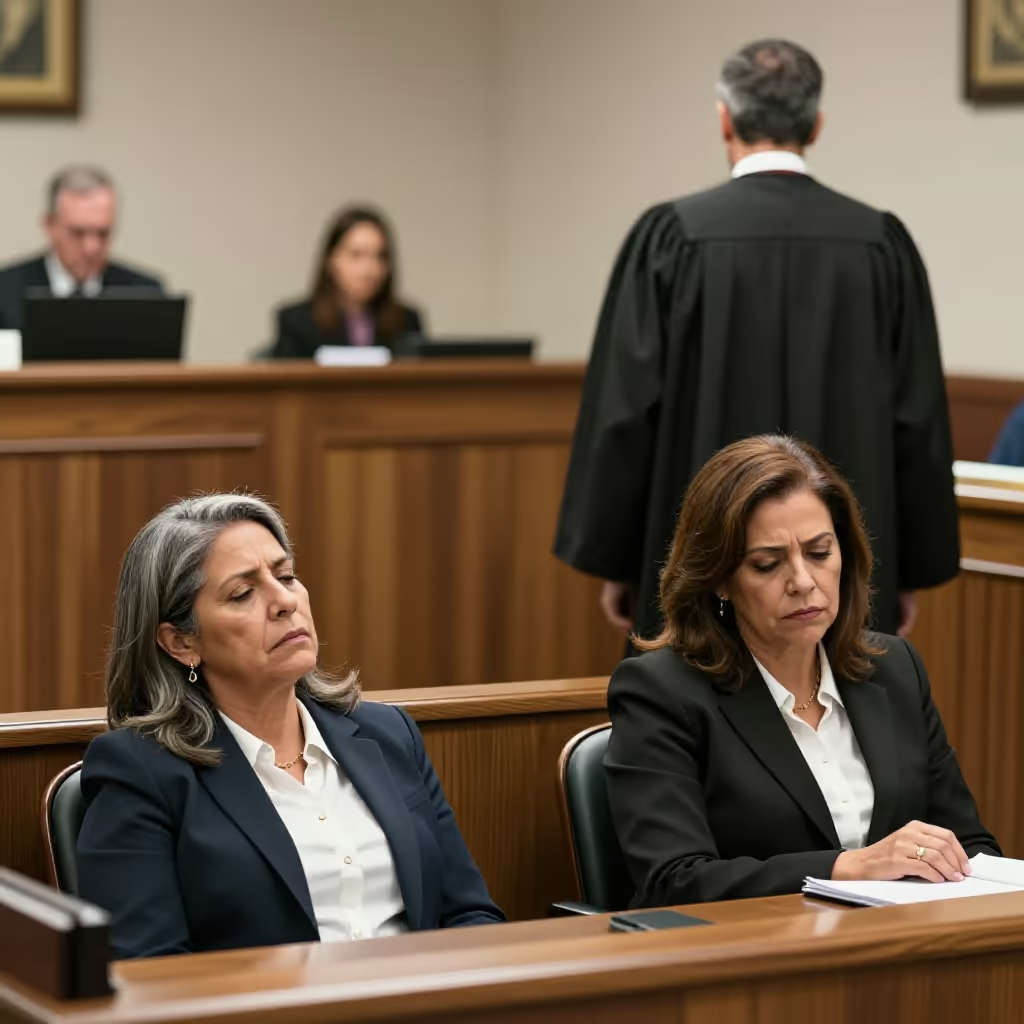
The result or final state of a situation, conflict, or process.
Der Ausgang der Wahl war bis zum Schluss völlig offen.
The outcome of the election remained completely open until the end.

leave
Going out in the evening for entertainment, often to restaurants, bars, or clubs. In military jargon especially, also permission to leave the barracks.
Die Soldaten haben heute Abend bis 23 Uhr Ausgang.
The soldiers have leave until 11 p.m. this evening.
output
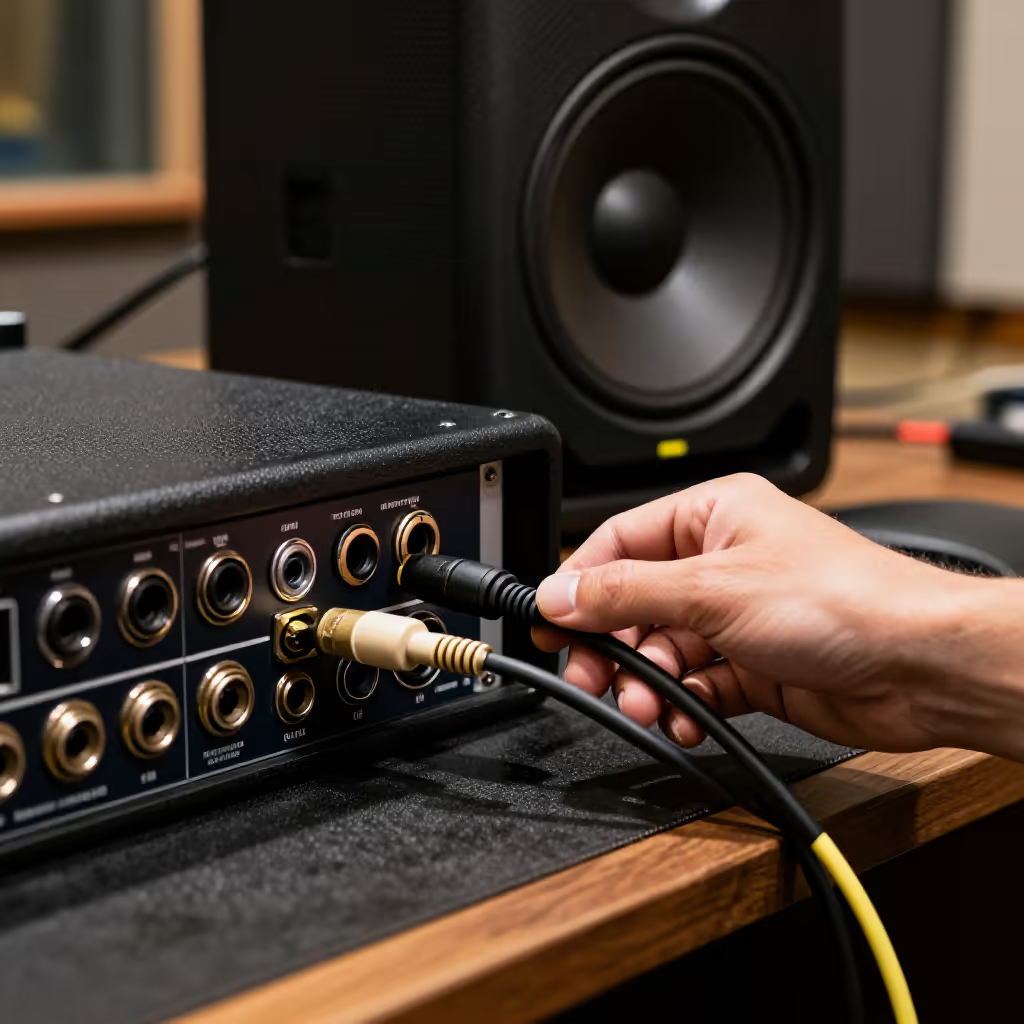
A technical connection on a device that outputs signals or data.
Der Verstärker hat einen digitalen Ausgang für die Lautsprecher.
The amplifier has a digital output for the speakers.

starting point
The initial or starting point of a development or line of thought.
Der Ausgang unserer Überlegungen war die Frage nach der Kundenzufriedenheit.
The starting point of our considerations was the question of customer satisfaction.
'Der Ausgang' (the exit/outcome) is the noun related to the verb 'ausgehen' (to go out/to turn out). The basic idea of 'going out' explains several meanings: the door through which one goes out (exit), the result that comes out of something, and the starting point from which one proceeds.
Wir wissen nicht, wie die Sache ausgehen wird.
We don't know how the matter will turn out.
With the meaning 'exit', the preposition is important. 'Am Ausgang' (at the exit) describes a location, while 'zum Ausgang' (to the exit) indicates a direction.
Wir treffen uns in zehn Minuten am Ausgang.
We'll meet in ten minutes at the exit.
In the meaning 'outcome', 'Ausgang' is often combined with events whose ending is uncertain. Typical phrases are 'der Ausgang der Wahl' (the outcome of the election), 'der Ausgang des Spiels' (the outcome of the game), or 'der Ausgang des Verfahrens' (the outcome of the proceedings).
Der positive Ausgang der Verhandlungen war eine große Erleichterung.
The positive outcome of the negotiations was a great relief.
The meaning 'going out in the evening' is somewhat formal or old-fashioned. Today it is used mainly in a military context, when soldiers receive permission to leave the barracks ('Ausgang haben' — to have leave).
Der Soldat freute sich, weil er am Wochenende Ausgang hatte.
The soldier was happy because he had leave on the weekend.
In the meaning 'starting point', the fixed expression 'seinen Ausgang nehmen' (to have its starting point/to originate) is often used. It describes where a development or chain of events began.
Die Diskussion nahm ihren Ausgang bei einer einfachen Frage.
The discussion had its starting point in a simple question.
decision
In a game, both Entscheidung and Ausgang can describe the ending. Ausgang refers neutrally to the final result, while Entscheidung emphasizes the moment or process in which victory and defeat are decided. Use Ausgang for the result and Entscheidung for the decisive result or the moment when it occurs.

Der Ausgang des Spiels überraschte viele Zuschauer, weil der Außenseiter gewann.
The outcome of the game surprised many spectators because the underdog won.
In der Verlängerung fiel die Entscheidung zugunsten der Heimmannschaft.
The game was decided in favor of the home team in extra time.