


A day on which a person does their professional work, as opposed to a day off or the weekend. Also refers to the duration of daily working hours.
example
Nach einem langen Arbeitstag freue ich mich auf mein Sofa.
After a long workday, I look forward to my sofa.
Usage tips
Compound word
This word is a clear example of a compound noun. It consists of 'die Arbeit' (work), the linking -s, and 'der Tag' (day). So it literally means a 'day of work'.
EXAMPLE
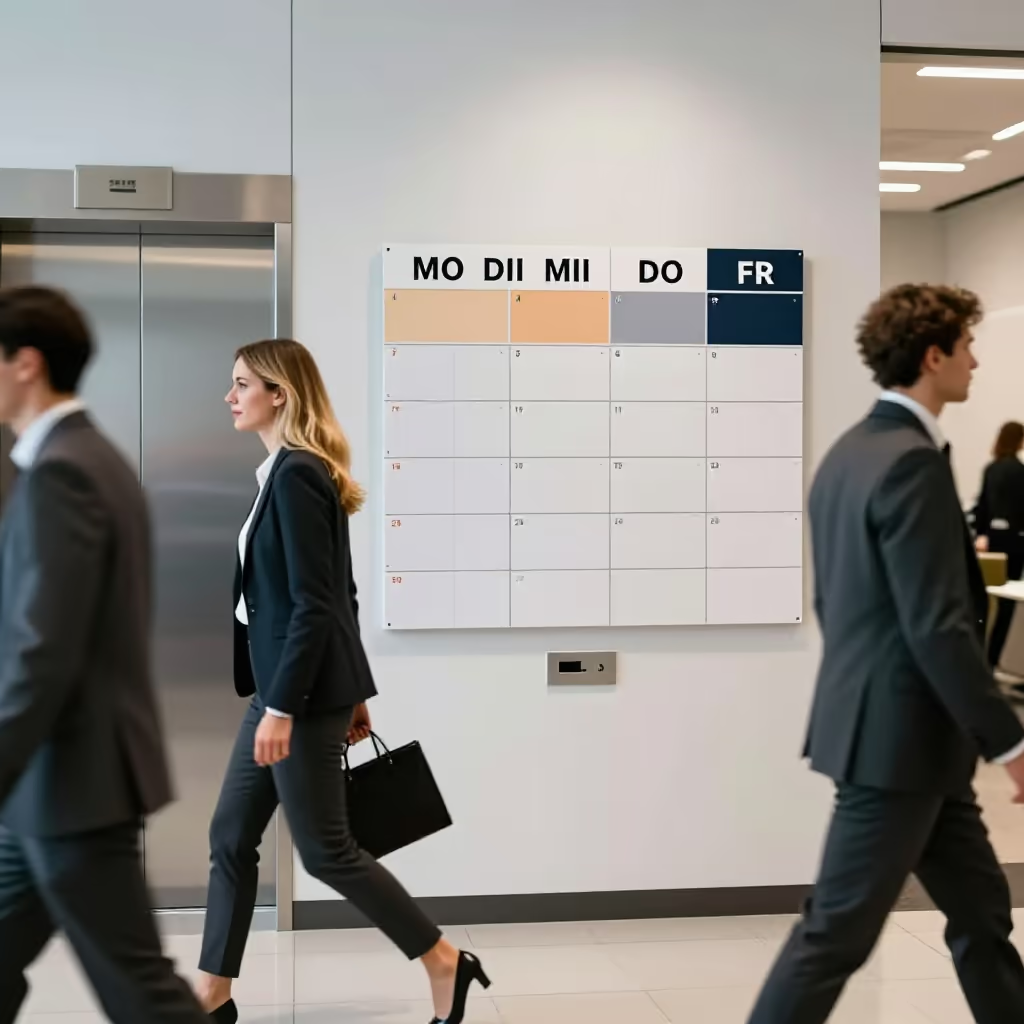
Montag bis Freitag sind für die meisten Menschen Arbeitstage.
Monday to Friday are workdays for most people.
Typical adjectives
To describe the quality of a workday, the word is often combined with adjectives. Typical examples are 'ein langer' (a long), 'ein kurzer' (a short), 'ein anstrengender' (a tiring), 'ein stressiger' (a stressful), or 'ein erfolgreicher' (a successful) workday.
EXAMPLE
Ich hatte heute einen wirklich stressigen Arbeitstag im Büro.
I had a really stressful workday at the office today.
Time reference
'Arbeitstag' (workday) is frequently used with prepositions to set the time frame for other actions. Common phrases are 'vor dem Arbeitstag' (before the workday), 'während des Arbeitstages' (during the workday), and 'nach dem Arbeitstag' (after the workday).
EXAMPLE
Ich trinke immer vor dem Arbeitstag einen Kaffee.
I always drink a coffee before the workday.
Compare with
confusable
Arbeitstag vs Woche
week
'die Woche' and 'der Arbeitstag' can both have to do with working time, but they refer to different periods of time. 'die Woche' is a period of several days, often Monday to Friday or seven days in total. 'der Arbeitstag' is a single day on which you work, or the working time on that day. Learners may confuse the words when talking about work. As a guide: for a whole period of time, use 'Woche'; for a single day, use 'Arbeitstag'.
Arbeitstag
Herr Richter hat heute einen langen Arbeitstag.
Mr. Richter has a long workday today.
Woche
Diese Woche arbeitet Lisa nur von Montag bis Donnerstag.
This week, Lisa is only working from Monday to Thursday.