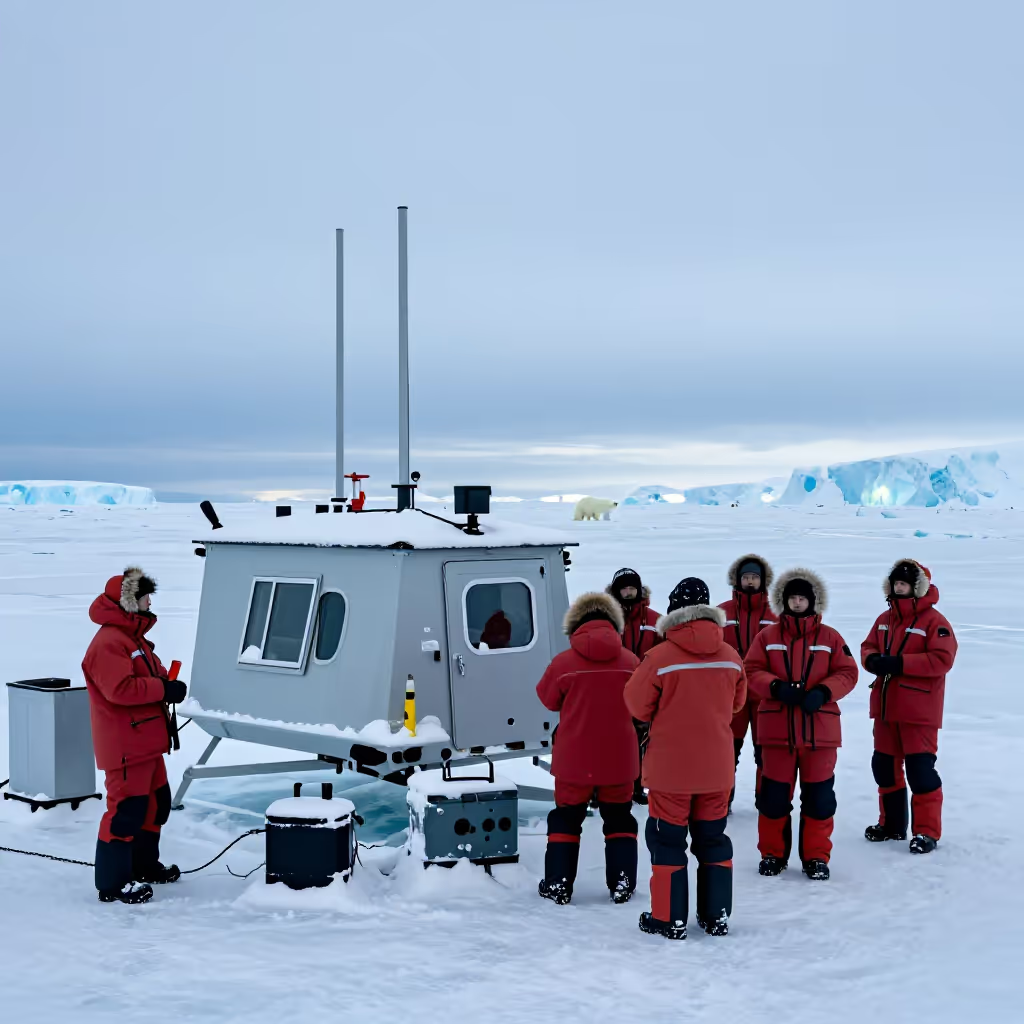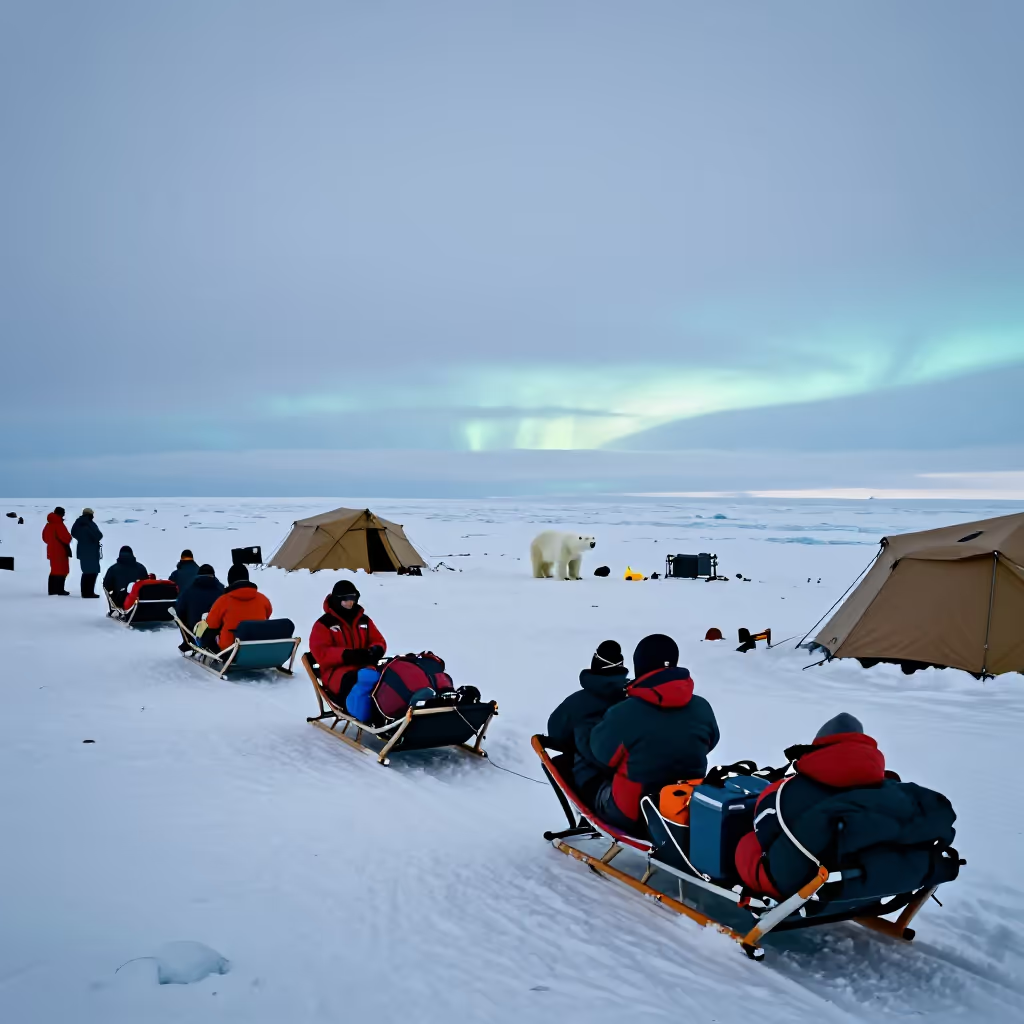
Refers to the Arctic, the region around the North Pole. It describes things that come from there or are typical of this region.
example
Der arktische Winter ist lang, dunkel und extrem kalt.
The arctic winter is long, dark, and extremely cold.

Usage tips
Word formation
The adjective 'arktisch' (arctic) is derived from the noun 'die Arktis' (the Arctic). The ending '-isch' is often used in German to form adjectives from geographical names or technical terms.
EXAMPLE
Eine arktische Expedition erfordert eine spezielle Ausrüstung.
An arctic expedition requires special equipment.
Lowercase spelling
Adjectives derived from geographical names with the ending '-isch' are written in lowercase. So you write 'der arktische Ozean' (the Arctic Ocean), not 'der Arktische Ozean'.
EXAMPLE
Die arktische Flora ist an extreme Bedingungen angepasst.
Arctic flora is adapted to extreme conditions.
Typical collocations
In its geographical meaning, 'arktisch' (arctic) is often combined with terms from nature and science. Typical examples are 'arktische Tierwelt' (arctic wildlife), 'arktische Kälte' (arctic cold), or 'arktische Forschung' (arctic research).
EXAMPLE
Eisbären sind ein bekannter Teil der arktischen Tierwelt.
Polar bears are a well-known part of arctic wildlife.
Figurative meaning
When 'arktisch' (arctic) is not meant geographically, it describes extreme cold. People then speak of 'arktischen Temperaturen' (arctic temperatures) or an 'arktischen Wind' (arctic wind) to emphasize the intensity.
EXAMPLE
Trotz der dicken Jacke spürte ich den arktischen Wind im Gesicht.
Despite the thick jacket, I felt the arctic wind on my face.
Compare with
near_synonym
arktisch vs eiskalt
ice-cold
'eiskalt' and 'arktisch' can both describe very intense cold. 'Eiskalt' is very common in everyday language and fits with water, hands, wind, or a room. It simply says that something is very cold. 'Arktisch' sounds stronger and more vivid. You use it when the cold feels extreme, almost like in the Arctic. For normal everyday situations, 'eiskalt' is usually more natural. 'Arktisch' fits well when you want to especially emphasize the cold.
arktisch
Im Garten ist es heute arktisch kalt, deshalb bleibst du lieber im Haus.
It is arctic cold in the garden today, so you'd better stay inside.
eiskalt
In der Pause trinkt sie eiskaltes Wasser aus ihrer Flasche.
During the break, she drinks ice-cold water from her bottle.