

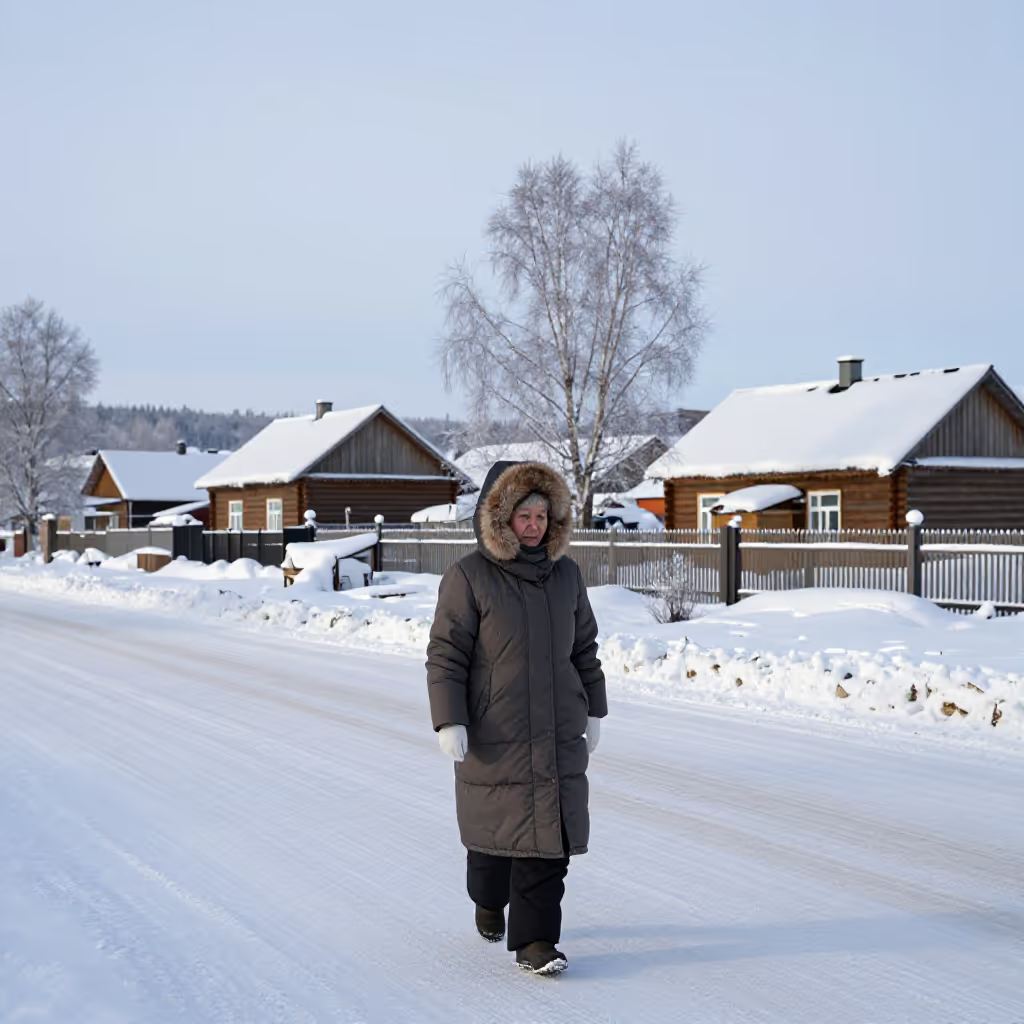
sibirisch
Siberian
Relating to or originating from Siberia, a large region in Russia. It is often used to describe extreme cold.
Im Winter herrscht in dieser Gegend eine fast sibirische Kälte.
In winter, this area has an almost Siberian cold.
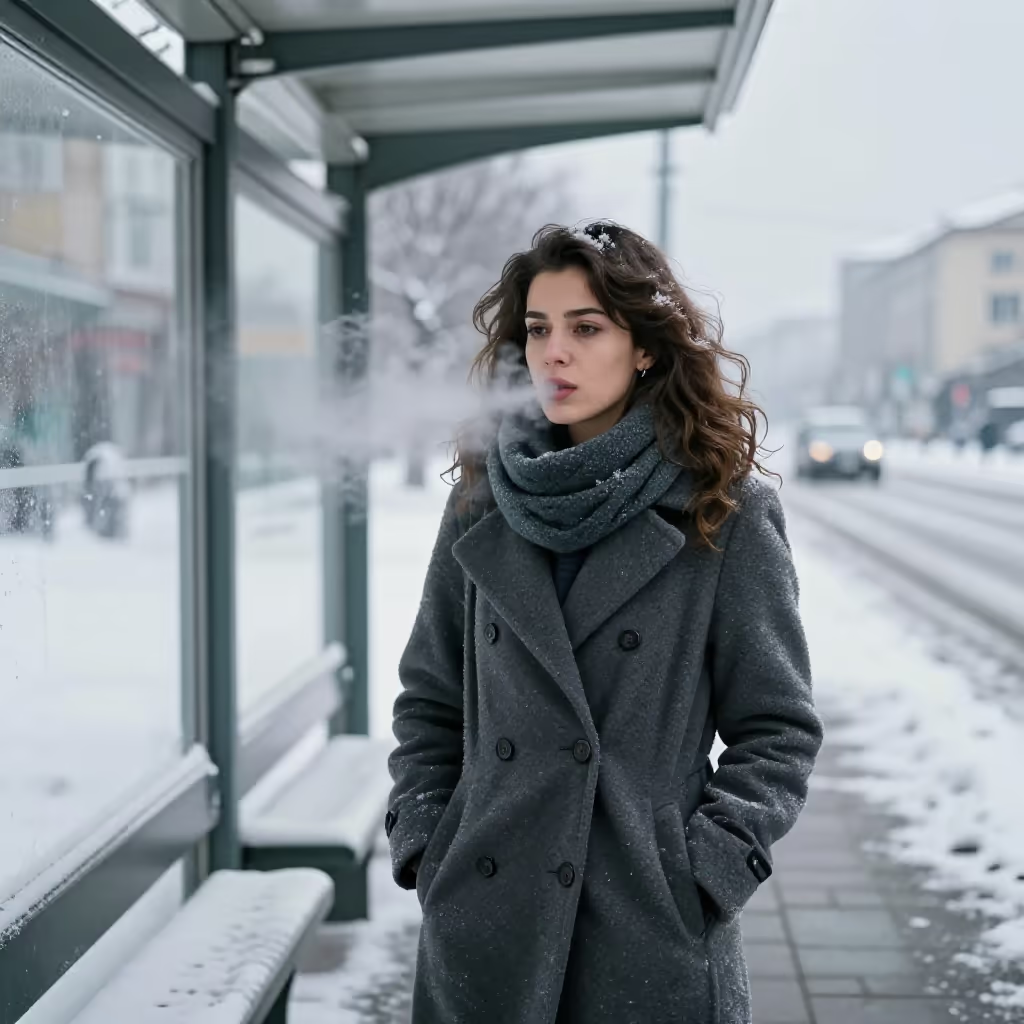
Siberian
Loading your saved state.
Siberian
Relating to or originating from Siberia, a large region in Russia. It is often used to describe extreme cold.
Im Winter herrscht in dieser Gegend eine fast sibirische Kälte.
In winter, this area has an almost Siberian cold.

The adjective 'sibirisch' (Siberian) is derived directly from the geographical name 'Sibirien' (Siberia). So it literally means 'originating from Siberia' or 'belonging to Siberia'.
Der sibirische Tiger ist eine vom Aussterben bedrohte Tierart.
The Siberian tiger is an endangered species.
'Sibirisch' (Siberian) is very often used figuratively to describe extreme cold. The most common collocation is 'sibirische Kälte' (Siberian cold).
Zieh dich warm an, es herrscht eine sibirische Kälte draußen.
Dress warmly; there is a Siberian cold outside.
Like other adjectives, 'sibirisch' (Siberian) can stand before a noun and is then declined, or it can stand unchanged after verbs such as 'sein' (to be) or 'wirken' (to seem/appear).
Eine sibirische Kältewelle zog über das Land.
A Siberian cold wave swept across the country.
Russian
'russisch' and 'sibirisch' can both have to do with Russia. 'russisch' is the general term for Russia, its language, culture, or people. 'sibirisch' refers only to Siberia, a specific large region in Russia. In addition, 'sibirisch' is often used to describe very intense cold. The words can be confused because Siberia is part of Russia. But 'sibirisch' is much more specific than 'russisch'.

Nachts wurde es im Zelt sibirisch kalt.
At night it became Siberian cold in the tent.
Der Kurs findet auf Deutsch statt, aber viele Teilnehmer sprechen auch russisch.
The course is held in German, but many participants also speak Russian.