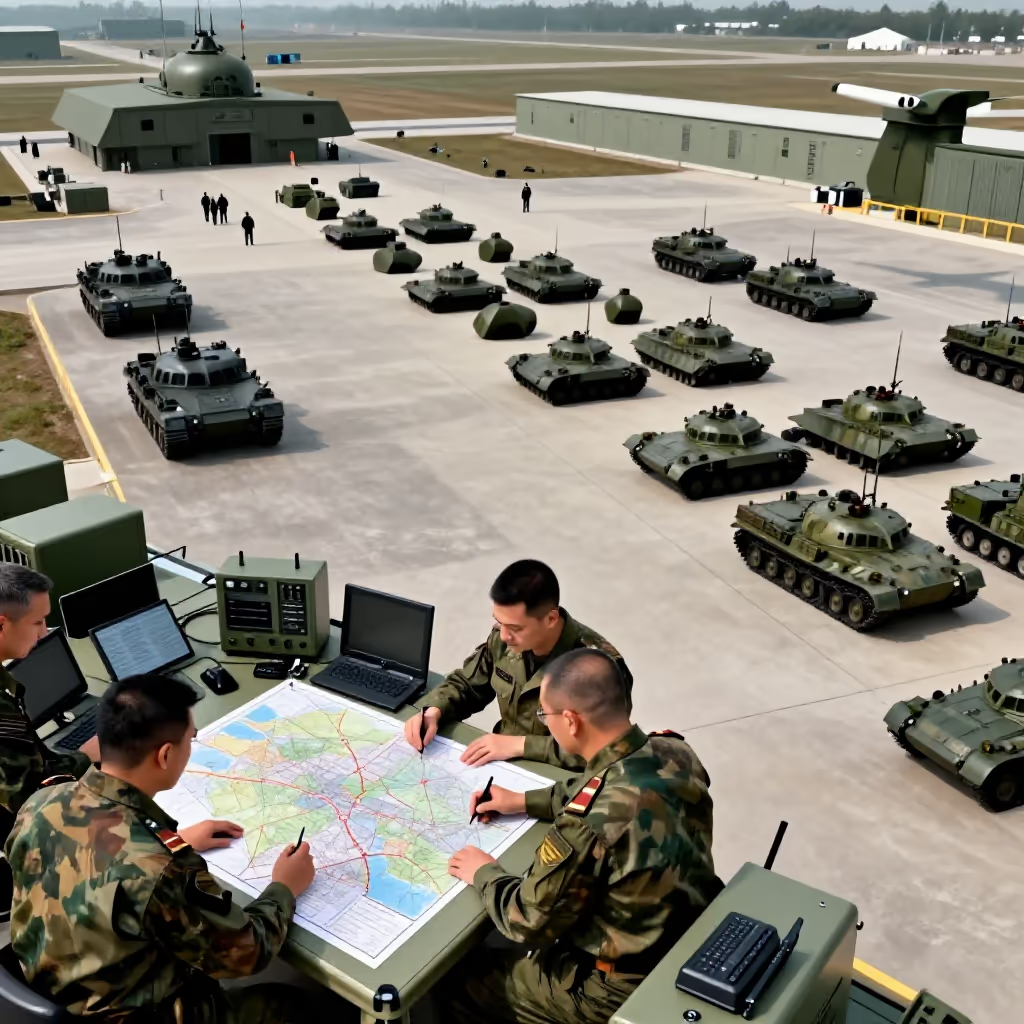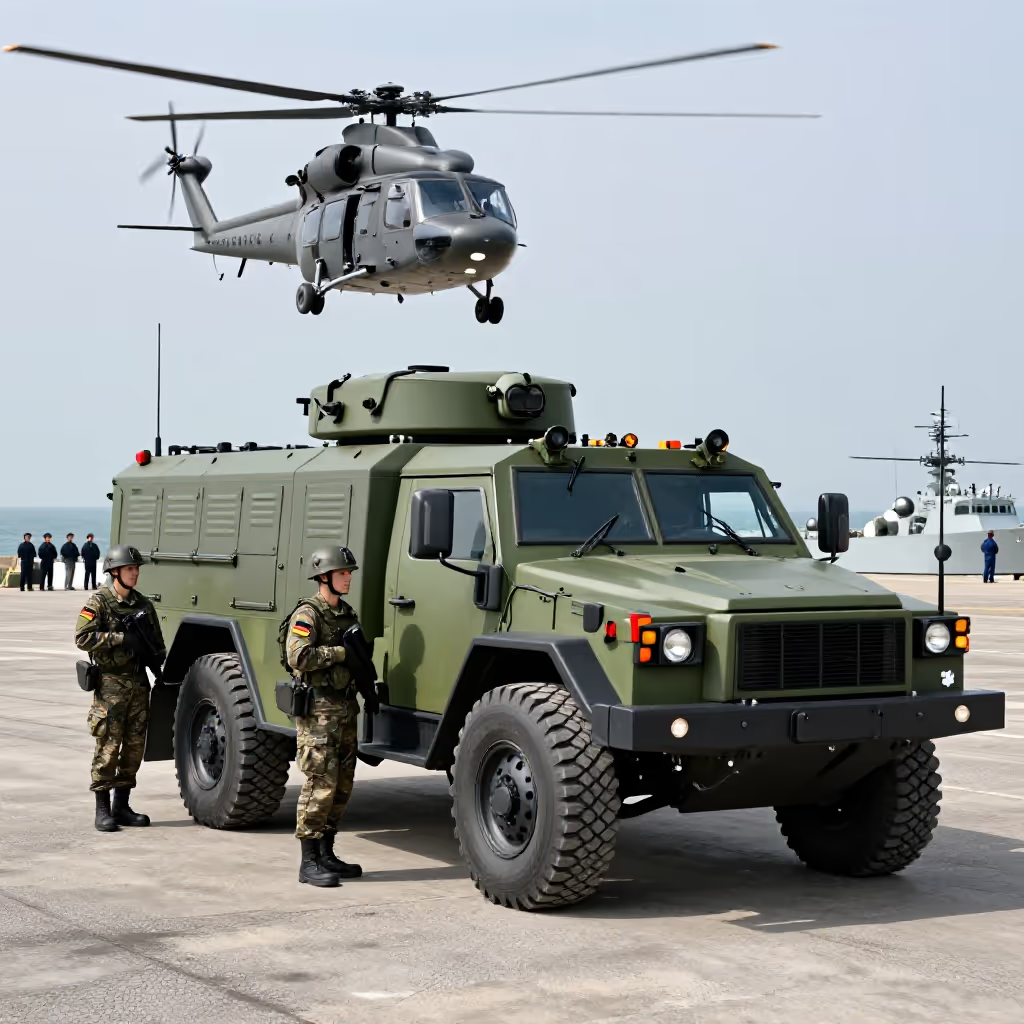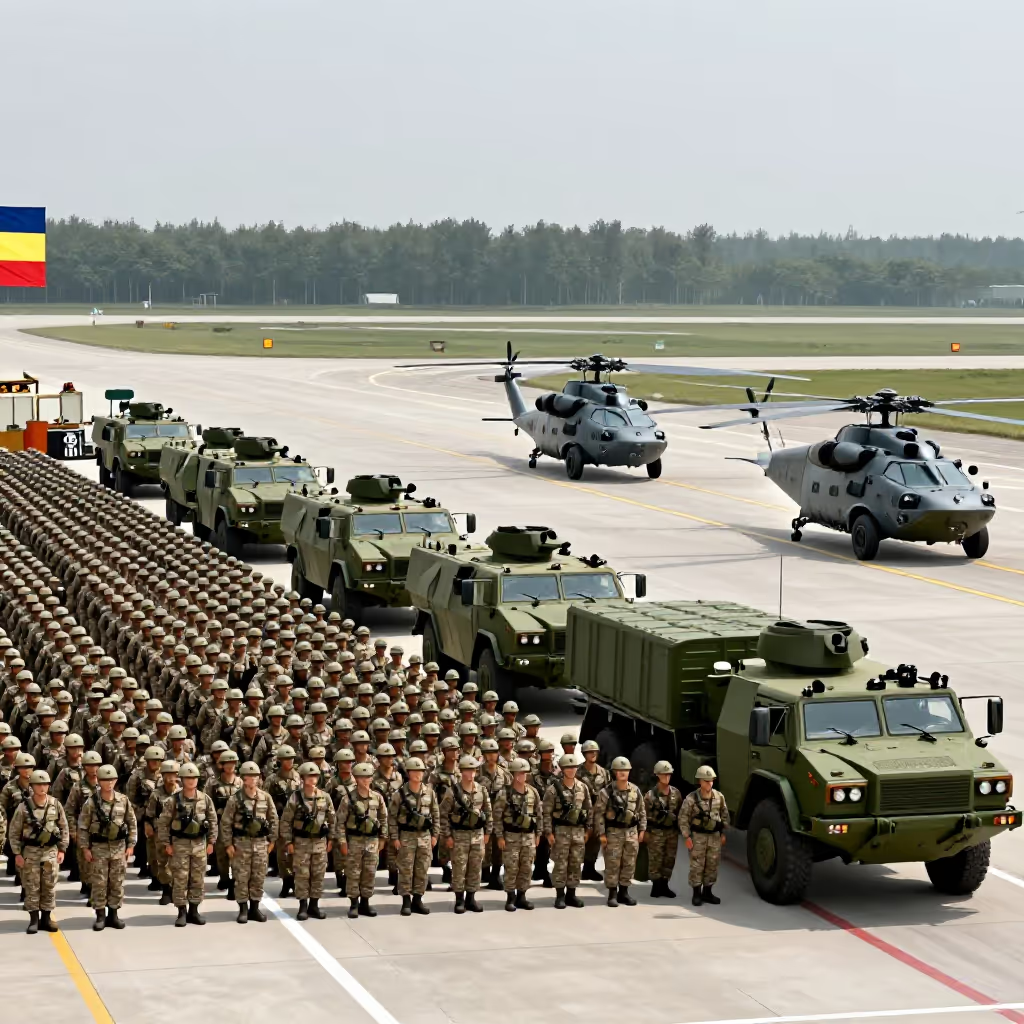
The entirety of a country's armed forces, especially the land forces. It includes soldiers, weapons, and equipment for defending the country.
example
Nach der Schule verpflichtete er sich für zwölf Jahre bei der Armee.
After school, he enlisted in the army for twelve years.
Usage tips
Important prepositions
The prepositions used with 'Armee' (army) are important. 'Zur Armee gehen' means to join the army. 'In der Armee sein' or 'bei der Armee sein' describes that someone is already serving as a soldier.
EXAMPLE
Er überlegt, nach der Ausbildung zur Armee zu gehen.
He is thinking about joining the army after his training.
Context clue: figurative use
You can often recognize the figurative meaning by the structure 'eine Armee von' (an army of) followed by a plural noun. Usually this does not refer to soldiers, but to a large number of people or even things.
EXAMPLE
Vor dem Konzert wartete eine Armee von Fans.
An army of fans was waiting before the concert.
Typical verbs
In a military context, 'Armee' (army) is often used with certain verbs. Typical expressions are 'in der Armee dienen' (to serve in the army), 'in die Armee eintreten' (to join the army), or 'die Armee mobilisieren' (to mobilize the army).
EXAMPLE
Er hat drei Jahre in der französischen Armee gedient.
He served in the French army for three years.
Register: technical language
The meaning of 'Armee' (army) as a specific large military formation (e.g. 'die 6. Armee' (the 6th Army)) is military technical language. In everyday language, 'Armee' is usually used for a country's entire armed forces.
EXAMPLE
In der historischen Dokumentation wurde die Rolle der 4. Armee analysiert.
The role of the 4th Army was analyzed in the historical documentary.
Compare with
near_synonym · confusable
Armee vs Menge
amount / crowd
'die Menge' and 'die Armee' can both refer to a large number of people. 'die Menge' is neutral and can describe a large group in one place or a large number of things or people. 'die Armee' actually refers to a country's armed forces. Figuratively, you can say 'eine Armee von Helfern' (an army of helpers) when a group seems very large and often organized. Learners may confuse the words because 'Armee' is sometimes used to mean 'very many'. In normal everyday situations, 'Menge' is usually more neutral. 'Armee' fits only literally for the military, or figuratively when the large group is meant to seem especially strong or organized.
Armee
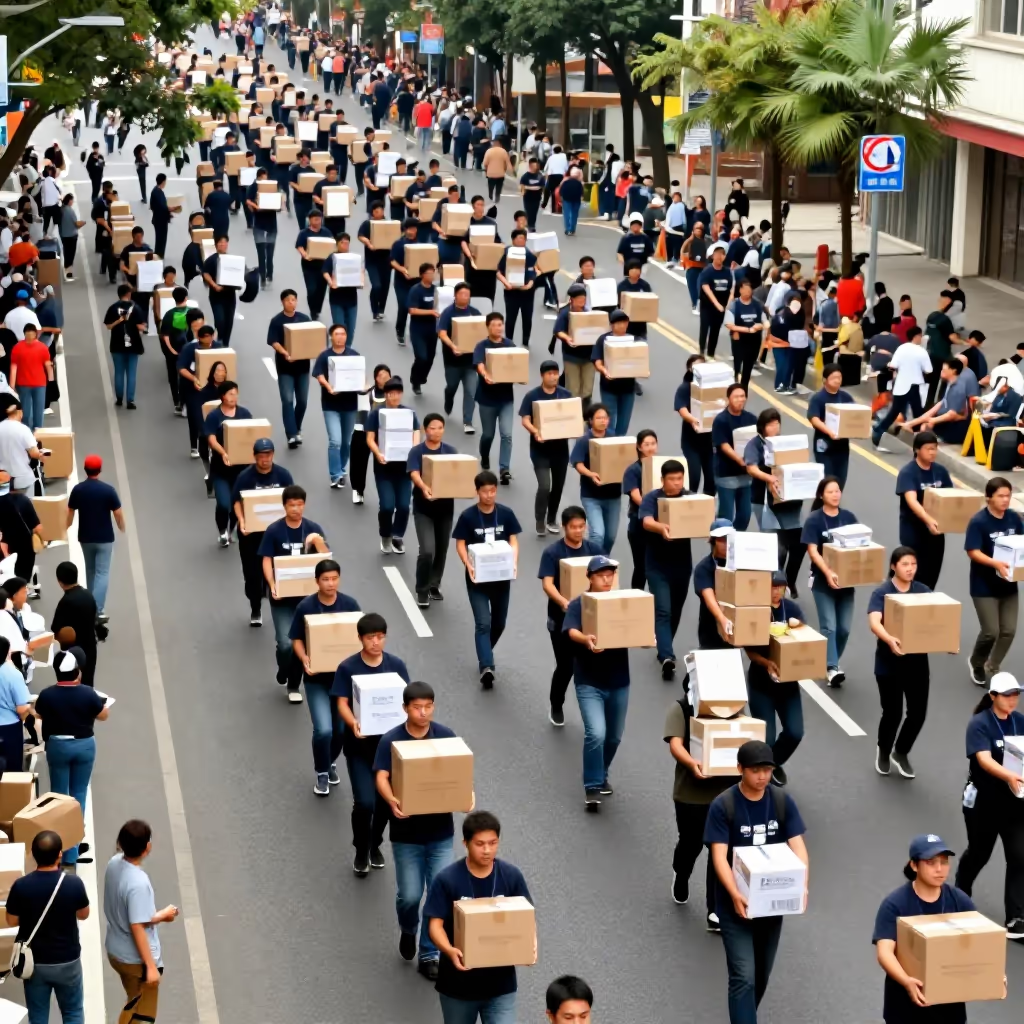
Nach dem Sturm half eine ganze Armee von Freiwilligen beim Aufräumen.
After the storm, a whole army of volunteers helped with the cleanup.
Menge
Vor dem Stadion wartete eine große Menge auf den Einlass.
A large crowd waited in front of the stadium to be let in.