

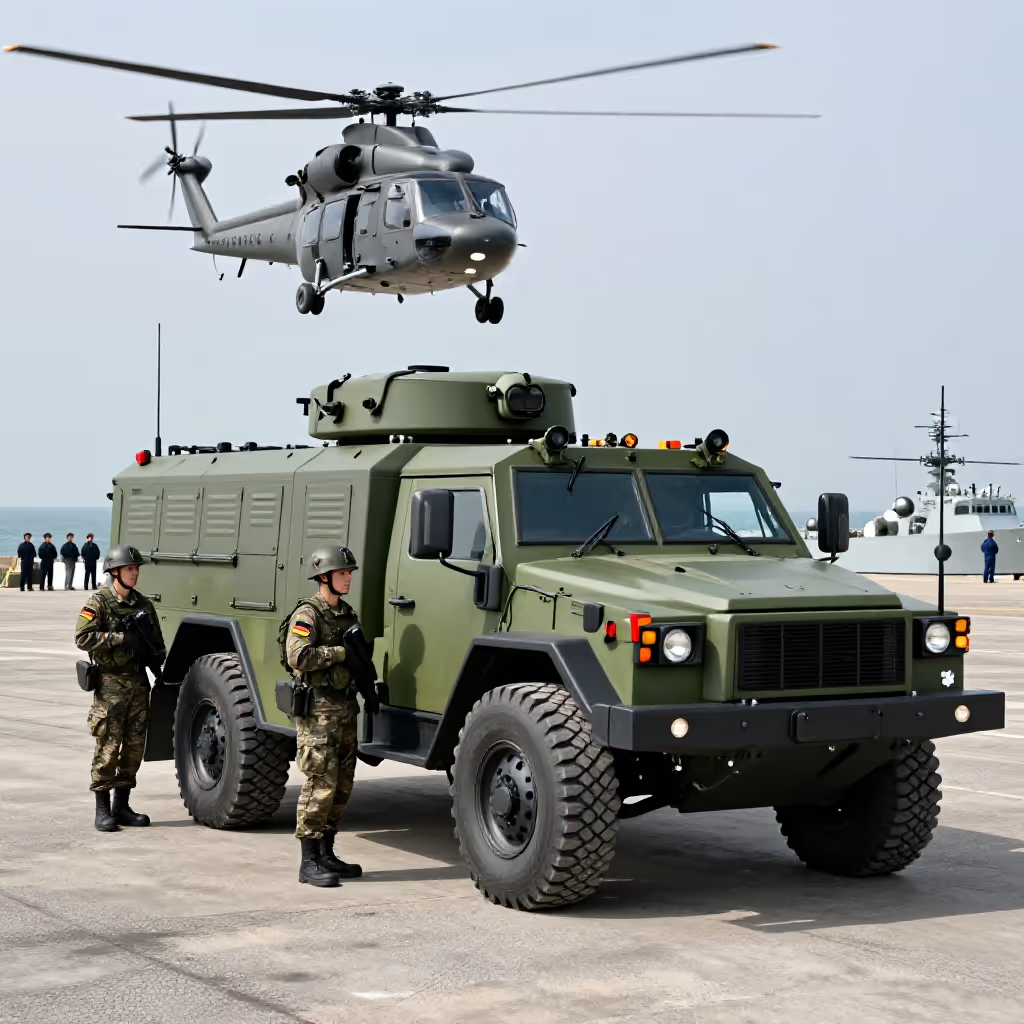
The name of the armed forces of the Federal Republic of Germany, consisting of the army, air force, navy, and other organizational branches.
example
Er hat sich für zwölf Jahre als Soldat bei der Bundeswehr verpflichtet.
He signed up as a soldier with the Bundeswehr for twelve years.
Usage tips
Compound structure
The name 'Bundeswehr' is made up of 'Bund' (federation/federal state) and 'Wehr' (defense). 'Bund' stands for the Federal Republic of Germany, and 'Wehr' is an old word for 'defense'. So the name literally means 'defense of the federation'.
EXAMPLE
Die Bundeswehr hat den Auftrag, Deutschland zu verteidigen.
The Bundeswehr has the mission of defending Germany.
Correct preposition
Fixed prepositions are used to express joining or belonging. You go 'zur Bundeswehr' (join the Bundeswehr) and are then a soldier 'bei der Bundeswehr' (with/in the Bundeswehr).
EXAMPLE
Nach der Schule ist er zur Bundeswehr gegangen.
After school, he joined the Bundeswehr.
Specific name
'Die Bundeswehr' is the official proper name of the German armed forces. You cannot use the word for the army of another country.
EXAMPLE
Die Bundeswehr wurde 1955 gegründet und ist eine Parlamentsarmee.
The Bundeswehr was founded in 1955 and is a parliamentary army.
Compare with
confusable
Bundeswehr vs Armee
army
'die Armee' and 'die Bundeswehr' both have to do with armed forces. 'die Armee' is a general word and can mean a country's armed forces, especially the land forces. 'die Bundeswehr', on the other hand, is the official name of Germany's armed forces. Learners may confuse the words because both are often used when talking about soldiers, defense, and the military. When it is about Germany, 'Bundeswehr' is more precise. When speaking generally about a country's armed forces, you are more likely to use 'Armee'.
Bundeswehr
Mein Nachbar arbeitet seit zwei Jahren bei der Bundeswehr.
My neighbor has been working for the Bundeswehr for two years.
Armee
Die Armee des Landes wurde nach dem Krieg neu aufgebaut.