

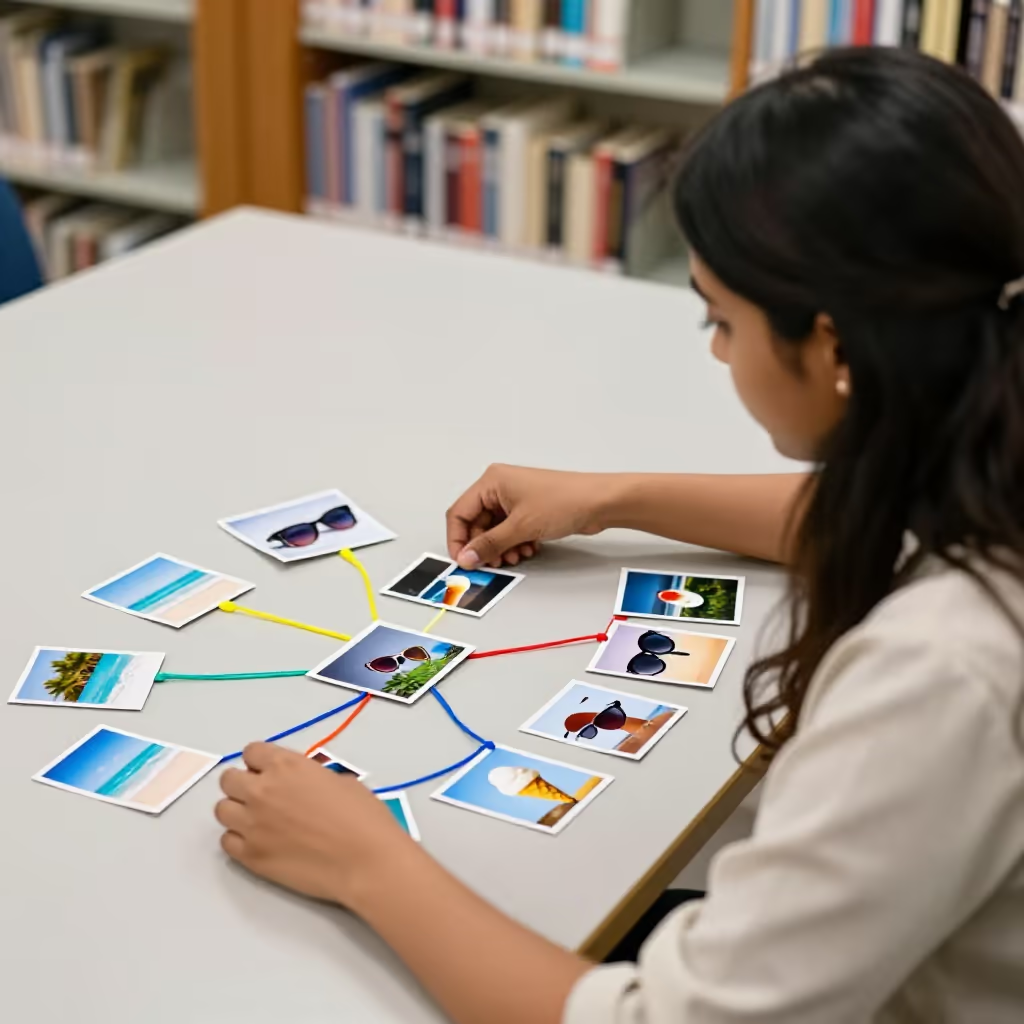
assoziieren mit
to associate with
To make a mental connection between different things, people, or ideas.
EXAMPLE
Viele Menschen assoziieren den Geruch von Zimt mit Weihnachten.
Many people associate the smell of cinnamon with Christmas.
to associate
Loading your saved state.
to associate with
To make a mental connection between different things, people, or ideas.
Viele Menschen assoziieren den Geruch von Zimt mit Weihnachten.
Many people associate the smell of cinnamon with Christmas.
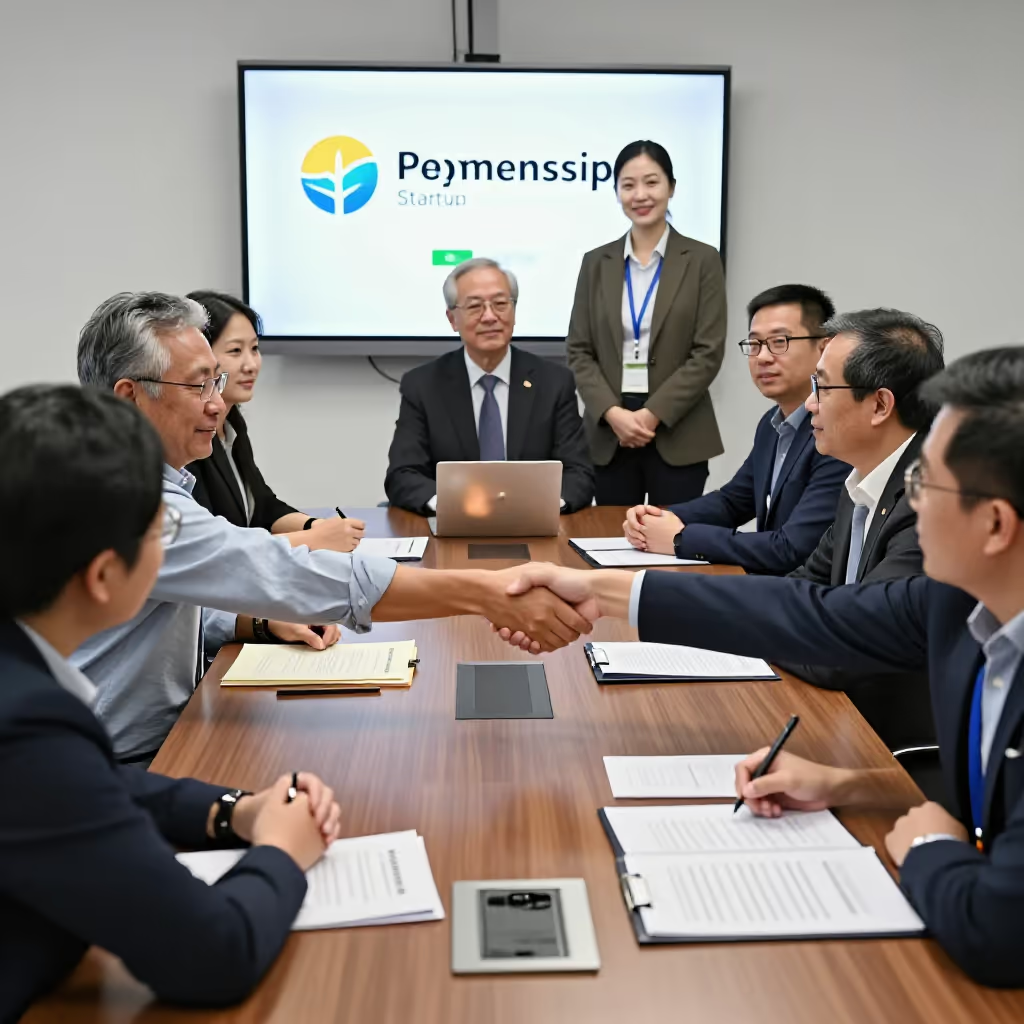
to associate with
To join or work together with a group, organization, or person, often in a partner-like but not fully integrated role.
Das kleine Forschungsinstitut hat sich mit der Universität assoziiert, um Zugang zu deren Laboren zu erhalten.
The small research institute associated itself with the university in order to gain access to its laboratories.
The ending '-ieren' often shows that a verb comes from another language. Such verbs are always weak and form their past participle with 'hat' and without 'ge-' ('hat assoziiert' — has associated).
Ich habe mit diesem Begriff noch nie etwas Positives assoziiert.
I have never associated anything positive with this term.
The use of the reflexive pronoun 'sich' changes the meaning. Without 'sich', it is about a mental connection; with 'sich', it means joining or associating oneself with a group.
Ich assoziiere den Sommer mit langen Abenden am See.
I associate summer with long evenings by the lake.
'Assoziieren' (to associate) belongs more to elevated written language or educated language. It is used less often in normal everyday speech.
Der Künstler assoziiert in seinen Werken oft Gegensätze wie Leben und Tod.
In his works, the artist often associates opposites such as life and death.
When making a mental connection, the preposition 'mit' (with) and the dative are always used. The structure is: etwas (accusative) mit etwas (dative) assoziieren — to associate something with something.
Er assoziiert den Geruch von frisch gebackenem Brot mit seiner Kindheit.
He associates the smell of freshly baked bread with his childhood.
to connect / to bandage
Both words describe a mental connection between things or ideas. Verbinden is more general and can also refer to a connection being made deliberately, whereas assoziieren more strongly describes an idea or association that arises spontaneously. Use assoziieren when an impression immediately evokes a particular idea.

Viele Menschen assoziieren den Geruch von Tannennadeln spontan mit Weihnachten.
Many people spontaneously associate the smell of pine needles with Christmas.
Ich verbinde den Geruch von Tannennadeln bewusst mit meiner Kindheit.
I deliberately associate the smell of pine needles with my childhood.