

aufblühen
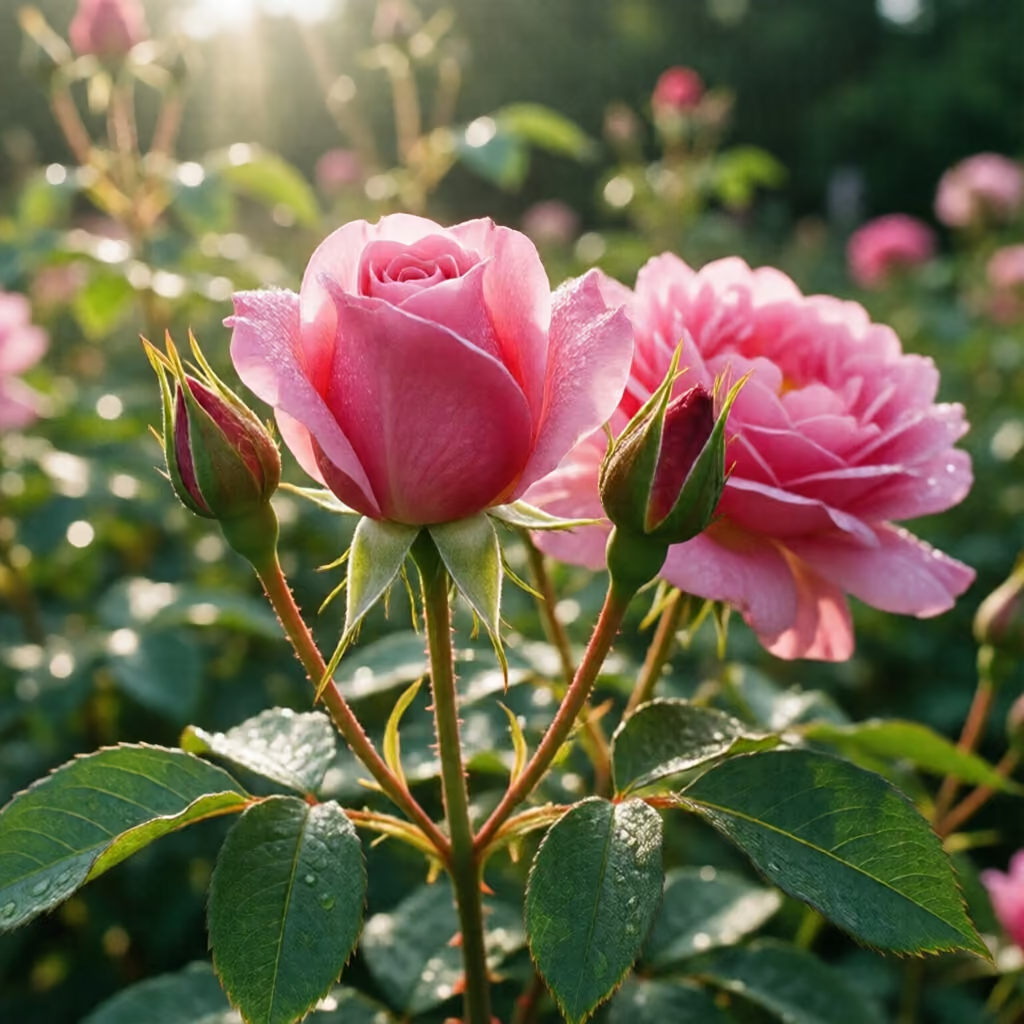
to bloom
A flower begins to open and develop.
EXAMPLE
Im Frühling blühen die Rosen im Garten auf.
In spring, the roses bloom in the garden.
to blossom
aufblühen – blühte auf – ist aufgeblüht
Loading your saved state.
to bloom
A flower begins to open and develop.
Im Frühling blühen die Rosen im Garten auf.
In spring, the roses bloom in the garden.

to blossom
To develop very positively as a person or inwardly and thereby become more lively, happier, or more successful.
Seit sie in der neuen Schule ist, blüht sie richtig auf.
Ever since she started at the new school, she has really blossomed.
| ich | blühe auf |
|---|---|
| du | blühst auf |
| er/sie/es | blüht auf |
| wir | blühen auf |
| ihr | blüht auf |
| sie | blühen auf |
| ich | blühte auf |
|---|---|
| du | blühtest auf |
| er/sie/es | blühte auf |
| wir | blühten auf |
| ihr | blühtet auf |
| sie | blühten auf |
| ich | bin aufgeblüht |
|---|---|
| du | bist aufgeblüht |
| er/sie/es | ist aufgeblüht |
| wir | sind aufgeblüht |
| ihr | seid aufgeblüht |
| sie | sind aufgeblüht |
| du | blüh auf! blühe auf! |
|---|---|
| ihr | blüht auf! |
| Sie | blühen Sie auf! |
| ich | war aufgeblüht |
|---|---|
| du | warst aufgeblüht |
| er/sie/es | war aufgeblüht |
| wir | waren aufgeblüht |
| ihr | wart aufgeblüht |
| sie | waren aufgeblüht |
| ich | werde aufblühen |
|---|---|
| du | wirst aufblühen |
| er/sie/es | wird aufblühen |
| wir | werden aufblühen |
| ihr | werdet aufblühen |
| sie | werden aufblühen |
| ich | blühe auf |
|---|---|
| du | blühest auf |
| er/sie/es | blühe auf |
| wir | blühen auf |
| ihr | blühet auf |
| sie | blühen auf |
Used for reported speech.
| ich | blühte auf |
|---|---|
| du | blühtest auf |
| er/sie/es | blühte auf |
| wir | blühten auf |
| ihr | blühtet auf |
| sie | blühten auf |
Used for wishes and “would”.
| infinitive | aufblühen |
|---|---|
| with zu | aufzublühen |
| present participle | aufblühend |
| past participle | aufgeblüht |
„Aufblühen“ (to bloom / to blossom) is a separable verb. In a main clause, „auf“ is separated and placed at the end of the sentence; in a subordinate clause, the verb remains together. With the infinitive using „zu“, „zu“ is placed between the prefix and the verb.
Nach den ersten warmen Tagen blühen die Knospen auf.
After the first warm days, the buds bloom.
Die Knospen blühen auf, sobald die Sonne wieder scheint.
The buds bloom as soon as the sun shines again.
Bei diesem Wetter beginnen die ersten Blumen aufzublühen.
In this weather, the first flowers begin to bloom.
„Aufblühen“ (to bloom / to blossom) consists of „auf“ and „blühen“ (to bloom). Here, the prefix reinforces the idea that something visibly begins to open and develop; this idea is also used figuratively for people.
Im Gewächshaus blühen die Pflanzen schon früh auf.
In the greenhouse, the plants bloom early.
When referring to plants, buds, or flowers, the literal meaning is usually intended. When „aufblühen“ (to blossom) refers to a person, group, or new life situation, it is figurative and describes positive development.
Im Mai blühen die Knospen im Park auf.
In May, the buds bloom in the park.
Seit dem Umzug in die Stadt ist Lea richtig aufgeblüht.
Lea has really blossomed since moving to the city.
For the figurative meaning, „richtig“ (really), „völlig“ (completely), or „neu“ (anew) often appear with „aufblühen“ (to blossom). A new environment, task, or group can also be the context in which someone blossoms.
In der neuen Theatergruppe ist er völlig aufgeblüht.
He has completely blossomed in the new theater group.