
aufeinander
each other
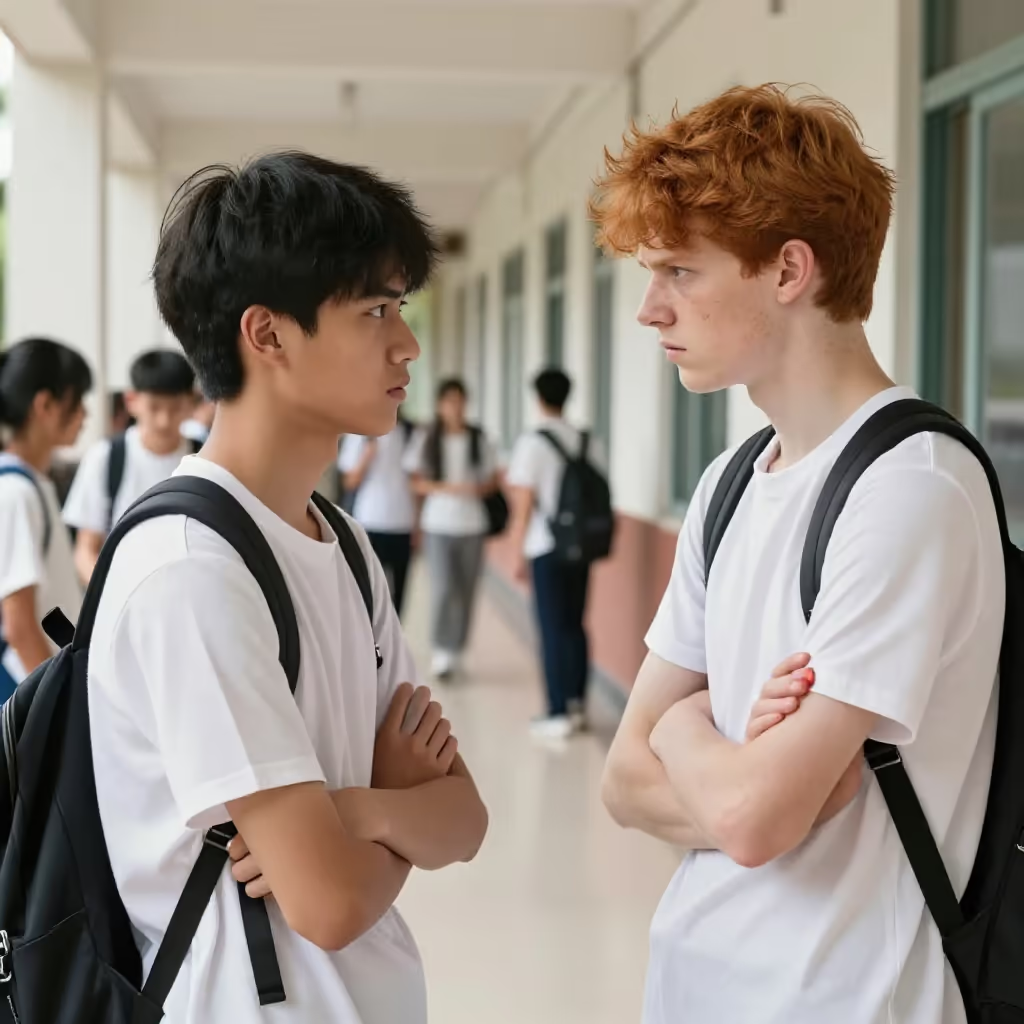
Expresses a reciprocal or mutual relationship or action between two or more people or things.
Die beiden Teams treffen morgen zum ersten Mal aufeinander.
The two teams will meet each other for the first time tomorrow.
on each other / one after another
Loading your saved state.
each other
Expresses a reciprocal or mutual relationship or action between two or more people or things.
Die beiden Teams treffen morgen zum ersten Mal aufeinander.
The two teams will meet each other for the first time tomorrow.
'Aufeinander' (on each other / one after another) is an adverb made up of the preposition 'auf' (on) and the reciprocal pronoun 'einander' (each other). It literally means 'auf einander' (on one another) or 'on each other'.
Die Kinder kletterten aufeinander, um die Mauer zu überwinden.
The children climbed on top of each other to get over the wall.
'Aufeinander' (on each other / one after another) is often combined with verbs that normally require the preposition 'auf' in order to express a mutual action. For example, 'warten auf' (to wait for) becomes the phrase 'aufeinander warten' (to wait for each other).
Wir haben eine Stunde lang aufeinander gewartet.
We waited for each other for an hour.
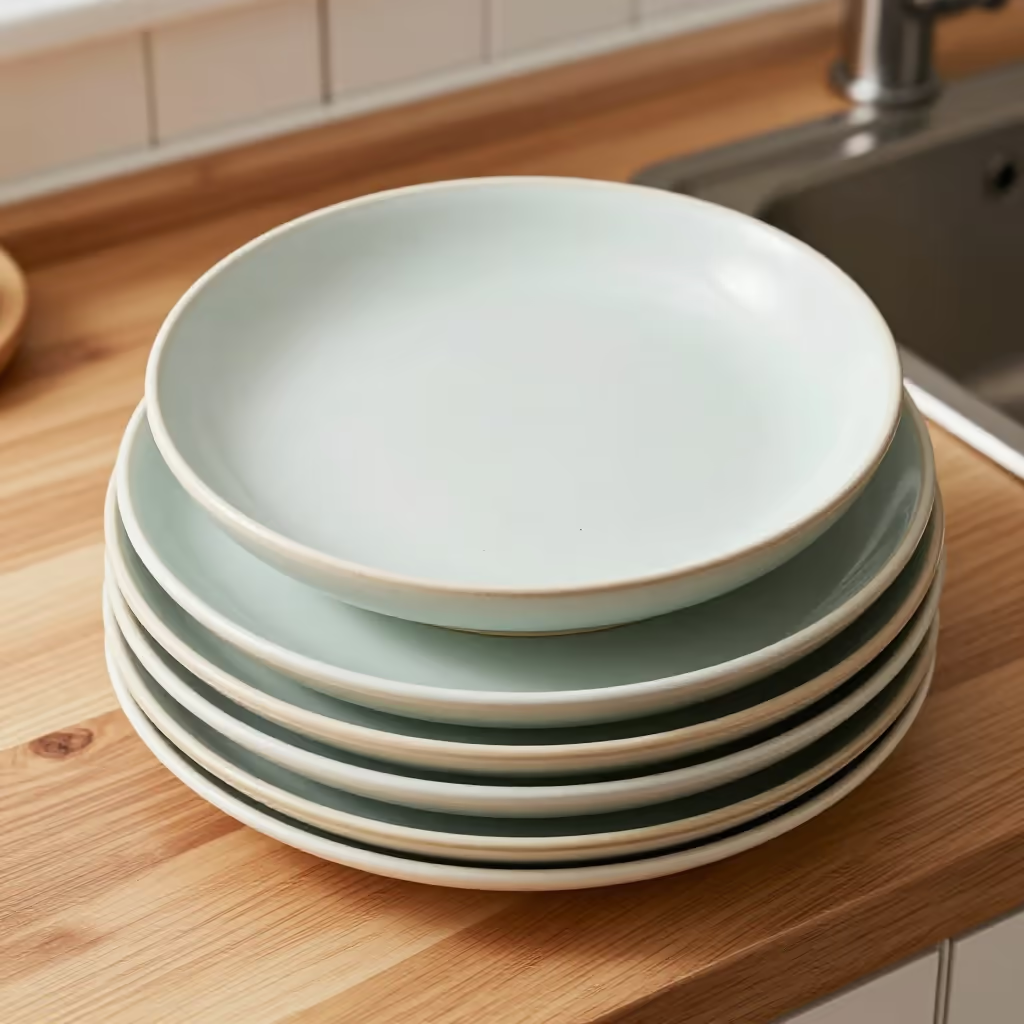
In its literal, spatial meaning, 'aufeinander' (on top of each other) is often used with verbs like 'legen' (to put/lay), 'stapeln' (to stack), or 'liegen' (to lie) to express that things are positioned one on top of another.
Stapeln Sie die Teller bitte vorsichtig aufeinander.
Please stack the plates carefully on top of each other.
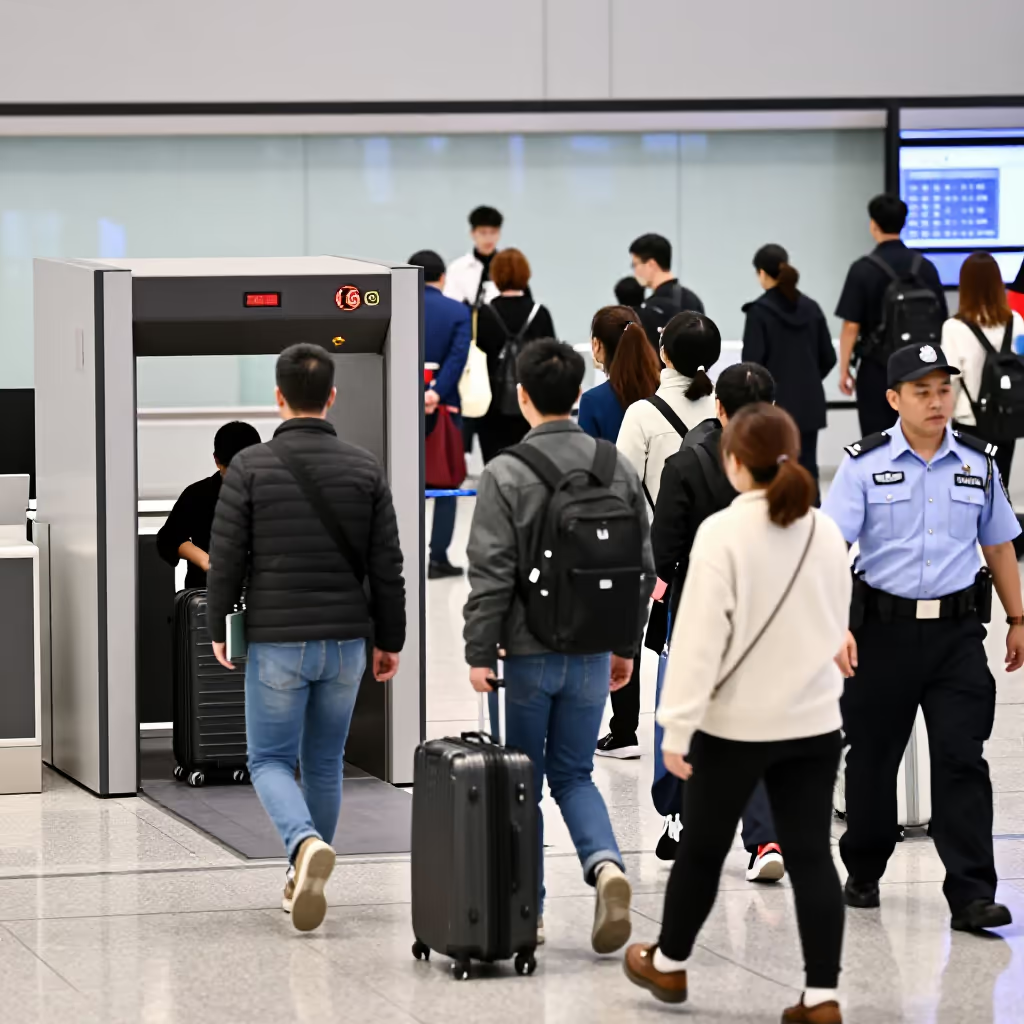
To express a direct sequence in time, 'aufeinander' (one after another) is almost always combined with the verb 'folgen' (to follow). It then means that something happens immediately after something else.
Die Termine folgen heute sehr dicht aufeinander.
The appointments are following very closely one after another today.
simultaneously / at the same time
'gleichzeitig' and 'aufeinander' form a contrast in time here. You use 'gleichzeitig' when two things happen in the same moment. You use 'aufeinander' in time expressions when one event comes directly after another, for example with appointments or steps in a process. The difference is important: with 'gleichzeitig', things run in parallel; with 'aufeinander', there is a sequence.

Die drei Termine folgen direkt aufeinander.
The three appointments follow directly one after another.
Heute starten zwei Besprechungen gleichzeitig, deshalb muss ich eine absagen.
Two meetings start at the same time today, so I have to cancel one.